Hello,
Scientists have been studying the recent wave of deadly storms that devastated Sri Lanka, Indonesia, Malaysia, and Thailand. They concluded in a study published this week that the storms were "supercharged" by higher sea temperatures and made worse by rapid deforestation.
As a brief recap, tropical Cyclone Senyar devastated large parts of Southeast Asia, with the Indonesian island of Sumatra being one of the hardest-hit regions. Tropical Cyclone Ditwah battered Sri Lanka and caused floods and landslides, with the death toll exceeding 600 and economic losses estimated at around $7 billion.
A team of researchers with the World Weather Attribution group said that during the five days of most intensive rainfall, sea surface temperatures in the North Indian Ocean were 0.2 degrees Celsius higher than the 1991-2020 average, giving the storms additional heat and energy.
Without the 1.3 C rise in global mean temperatures since the pre-industrial age, the sea surface in the area would have been around one degree colder in late November, they estimated. Tropical storms are common during the monsoon season, and while scientists say there is no evidence that climate change has made them more frequent, they say higher sea temperatures are making individual events more destructive. Separately, scientists at the European Union's Copernicus Climate Change Service (C3S) said this week that 2025 is set to be the world's second or third warmest on record, potentially surpassed only by last year’s record-breaking heat.
The data is the latest from C3S following last month's COP30 climate summit, where governments failed to agree on substantial new measures to reduce greenhouse gas emissions, reflecting strained geopolitics as the United States rolls back its efforts, and some countries seek to weaken CO2-cutting measures.
|
|
|
1. Forecasters predict ‘extremely active’ 2024 Atlantic hurricane season |
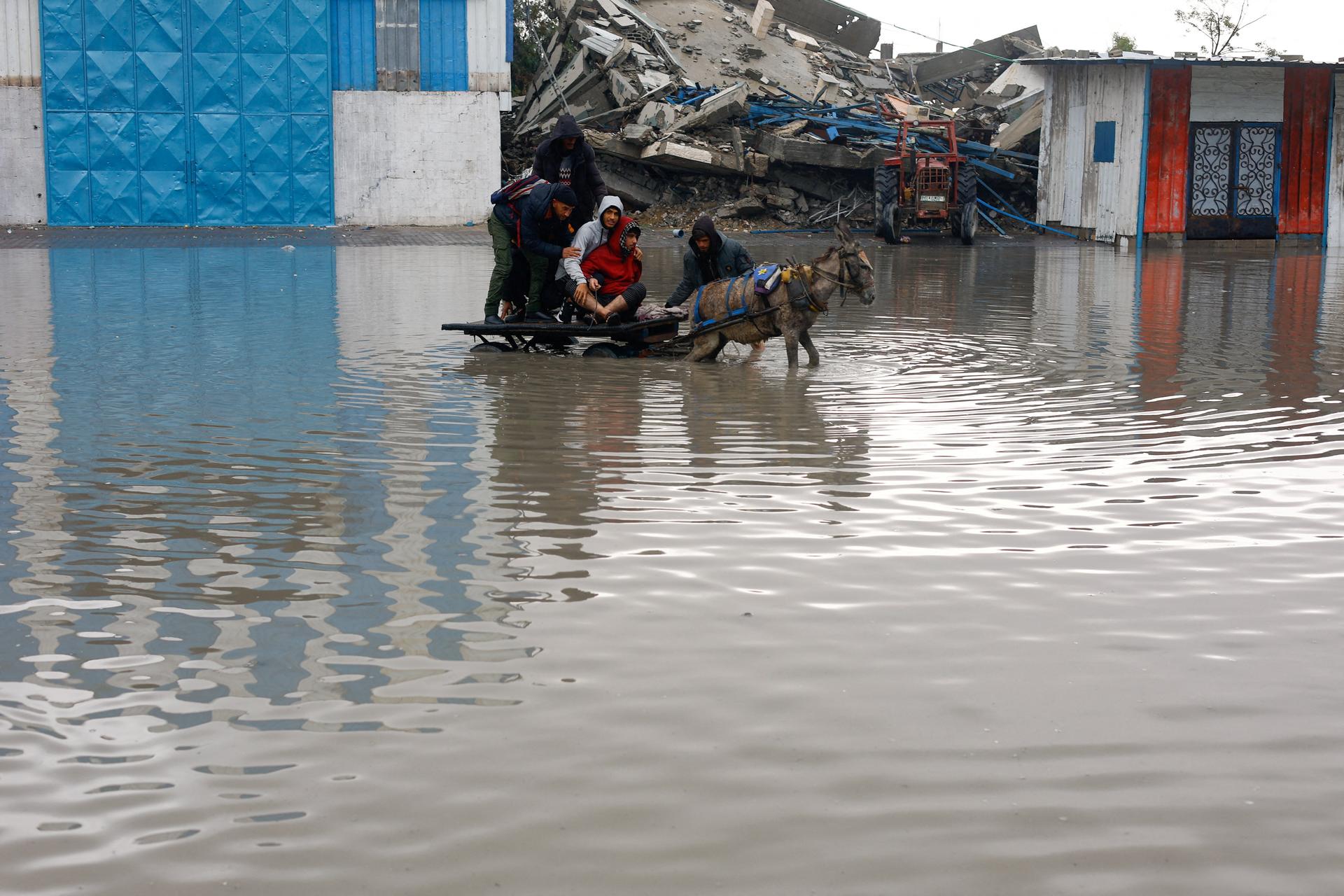
Torrential rain swept across the Gaza Strip this week, flooding hundreds of tents sheltering families displaced by two years of war, and leading to the death of a baby girl due to exposure, local health officials said.
Nearly 795,000 displaced people are at heightened risk of potentially dangerous flooding in low-lying, rubble-filled areas where families are living in unsafe shelters, the International Organization for Migration said. |
Displaced Palestinians ride a donkey-drawn cart on a rain-flooded street in Gaza City. REUTERS/Mahmoud Issa |
2. Torrential rains unleash widespread flooding, evacuations in Pacific Northwest |
In the United States, heavy rains drenched the Pacific Northwest, with flooding across much of the region from Oregon north through Washington state and into British Columbia. This led to dozens of roads being closed and prompted the evacuation of tens of thousands of people. |
3. First climate migrants arrive in Australia from sinking Tuvalu in South Pacific |
The first climate migrants to leave the sinking Pacific island country of Tuvalu have arrived in Australia, foreign affairs officials said. More than one-third of Tuvalu's 11,000 population applied for a climate visa to migrate to Australia, under a deal struck between the two countries two years ago.
Tuvalu, one of the countries at greatest risk from climate change because of rising sea levels, is a group of low-lying atolls scattered across the Pacific between Australia and Hawaii. |
4. Interpol-led global wildlife sting makes record seizures of animals, plants, timber |
The international criminal police organization Interpol said it has seized a record number of illegally traded live animals between September and October this year. Nearly 30,000 live animals were seized in Operation Thunder 2025, a month-long global sting by police, customs, border security, and forestry and wildlife authorities, the agency said.
Interpol identified some 1,100 suspects, and arrested 24 people in South Africa, two in Vietnam, and one in Qatar. It did not elaborate on the arrests. |
5. Ghana bans mining in forest reserves to curb environmental damage |
Africa’s top gold producer Ghana, is battling a surge in poorly regulated small-scale mining that is destroying cocoa farms, degrading forests and rivers, and heightening sustainability risks for its mining sector, sparking protests. As part of sweeping environmental protections aimed at stopping deforestation and protecting its waterways, Ghana has decided to ban mining in its forest reserves.
|
|
|
Here’s something to brighten up your day. Towering Christmas trees made entirely from discarded plastic bottles are lighting up streets in Ghana's capital Accra this holiday season. Click here for the full festive Reuters video. |
|
|
-
The majority of business leaders think sustainability should be radically revised, according to a recent survey. Click here to read the five suggestions for improvement by David Grayson, emeritus professor of corporate responsibility at Cranfield School of Management for Ethical Corp Magazine.
- Over the first 10 months of 2025, the United States was the only major power market to increase the carbon intensity of power generation compared to the year before, writes Gavin Maguire, global energy transition columnist at Reuters. Click here to read how Asia is beating the U.S. in clean power.
|
|
|
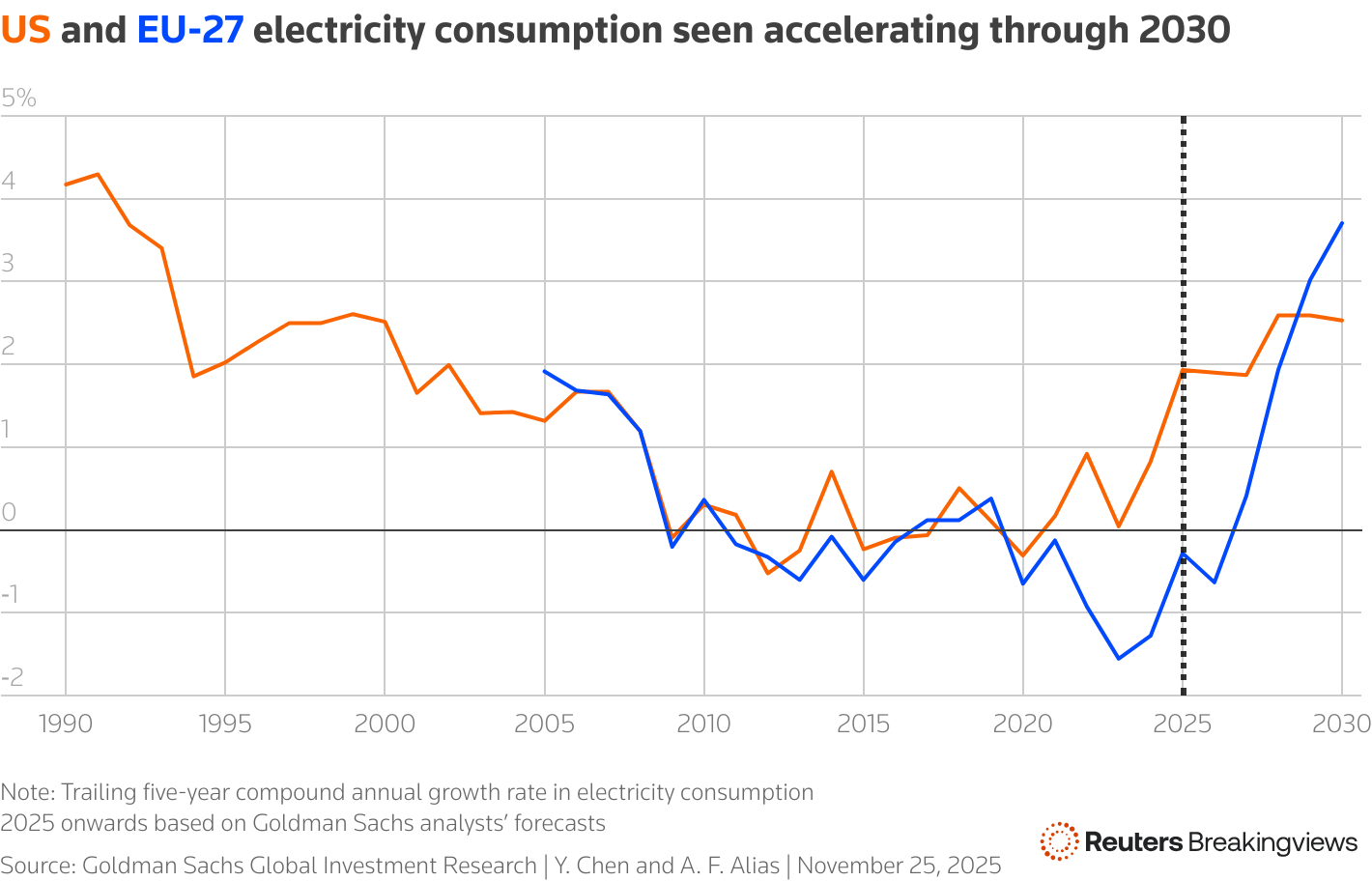
In its short-term energy outlook, the Energy Information Administration said that U.S. electricity consumption will hit record highs in 2025 and 2026. The demand increases come in part from data centers dedicated to artificial intelligence and cryptocurrency, and as homes and businesses use more electricity and less fossil fuel for heat and transportation. In Europe, the EU is set to accelerate approvals for energy grid projects and develop European Union-wide plans for cross-border electricity infrastructure to tackle high energy prices. Industrial energy prices in Europe are more than double those in the U.S. and China, which energy-intensive manufacturers say deters investment in Europe. |
|
|
|