Hello Power Up readers,
Have we entered an era of tanker warfare? Attacking and seizing merchant ships has been largely taboo in modern conflict, though militias such as Somali pirates and the Yemeni Houthis have used the tactic in recent years. But such methods now appear to be an unorthodox new tool in economic warfare.
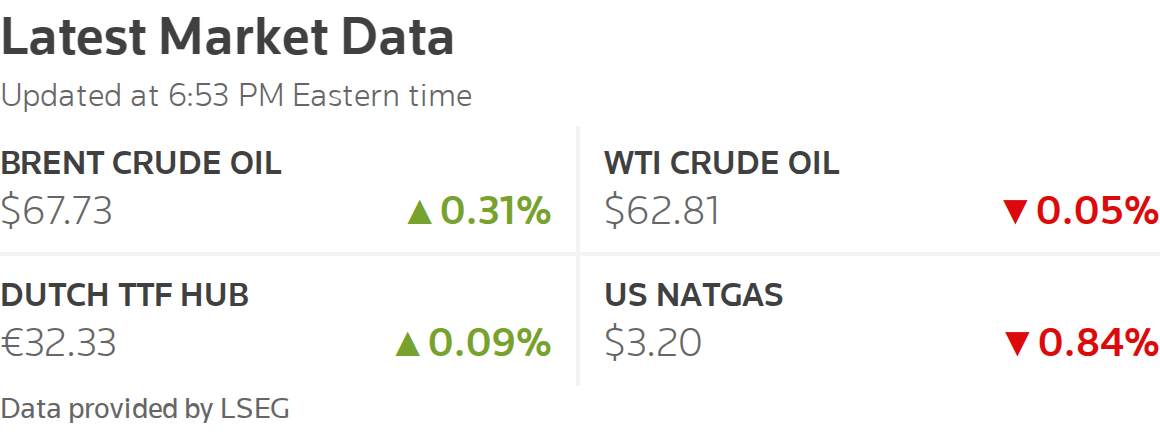
President Donald Trump on Wednesday said the U.S. Coast Guard seized a sanctioned oil tanker off the coast of Venezuela, a move that sent oil prices higher, though they have retreated this morning.
But what hasn’t reversed is the sharp escalation of tensions between Washington and Caracas, which called the move “an act of international piracy.” The sanctioned tanker was carrying Venezuelan oil bound for Cuba. Its interception will deprive Venezuelan President Nicolas Maduro’s regime of vital revenue.
If President Trump forces a change of government in Venezuela, Western energy majors will likely flood back into the oil-rich country and calls for it to leave OPEC would likely grow. But, as I wrote earlier this week, Venezuela is likely to retain its seat in the producer group regardless, as this is better aligned with Trump’s broader geopolitical goals.
While seizures of tankers remain a rare occurrence globally, strikes on tankers have become a feature of the ongoing war between Russia and Ukraine. Kiev has in recent months targeted several vessels used by Russia’s so-called “shadow fleet” to transport oil across the Black Sea and beyond.
On Wednesday, sea drones disabled a tanker en route to the Russian port of Novorossiysk, the third such strike in two weeks. This comes as Kyiv has been attacking Russian oil refineries for months, using long-range aerial drones to strike far behind the war’s front lines. Put together, these attacks should chip into Russia’s revenue from oil exports.
Striking tankers is a risky move, however, as it could lead to major environmental disasters and potentially severe shipping disruption. But as the war in Ukraine drags into its fourth year, Kyiv appears more willing to take its chances.
Here is some more energy-related news: