Avoid Jargon in Your Purpose Statements. Too many organizations rely on buzzword-laden purpose or vision statements that lack conviction, authenticity, or meaning to inspire performance. These statements can have quietly devastating consequences: strategic drift and indecision, employee disengagement, and an erosion of trust and brand integrity

Read online 

Manage email preferences

Harvard Business Review | The Management Tip of the Day
 

This week’s tips are adapted from Phil Le-Brun and Jana Werner’s new book, The Octopus Organization: A Guide to Thriving in a World of Continuous Transformation (HBR Press). An “Octopus Organization” is flexible, decentralized, and built for change. The journey to becoming one begins with identifying “antipatterns”: formulaic responses to complex challenges that can set organizations back. This week, we’re outlining five of these antipatterns—and how to overcome them.  

Today’s Tip

Avoid Jargon in Your Purpose Statements

Too many organizations rely on buzzword-laden purpose or vision statements that lack conviction, authenticity, or meaning to inspire performance. These statements can have quietly devastating consequences: strategic drift and indecision, employee disengagement, and an erosion of trust and brand integrity. Here’s how you can tackle your purpose statement like an Octopus Organization. 

Diagnose your current purpose. Have an honest leadership discussion about your purpose to assess whether it’s effective. Consider what emotions it inspires; how it connects people (or fails to); how simple, memorable, and authentic it is; and whether it articulates how your organization creates value. 

Rediscover or refine your purpose. Once you diagnose your current purpose, you can improve it to reflect your true organizational values. Involve stakeholders to uncover richer insights, and aim for a statement that’s not just aspirational, but also operational. 

Bring your purpose to life. Have a specific story to tell that illustrates your purpose in action. What does it mean to you and the day-to-day work of the company? What difficult decisions has it actually informed—and how? 

Change the language. If words like “purpose” or “mission” feel limiting or unclear, call it a “pride” or “ambition” statement instead. Your goal is to use your leadership language to connect emotionally with your people. 

 
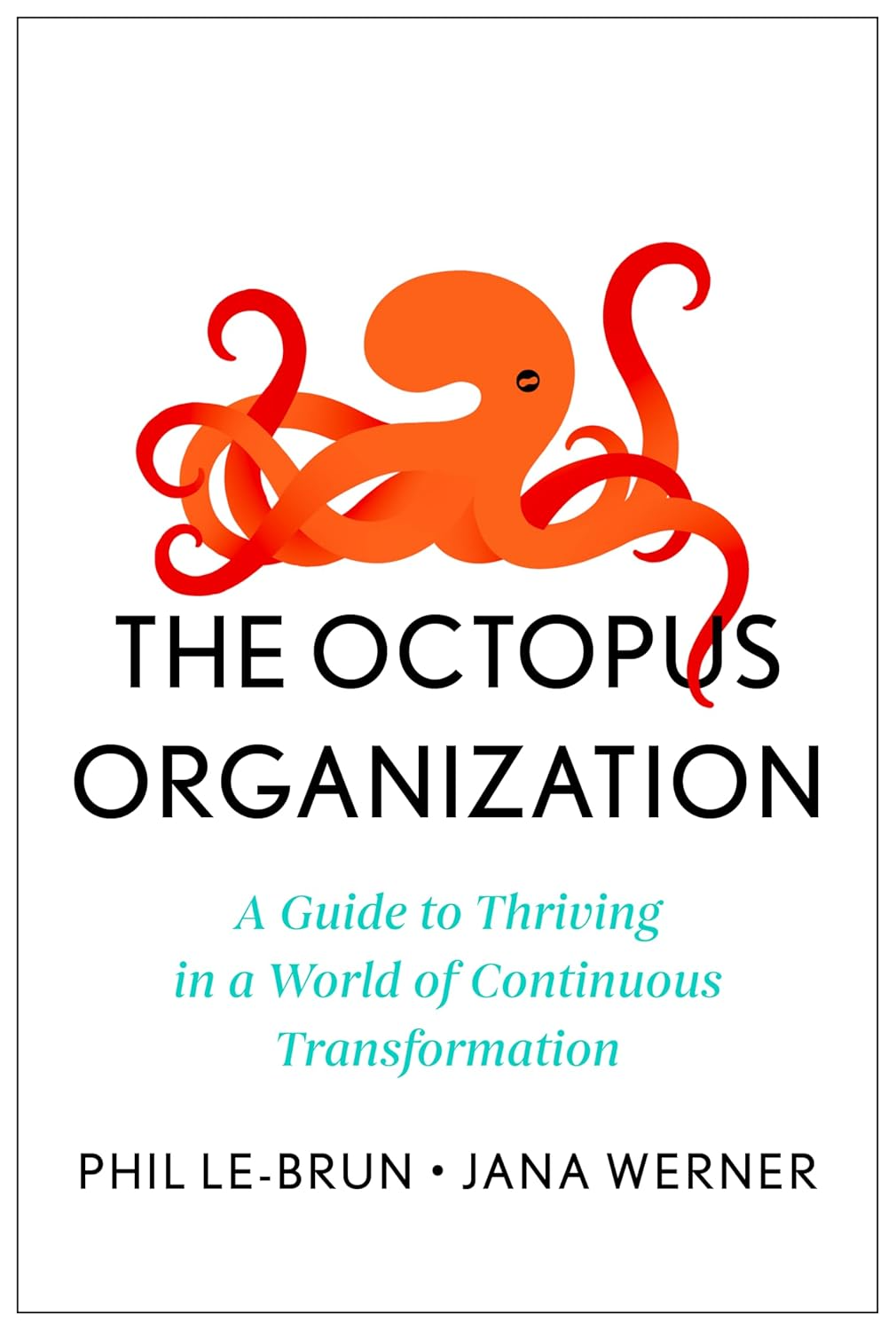
Book cover for The Octopus Organization: A Guide to Thriving in a World of Continuous Transformation.

Adapted from

The Octopus Organization: A Guide to Thriving in a World of Continuous Transformation

by Phil Le-Brun and Jana Werner

Book cover for The Octopus Organization: A Guide to Thriving in a World of Continuous Transformation.

Adapted from

The Octopus Organization: A Guide to Thriving in a World of Continuous Transformation

by Phil Le-Brun and Jana Werner


ADVERTISEMENT


A person holding a tablet displaying the HBR subscriptions webpage.

Stay ahead of the issues shaping modern leadership

An HBR subscription gives leaders steady insight when priorities shift fast.

Choose your plan

 
Coaching Real Leaders with Muriel Wilkins

Podcast

Do I Really Want to Be CEO?

A leader struggles with defining what she can do, versus what she wants to do.

Listen now
 

The HBR App:
Get the best in leadership thinking on-the-go.

Download on the App Store.
Get it on Google Play
 
X Icon Facebook IconInstagram Icon

You are receiving this because you registered at hbr.org to receive The Management Tip of the Day emails, or you provided us with your email address.

If you prefer not to receive The Management Tip of the Day emails, please unsubscribe.

You may also Manage Email Preferences, view our Privacy Policy, or Contact Us.

To ensure email delivery, add emailteam@emails.hbr.org to your address book, contacts, or safe sender list.


Harvard Business Publishing, 20 Guest St, Suite 400, Brighton, MA 02135  

Copyright © 2025 Harvard Business School Publishing. All rights reserved.