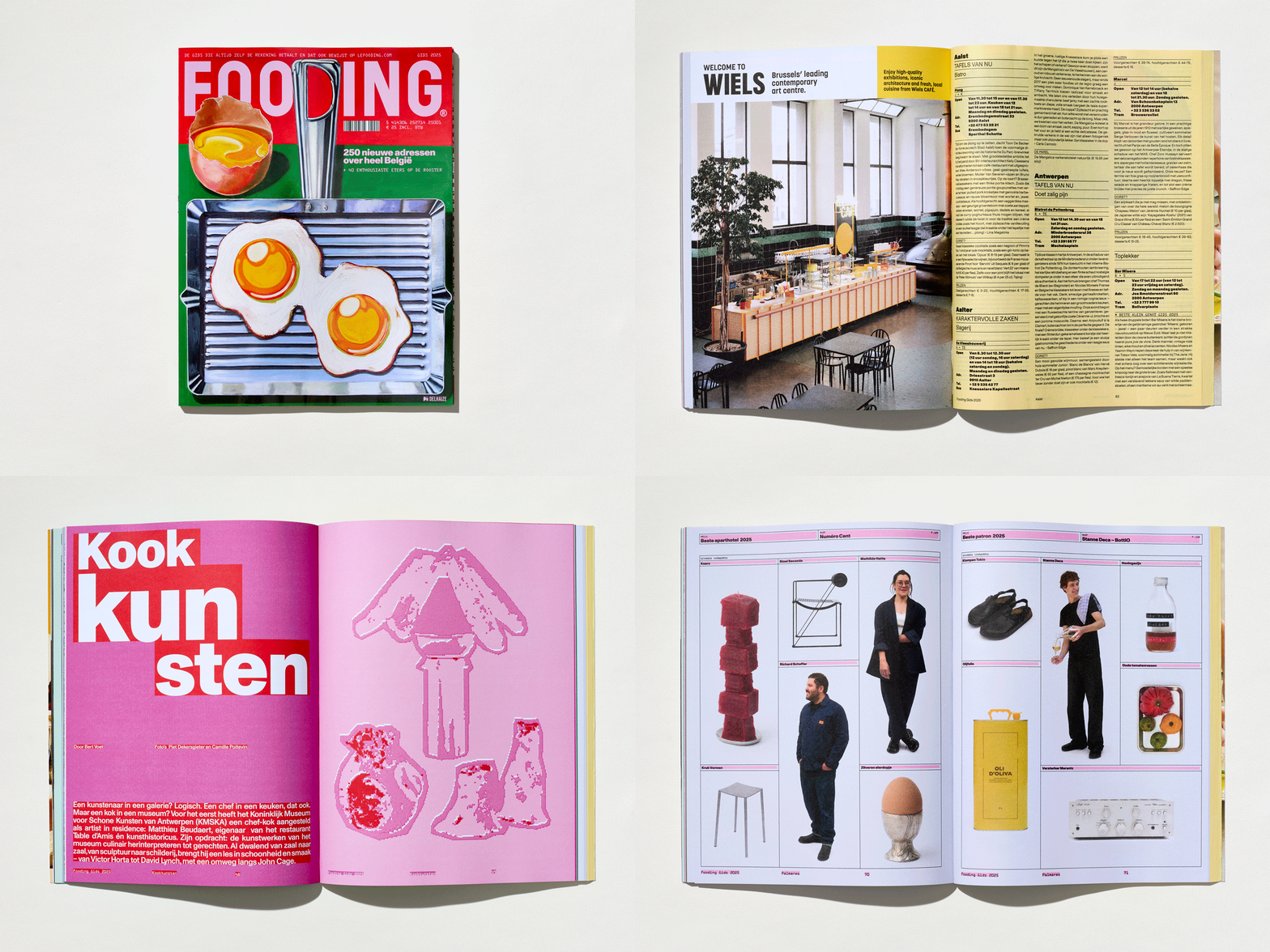
A special edition of ‘Le Fooding’, ArtReview’s Power 100 list and the projects reshaping Italy ahead of the Winter Games.
|
Friday 5/12/25
|

|
|
London
Paris
Zürich
Milan
Bangkok
Tokyo
Toronto
|
|
|
|

Good morning. We’re gearing up for three Monocle Christmas markets this weekend. Catch us in Paris, Toronto and Tokyo to find the perfect gift and enjoy some warming winter drinks with the Monocle team – you can find more information here. And we’re back in the Engadine with a seasonal pop-up at Hotel Steani in St Moritz, so stop by to explore our edit of Monocle products and reads, from books and cosy knits to candles and limited-edition collaborations. Now here’s what’s coming up in today’s Minute:
THE OPINION: Collectable design shines at Design Miami
IN PRINT: Italy’s Olympic-sized development efforts
DAILY TREAT: Tuck in to a special Belgium edition of ‘Le Fooding’
ART: The Power 100 spotlights Gulf-based and African artists
|
|
Bright, bold and bustling, Design Miami 2025 celebrates colour and creativity
By Grace Charlton
|

|
When the first edition of Design Miami took place in 2005, the fair dedicated to collectable design might have been considered, at best, a quirky sideshow to the glitzy Art Basel Miami. A space for the design industry where rare antiques mingle with contemporary pieces that do away with the restrictive adage that design is where form meets function. At worst, the fair could have been a flash-in-the-pan event in a city that has the quality of a pastel-hued tropical fever dream. Two decades later, Design Miami is now a global phenomenon that tours the world to put on showcases of the weird and wonderful in Paris, Seoul, Los Angeles, Basel and, in 2027, Dubai.
This week the fair returned to its base in Miami’s Pride Park for a final victory lap of a milestone year that will come to a close on Sunday. And it’s the biggest edition to date: more than 80 exhibitors gathered under the curatorial theme “Make. Believe”, an apt rallying cry in a city with an uninhibited disposition, where anything goes when it comes to aesthetics.
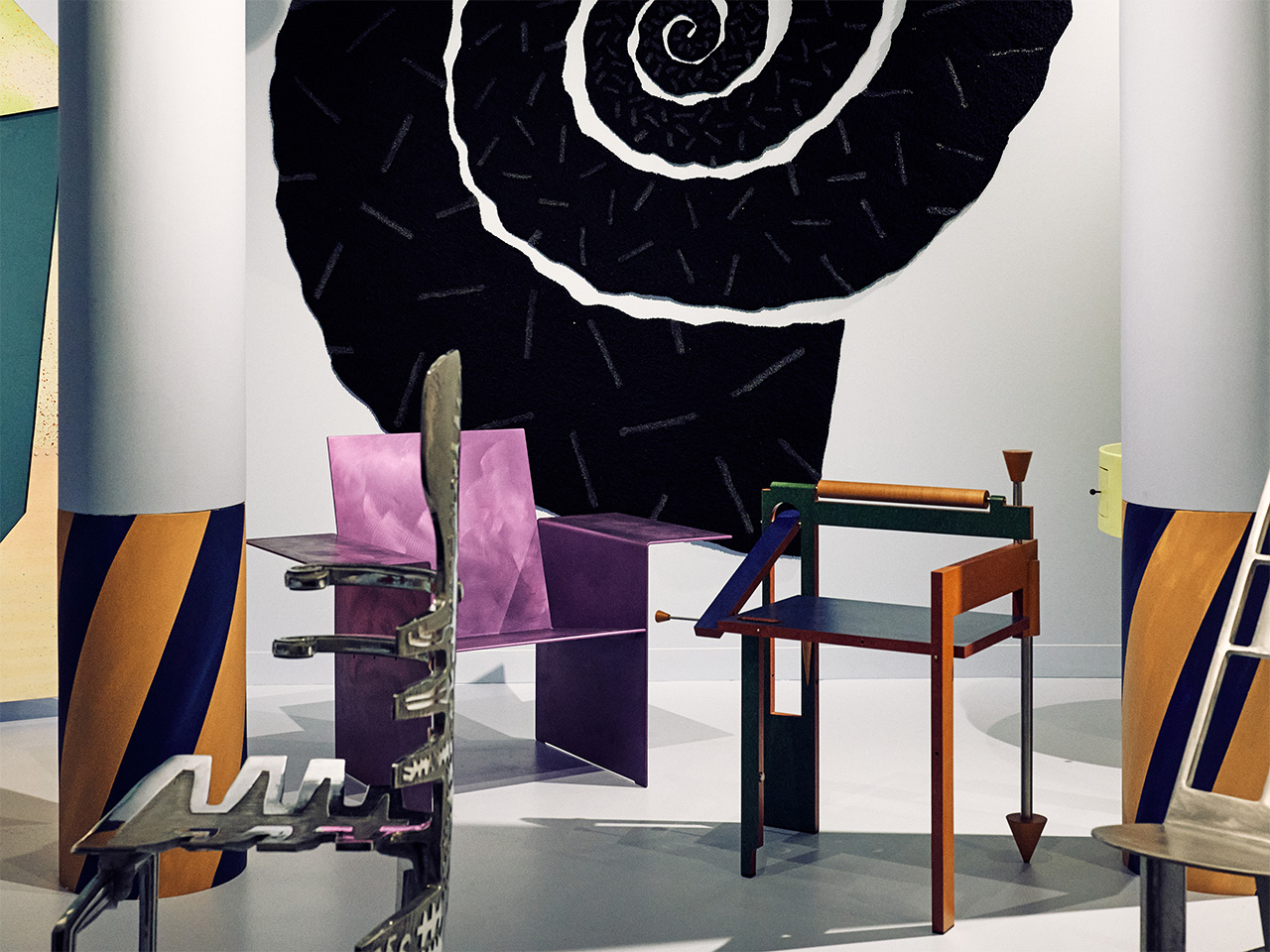
Sitting pretty: Superhouse’s American Art Furniture: 1980-1990
“Miami is fun, sunny, bright, tropical and energetic – and it all materialises at the fair,” Design Miami CEO Jen Roberts tells The Monocle Minute. “We see design as a tool for betterment and positive change in the world. It has been an extraordinary trajectory. Twenty years ago, there wasn’t a clear path for young designers coming out of school. Now you can be part of incubator shows, get picked up by a gallery, come to Design Miami and be commissioned for industrial projects.”
Highlights from this year’s edition include French designer Mathieu Lehanneur’s Palazzo display, where a chartreuse Familyscape sofa comes with a handbag-shaped cushion that can be unzipped to store those pesky remote controls. New York-based gallery Superhouse brought some 1980s radical optimism with its presentation, American Art Furniture: 1980-1990, featuring colourful pieces from designers including Dan Friedman, Michele Oka Doner and Pippa Garner. Italian luxury fashion house Fendi tapped Argentinian designer and artist Conie Vallese to create pieces alongside the brand’s ateliers. The result is an enticing recreation of a salotto (living room), with an artful pairing of brass flowers on chair legs and a folding screen, combined with panels of baby-blue and banana-yellow leather.
Some of the design pieces might prompt a smile. Others will make you question how far people will go to explore the limits of bad taste. But what’s sure is that the world is only now waking up to the value of collectable design, with Salone del Mobile set to enter the space at its next edition in spring 2026 and Pad drawing attention in Paris and London. The rise of collectable design has only just begun and, in hindsight, it makes perfect sense that it would take root in Miami. Carefree and self-assured, the city offers a joyful alternative to beige minimalism and the repetitive results borne out of a function-first mentality. So, unbutton your Cuban-collar shirt, grab a cocktail and make peace with the bizarre. Welcome to Miami.
Grace Charlton is Monocle’s associate editor of design and fashion. For more opinion, analysis and insight, subscribe to Monocle today.
|
|
EDO TOKYO KIRARI  MONOCLE MONOCLE
|
|
in print: italy
10 projects reshaping Italy as its north prepares for the Winter Olympic Games
Milano Cortina 2026 will be a stage on which Italy can showcase the best of all that it has to offer, from the stunning beauty of the Dolomites to the ancient city centre of Verona (writes Ed Stocker). But it’s also much more than a showcase of the country’s natural and historic assets. The event has given the Bel Paese fresh impetus to upgrade its infrastructure. The optics are good – and not just the fibre ones. For Monocle’s new Alpino newspaper, we rounded up 10 projects reshaping the country ahead of the Games. Here are a couple.
1.
Connecting the dots
The Games have provided the Italian government with a good excuse to extend Milan’s enviable fibreoptic network, first unfurled in 2005, to the rest of the country. About 900km of fibre has been run north from the Lombard capital to the Valtellina valley (which includes one of the main ski venues in Bormio), near the border with Switzerland. This extension will give the state police a high-speed connection that will aid them in securing events and communicating with local hospitals.
2.
New heights
A significant part of the host’s infrastructure push has been the improvement of transportation to the area’s ski slopes, including upgrading outdated cable cars. The Ponte Bondio-Mottolino lift has been modernised with an automatic clamping system that allows cabins to detach from the cable at the stations, slowing them down to allow safe boarding and disembarking before they reattach and continue on their journey. Completed in late 2024, this update follows a private investment in the Mottolino resort, which included the opening of a coworking space and several new restaurants.
|
|
• • • • • DAILY TREAT • • • • •
Tuck in to the best of Belgium with a special edition of ‘Le Fooding’
French food publication Le Fooding is celebrating 25 years of spotlighting the greatest Gallic restaurants, bars and bakeries. This year sees the third installation of its Belgian iteration. From Flanders and Brussels to Wallonia and Ghent, there’s plenty to dig into in this bountiful nation.
Co-CEO Christine Doublet’s highlights are Bloesem in Antwerp and Commotie in Ghent. “Both are plan-ahead, special occasion, tasting-menu spots. Book in advance and then build a weekend around that reservation,” she says.
lefooding.com
To hear more about 25 years of ‘Le Fooding’, tune in to ‘The Stack’ on Monocle Radio.
|
|
|
Sponsored by Edo Tokyo Kirari
|
|
|
|
|
|
ART: GLOBAL
Ghana’s Ibrahim Mahama becomes the first African to top the ArtReview Power 100
Who holds the most clout in the art world (asks Sophie Monaghan-Coombs)? Once a year, an attempt at answering this question arrives in the form of the ArtReview Power 100. The list is decided upon by a group of about 30 in-the-know art cognoscenti. It catalogues influential individuals and organisations and tries to capture the art world not just as an economic or aesthetic system but also as a social one.
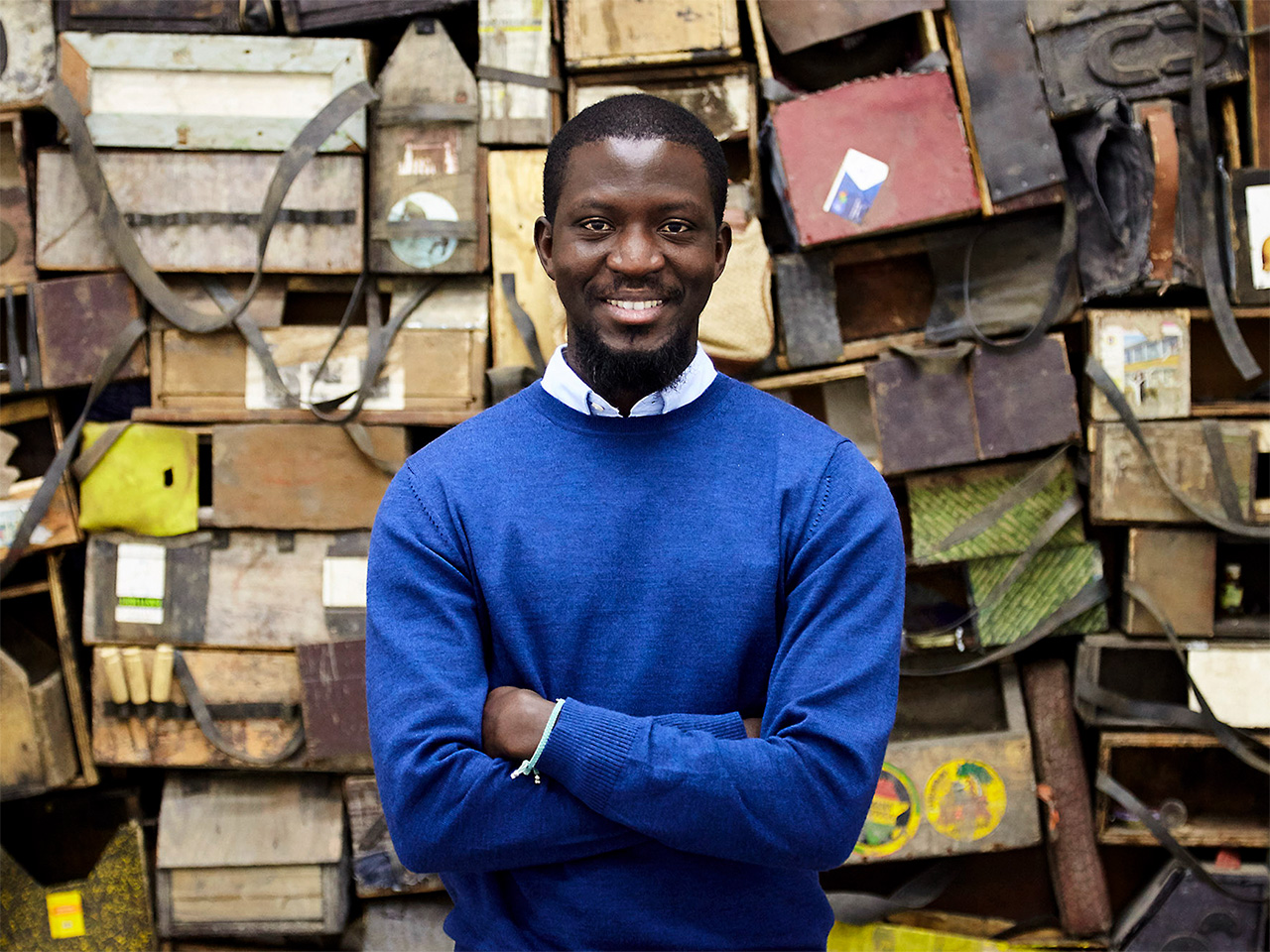
Standing out: Ibrahim Mahama
People from the Gulf feature heavily on the list, which includes Qatar’s Sheikha al-Mayassa bint Hamad bin Khalifa al-Thani and Emirati Sheikha Hoor al-Qasimi, both of whom play integral roles in shaping the art scene in their regions. The presence of Gulf nations on the list is the result of their funding many new museums, biennials and other art projects – as well as acting as a bridge between the East and West. This year the Power 100 is topped by Ghanaian artist Ibrahim Mahama – the first person from Africa to be given the number-one spot. Mahama directs the profits of his sales into several art institutions and initiatives in his hometown of Tamale. The ranking represents “a new phase in the way the art world is globalised,” Mark Rappolt, editor in chief of ArtReview, tells The Monocle Minute. “It is moving away from the traditional art centres of London, Paris and New York towards a more distributed geography.”
|
|
| | |