| |  | | | | |  | By Megan R. Wilson | - Hep B votes delayed: Amid confusion about the proposals and debates over specific wording, a federal vaccine panel on Thursday delayed a vote on whether to change the recommendations concerning giving infants their first dose of hepatitis B shots when they’re born.
- New tech solutions in Medicare: The Trump administration is rolling out two pilot programs that could offer lucrative opportunities for artificial intelligence and device developers — and potentially loosening some device approval requirements.
- People in Obamacare plans making tough decisions: Fresh numbers from KFF shows people with Affordable Care Act plans are likely to drop their insurance or sign up for high-deductible options as potential legislative fixes to the expiring enhanced subsidies are expected to fail.
Hello and welcome to the Health Brief newsletter. Send health tips, scoops and intel to megan.wilson@washpost.com, or message me securely on Signal at megan.434. This newsletter is published by WP Intelligence, The Washington Post’s subscription service for professionals that provides business, policy and thought leaders with actionable insights. WP Intelligence operates independently from the Washington Post newsroom. Learn more about WP Intelligence. | 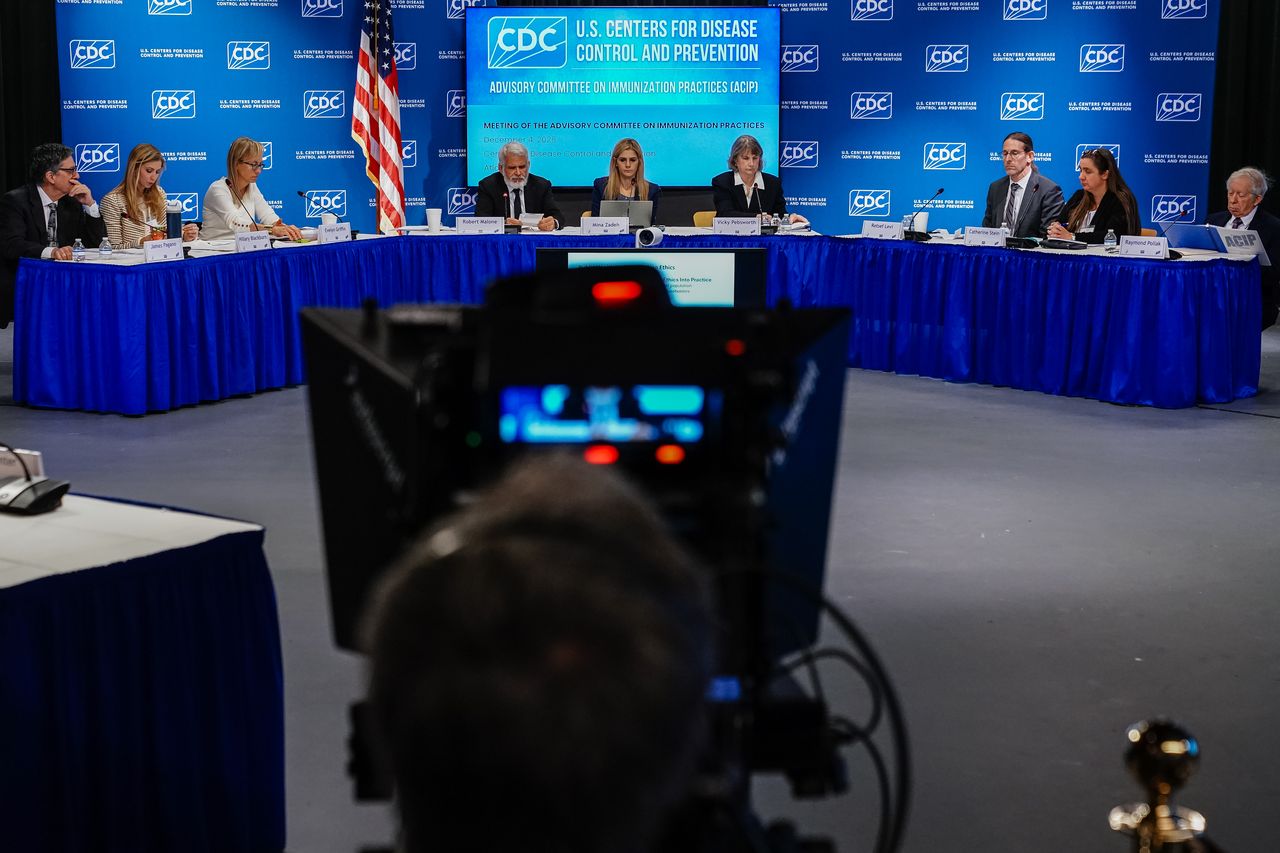 | | Members of the CDC Advisory Committee on Immunization Practices met on Thursday. (Elijah Nouvelage/Getty Images) | | | |  | The Lead Brief | A panel of federal vaccine advisers on Thursday postponed a set of votes on whether to change recommendations for hepatitis B vaccines amid confusion and disagreements about the language under consideration. The Advisory Committee on Immunization Practices, which makes recommendations on vaccine policy to the Centers for Disease Control and Prevention, is meeting Thursday and Friday. What they discuss could have an impact on insurance coverage. The advisers — all handpicked by Health Secretary Robert F. Kennedy Jr. — at times clashed with other members and speakers. The panel had floated voting on three recommendations related to the timing and number of hepatitis B vaccinations given to children — which are administered in a three-shot series, including the first one given hours after birth. One proposed recommendation would suggest only giving the first dose to babies born to mothers with hepatitis B — a disease that attacks the liver and can lead to cirrhosis and cancer. For other babies, the panel is weighing whether to recommend what’s called “shared clinical decision-making:” i.e., consulting with their doctors regarding if or when to administer the first shot — and delaying the birth dose by at least two months if they decide to wait. The panel voted 7-3 to push the vote to Friday. The Washington Post’s Lena H. Sun and Paige Winfield Cunningham wrote a dispatch on today’s meeting in Atlanta, where the CDC is located. The meeting included presentations casting doubt on the safety of giving children the three-shot series, including from two prominent vaccine critics recently hired by the CDC, drawing concern from medical groups and doctors. | | | | | | Numbers Game | 52 percent Fresh polling from KFF shows that more than half of Americans with Affordable Care Act plans are “very” or “somewhat” likely to opt out of health insurance entirely if their premiums double next year, which is the average increase KFF has calculated for 2026. The largest number of people (70 percent) will likely move into cheaper high-deductible plans, which typically come with higher co-pays. Nearly 60 percent of enrollees said they couldn’t absorb even a $300 annual increase — which is the increase KFF anticipates for lower-income people on mid-level “silver plans” — without “significantly disrupting” their finances if the enhanced subsidies expire. About half of respondents across all income levels say it would be “very difficult” to find any other affordable coverage if premiums rise. → Should health care overall costs go up by $1,000 next year, most people said they’d likely respond by shifting their spending on things including food or clothing, although 55 percent reported being “very” or “somewhat” likely to take on extra hours at work or find an additional job to pay the increased expenses. And it’s happening right now. The poll, conducted at the beginning of November, found that nearly everyone surveyed plans to make a decision about their health insurance coverage by the end of December. People have until Jan. 31 to sign up, but need to do so by Dec. 15 if they want their coverage to kick in at the start of 2026. The political angle: More than 8 in 10 enrollees across both parties say Congress should extend the tax credits; however, who they blame for a lapse breaks largely along political affiliation. More than half of registered voters say a $1,000 hike in their health costs next year would have a major impact on whether they vote in the 2026 midterm elections — and whom they vote for. Most independent voters — 55 percent — said a $1,000 jump in their personal health costs have a “major impact” on which party’s candidate they would support. Of those voters, 32 percent said Republicans in Congress would be to blame if their health costs spike, with President Donald Trump taking most of the blame (44 percent) from independent voters. And what’s happening on Capitol Hill?: Theodoric Meyer and Riley Beggin wrote for The Washington Post Thursday morning about the lead-up to next week’s anticipated health care vote, which they note is likely to fail. While there are bipartisan efforts underway, my colleagues report, Republicans are also planning their own health policy alternatives. Speaker Mike Johnson (R-Louisiana) said Thursday he’ll be releasing a bill next week to be put up for a vote before the end of the year. But there aren’t any details yet about what will be included. In the Senate, Sen. Bill Cassidy (R-Louisiana) is leading the charge for a GOP option that would put the equivalent of the enhanced subsidies into a health savings account for people to use for their out-of-pocket health costs — but not for their monthly premiums — paired with high-deductible “bronze” plans. | | | |  | Agency alert | The Trump administration met with industry leaders Thursday to discuss its plans to encourage the use of technology, including artificial intelligence, through two new health care programs, my WP Intelligence colleague Rebecca Adams reports. Entrepreneurs and other organization leaders who came from around the globe heard from officials at the Centers for Medicare and Medicaid Services and Food and Drug Administration about two projects that could be a boon to app developers, artificial intelligence-enabled medical device makers, and physicians. CMS Administrator Mehmet Oz told industry at Thursday’s event that the agency wants to reward organizations that can show improvements in health outcomes. “We want to pay enough money that this becomes an interesting business opportunity for sponsors all around the world,” Oz said. “We want people to make money building these solutions …. We want you to come to us with ideas, and because it’s an attractive option, we want innovative people to be able to build companies without having to give it all away.” Why it matters: The Trump administration has put an emphasis on using health tech — such as wearables — to improve care and treat people with chronic conditions. The details haven’t yet been released, but the announcement has so far received rave reviews from industry. It could be a major windfall for companies and health systems: One of the initiatives could allow medical device-makers to skip FDA reviews under certain circumstances. THE TOP POINTS: One pilot program, called the Advancing Chronic Care with Effective, Scalable Solutions — known as ACCESS — leverages technology-based care to help patients on traditional Medicare with conditions including obesity, diabetes, chronic kidney disease, heart disease, depression and musculoskeletal illnesses including arthritis. → ACCESS is a voluntary model, which means that companies are likely to participate only if it helps their bottom lines. Organizations that join will get up-front payments based on patient risk but only receive full payment if they improve outcomes such as by lowering blood pressure. The second program being rolled out — known as the Technology-Enabled Meaningful Patient Outcomes for Digital Health Devices Pilot, or TEMPO — would allow device manufacturers that work within ACCESS to bypass certain FDA safety requirements. The most complex medical devices typically undergo a scientific and regulatory review of the products’ safety and effectiveness, known as premarket authorization, before they can be used in the United States. FDA Chief of Staff Jim Traficant said that federal officials would allow companies to skip that review in some circumstances. Device manufacturers could request that regulators “exercise enforcement discretion," Traficant said. | | | | | | Executive Health Brief | The FDA has named Tracy Beth Høeg acting director of the Center for Drug Evaluation and Research, the post atop the agency’s drug approval office made vacant by the sudden retirement of Richard Pazdur. Høeg, a sports medicine doctor who has been critical about covid-19 vaccines, has been a top adviser in the vaccine approval office, the Center for Biologics Evaluation and Research. “Dr. Høeg is the right scientist to fully modernize CDER and finish the job of establishing a culture of cross-center coordination there,” said FDA Commissioner Marty Makary in a statement. “At CBER, she advanced scientific rigor through her commitment to providing the public with the highest quality of evidence, including our road map to reduce and replace animal testing with new technologies.” — The agency also announced that Karen Murry would be the new leader of FDA’s office in charge of over-the-counter drugs, the Office of Nonprescription Drugs inside CDER a day after STAT reported that its prior leader, longtime FDA veteran Theresa Michele, had been ousted. | | | | | | | | | | | | |


_tstmp_1756933376-1920-1080.png)