| | US officials defend deadly boat strikes, Europe grows more wary of Washington-led peace talks on Ukr͏ ͏ ͏ ͏ ͏ ͏ |
| |  | Flagship |  |
| |
|
The World Today |  - US admiral defends boat strike
- EU distrusts US on peace talks
- Indigenizing AI chips
- Dim US job market signals
- AI could kill the billable hour
- Bots do peer review
- Zipcar shuts in UK
- Europe’s heavy cars
- Israel OK’d for Eurovision
- Adidas’ new old China line
 South Korean sculptors embrace asymmetry. |
|
US admiral defends boat strike |
 Evelyn Hockstein/Reuters Evelyn Hockstein/ReutersA US Navy admiral on Thursday defended an attack that killed two survivors of a strike on an alleged drug boat, amplifying a debate over the Trump administration’s deadly maritime tactics. After the admiral testified in a congressional hearing, a top Republican senator said the Sept. 2 strike was “highly lawful and lethal,” while one Democrat said unedited footage of the attack was “one of the most troubling things I’ve seen.” The White House is betting on public support for its campaign against drug trafficking, despite growing scrutiny from lawmakers and legal experts who have questioned whether the second strike amounts to a war crime. The fracas has also put increasing pressure on the Pentagon and embattled Defense Secretary Pete Hegseth. |
|
Europe wary of US in peace talks |
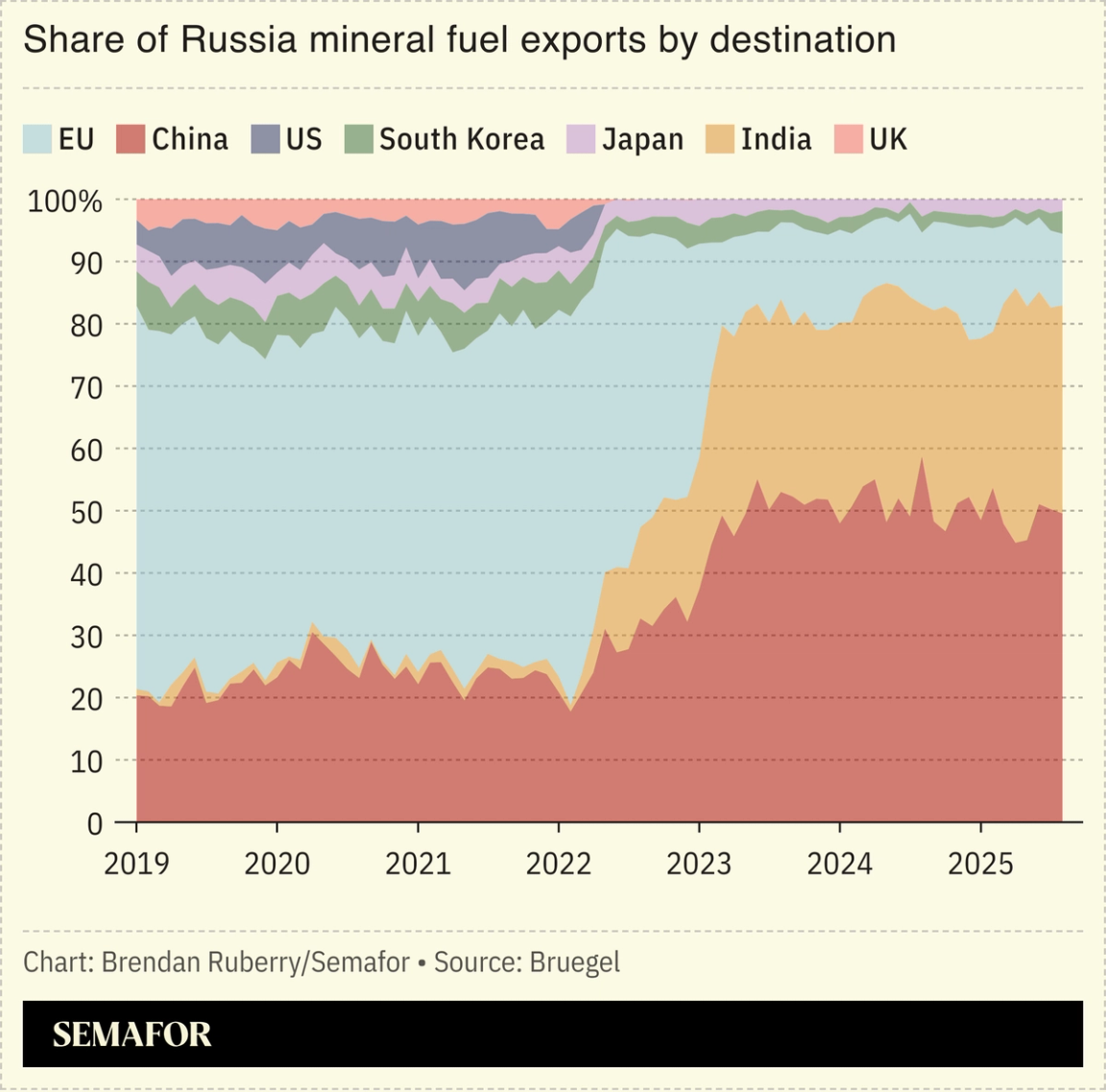 A leaked conversation between Europe’s leaders reflected their growing distrust of US-led efforts to end Russia’s war in Ukraine. Der Spiegel obtained notes of a Monday conference call where France’s president said the US may “betray Ukraine” and Germany’s chancellor said Washington’s negotiators are “playing games” with Europe and Kyiv; Finland’s president suggested US negotiators may have been in touch with Moscow while talking to Ukrainian officials last month. European diplomats, meanwhile, criticized Russia in a leading Indian newspaper ahead of President Vladimir Putin’s visit to India, prompting a rebuke from New Delhi. India has “chosen to remain distant” from the conflict, an expert wrote in Foreign Policy, even as the US pressures it to stop buying Russian oil. |
|
China weaning off of Nvidia chips |
|
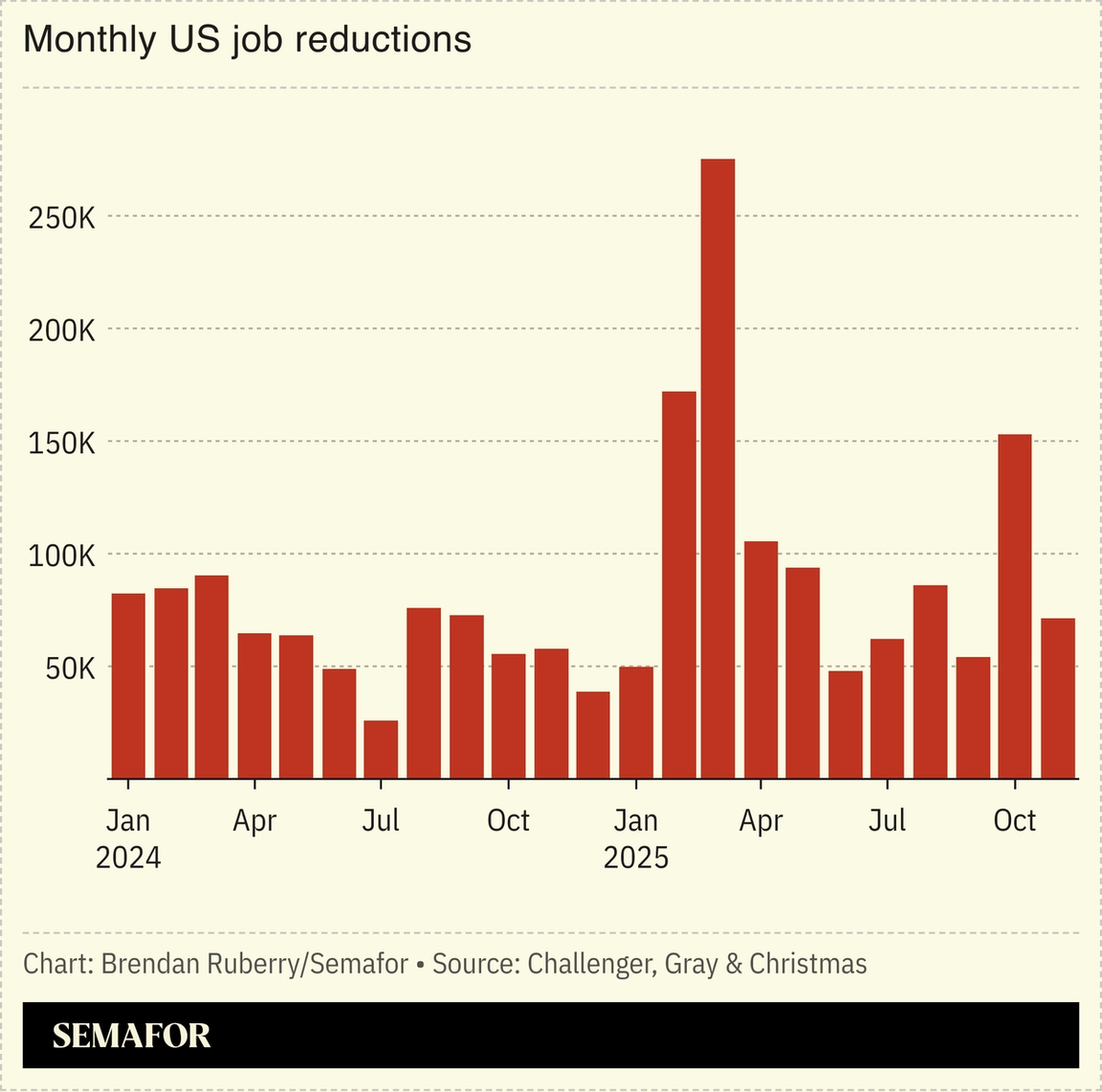 US companies are letting go of employees at a rapid clip. Layoffs have surpassed 1 million this year — the most cuts since 2020 — new data from consulting firm Challenger, Gray & Christmas showed Thursday. Job losses last month were the highest since early 2023, ADP reported. Large employers grappling with tariffs, AI, and pandemic-era overhiring have announced massive cuts throughout 2025, but small businesses are now leading the payroll pullback, Bloomberg noted. The cooling labor market bolsters the US Federal Reserve’s likely decision to trim interest rates next week, though sticky inflation complicates that call. |
|
AI could make billable hours obselete |
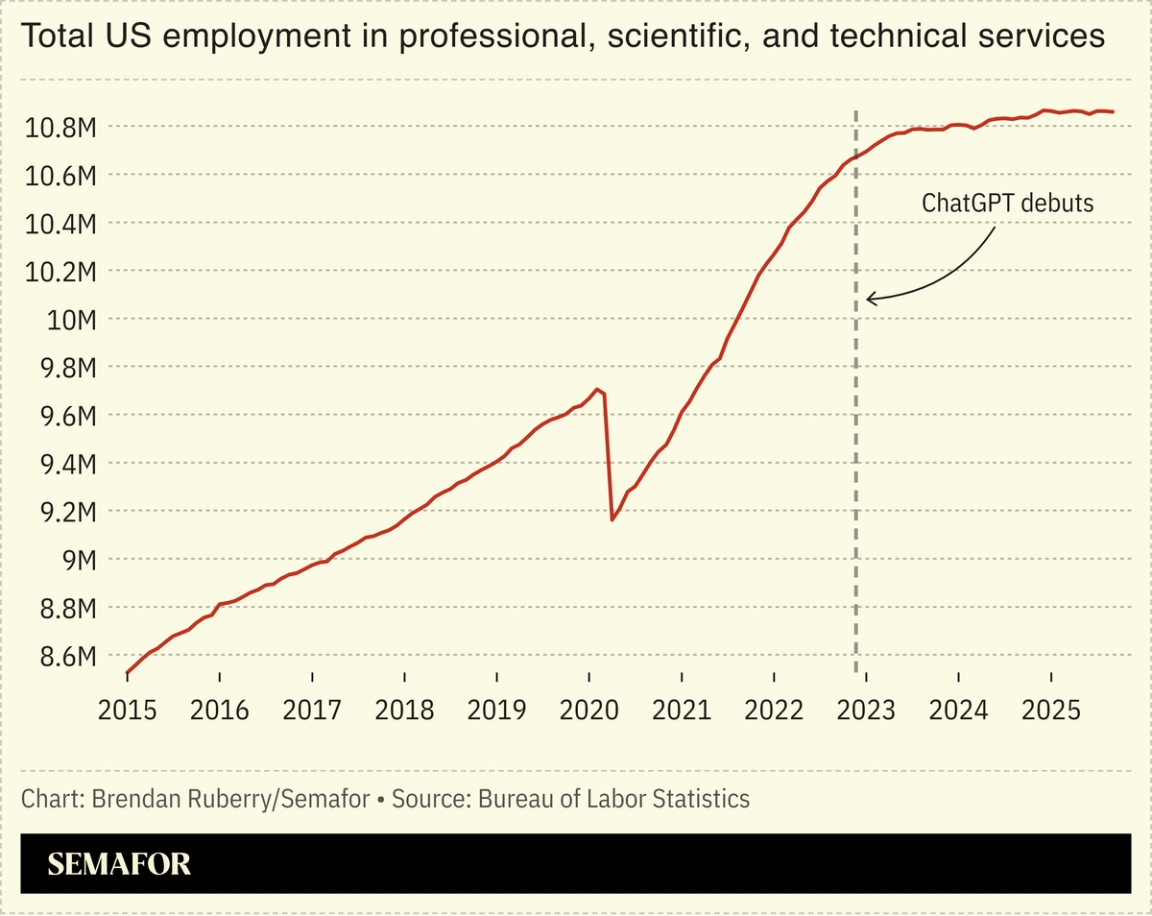 Widespread AI adoption could render the billable hour obsolete, a business expert argued. Lawyers, public relations pros, and consultants are outsourcing more work to bots, so the logic of charging for time — rather than the end product — may no longer make sense, Columbia Business School’s Rita Gunther McGrath argued in The Wall Street Journal. Companies first began billing hours to clients in the 1960s and 1970s, but AI tools, capable of scanning and drafting documents at hyperspeed, can accelerate rote tasks. This puts more of an emphasis on “judgment, creativity and relationship management — the value of which bears little relationship to time expended,” McGrath wrote, suggesting that outcome-based pricing or subscription and retainer models are more viable alternatives. |
|
AI is increasingly being used in scientific peer review, both openly and secretly. Analysis of research submitted for a major AI conference found that 21% of peer reviews — evaluations of a scientific paper’s rigor and quality — were wholly written with AI, and more than half contained some AI use. Some carried hallucinated references, or misunderstood the point of the study they were reviewing. Peer review is time-consuming, unpaid work, so using LLMs is appealing, a scientist wrote in Nature. Some preprint sites, which publish research before it reaches journals, are integrating AI tools to speed up their reviews. But AI models aren’t yet ready for such tasks, he warned, and errors could undermine confidence in the scientific process. |
|
No more Zipcars in London |
 Scott Barbour/Getty Images Scott Barbour/Getty ImagesLondon’s biggest car-sharing service will shut down this month, a sign of how the UK capital’s transport is changing. Zipcar has thousands of cars and trucks parked on the streets, available at a moment’s notice for a few pounds an hour; the company claimed each vehicle removed 27 barely-used private cars from the roads. A new congestion charge for electric vehicles seems to have triggered its decision to quit, London Centric reported, but longer-running trends are behind it: Significantly cheaper dockless e-bikes are making up a growing percentage of London’s commute, and fewer Londoners are traveling at all, thanks to remote working. New York has seen something similar, with trips around the city still way down from their pre-pandemic peak. |
|
Europe to tackle ‘carspreading’ |
 Simon Dawson/Reuters Simon Dawson/ReutersCars across Europe are becoming heavier and larger, and cities are looking to clamp down on so-called “carspreading.” Their average width in Europe grew by 10 cm (4″) between 2000 and 2020, the BBC reported, and the average weight has risen 230 kg (500 lb) since 2018. Many top-selling cars in the UK are wider than a standard parking space. The rise of SUVs (sneeringly called “Chelsea tractors”) is driving the trend: Their market share has grown from 13.2% in 2011 to 59% this year. Consumers prefer larger cars for safety, but critics say they are dangerous for other road users, and take up more space. France already imposes higher taxes on heavier cars, with some British cities following suit. |
|
Conflicts force tough cultural decisions |
 Clodagh Kilcoyne/Reuters Clodagh Kilcoyne/ReutersEnduring global conflicts have renewed debates and spurred difficult decisions on whether to penalize sporting and cultural figures for their governments’ actions. Israel on Thursday was officially cleared to participate in the Eurovision Song Contest, prompting the Netherlands, Spain, Ireland, and Slovenia to pull out of next year’s competition, citing Israel’s offensive in Gaza. “Culture unites, but not at any price,” a Dutch broadcasting executive said. Meanwhile, Russia — which has been banned from Eurovision since the 2022 invasion of Ukraine — won an appeal, along with Belarus, allowing its competitors to qualify for the upcoming Winter Olympics as “neutral athletes,” after a nearly four-year blanket ban. Russia, though, is still banned from the FIFA men’s World Cup next year. |
|
Foreign brands join China’s guochao trend |
|
|