| |  | | | | |  | By Megan R. Wilson | Did someone forward this newsletter to you? Sign up here to get it in your inbox. - Watchdog flags ACA subsidy fraud: A fresh report from the Government Accountability Office found ongoing vulnerabilities in Affordable Care Act enrollment — from fictitious applicants to improperly used Social Security numbers — raising fresh questions about federal oversight.
- Subsidy stalemate: Bipartisan negotiations over extending the enhanced ACA subsidies remain stalled, with lawmakers openly doubting they can reach a deal before the mid-December deadline.
Good afternoon and welcome to the Health Brief newsletter. Today’s focus is on the enhanced Affordable Care Act premium subsidies as the enrollment deadline looms. I’m starting out with a government watchdog report that addresses one of the key complaints from Republicans about the subsidies — that they’re subject to fraud — and walking through the state of play about bipartisan negotiations. → For your calendar: Tomorrow, the federal panel of vaccine advisers is set to meet bright and early in Atlanta. Here’s a LINK to the live stream, which is scheduled to kick off at 8 a.m., if you want to watch along. Breaking: The Post’s Rachel Roubein just posted a story about how former leaders of the Food and Drug Administration are raising alarms about the agency’s plans to take a stricter approach to vaccine approvals, arguing it could undermine the nation’s ability to fight infectious diseases. Whether it’s about health care costs, vaccine policy, staffing changes — or anything flying under the radar — send health tips, scoops and intel to megan.wilson@washpost.com, or message me securely on Signal at megan.434. This newsletter is published by WP Intelligence, The Washington Post’s subscription service for professionals that provides business, policy and thought leaders with actionable insights. WP Intelligence operates independently from the Washington Post newsroom. Learn more about WP Intelligence. | 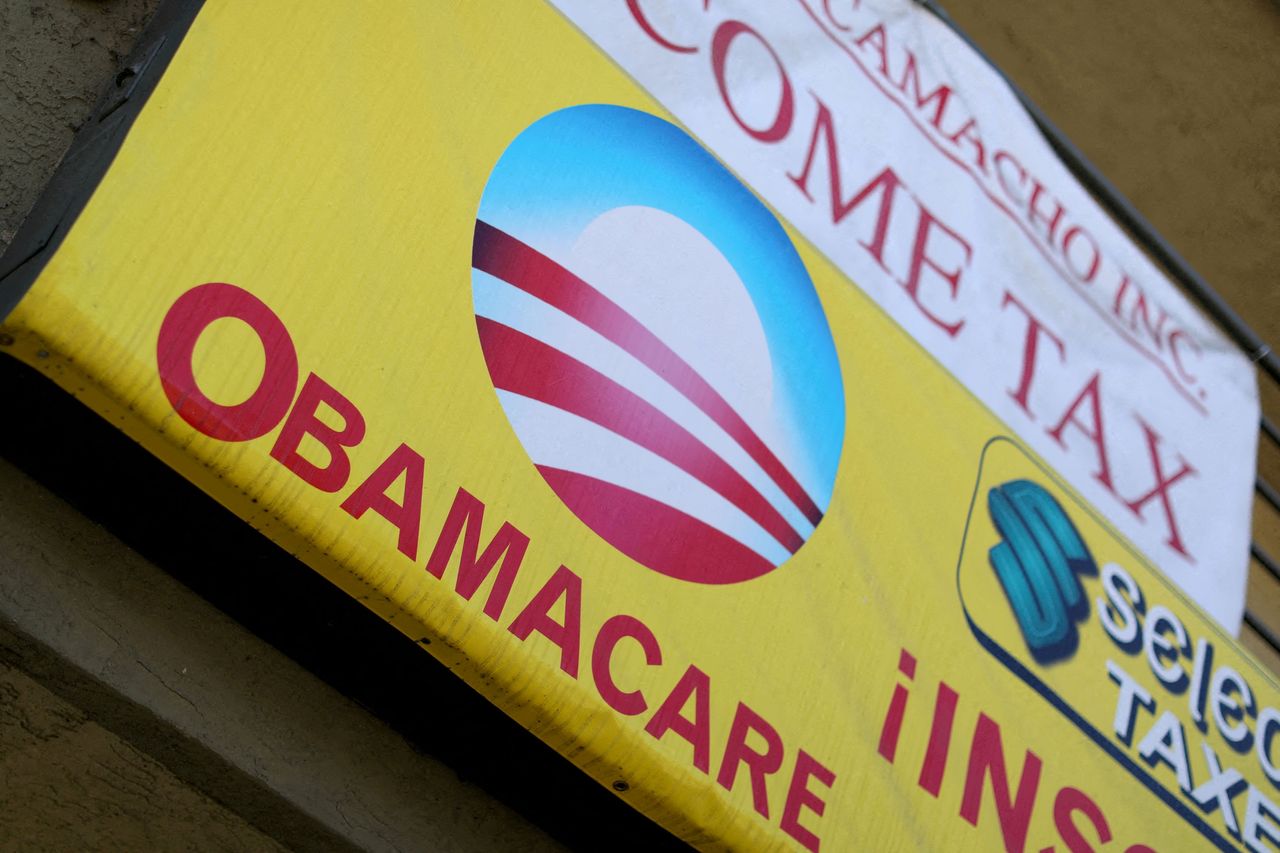 | | An initial report from the Government Accountability Office found evidence of fraud in enrolling Obama (Mike Blake/Reuters) | | | |  | The Lead Brief | Congress has spent much of the past year focused on the future of the enhanced ACA subsidies, but a new report from a government watchdog provides a reminder of another long-running marketplace vulnerability: millions of dollars of fraud. While Republicans on Capitol Hill and conservative groups have described a system rife with fraud — including enrolling people who don’t exist in federally subsidized health plans — preliminary findings from the Government Accountability Office show that the issue is real but doesn’t appear as sweeping as some have suggested. The watchdog, which is continuing to investigate the problem, is blunt that the same structural weaknesses it identified years ago remain unresolved. The report includes details about covert testing — in which GAO made up fake enrollees and successfully got them coverage — a look at the overall levels of fraud or mismanagement. Why it matters: The enhanced premium subsidies went to nearly 20 million Americans in 2024, costing the federal government $124 billion — but small error rates can translate into real dollars, political exposure and operational headaches for the Centers for Medicare & Medicaid Services. Here are some key takeaways from the new report: - Fake people can get coverage: GAO investigators created 20 fictitious people — complete with invalid Social Security numbers — and tried to sign them up on the federal ACA marketplace, HealthCare.gov, for the 2025 plan year. As of September, 18 of them still had active coverage. The federal government paid insurers a combined $10,000 per month in enhanced premium tax credits for these fake enrollees. “While these fictitious enrollees are not generalizable to the universe of enrollees, they can suggest weaknesses in enrollment controls,” GAO wrote, adding the office would release more details in a future report.
- “Overused” Social Security numbers: Some Social Security numbers used to obtain coverage on HealthCare.gov appear to be associated with more than a year of subsidized insurance coverage, which GAO attributes to potential fraud, identity theft or data-entry errors — writing that it is continuing to investigate. For example, one frequently used Social Security number in 2023 racked up more than 71 years of coverage across 125 policies. In the 2024 plan year, GAO found 66,000 Social Security numbers with more than a year of insurance coverage. According to the report, CMS officials said that the federal marketplace doesn’t block new enrollments from people with Social Security numbers already in the system, because the agency doesn’t want to block legitimate people from getting coverage if their identity has been stolen. GAO said it’s reviewing CMS’s backup verification practices.
- Using dead people to get coverage: GAO matched federal death data with information about advanced premium tax credit recipients, finding that a total of 26,000 Social Security numbers attached to people who had died were used to get coverage in 2023. Households associated with those Social Security numbers received a combined $94 million in enhanced premium tax credits. A majority of those Social Security numbers — 19,000 — only match up with the death data, meaning that the enrollees’ names or birthdays are different from those of the deceased. GAO said this could indicate so-called synthetic identity fraud, in which real data is combined with fake information to give it a veneer of authenticity.
- Insurance agents and brokers make unauthorized coverage changes: Insurance agents and brokers work on commission, which GAO said gives them “a financial incentive to maximize enrollments.” At least 30,000 applications in the 2023 plan year and 160,000 applications in the 2024 plan year “likely had unauthorized changes,” according to GAO’s preliminary analysis. “While only one enrollment change may go into effect for a given month, the volume of these actions indicates potential misconduct,” the office writes. “Beyond legitimate enrollments, this may include making unauthorized changes to existing enrollments, enrolling consumers without their knowledge or consent, and creating fictitious enrollments.”
- Suspended brokers return under Trump admin: Last October, CMS said it had suspended 850 agents and brokers from June through October 2024 “for reasonable suspicion of fraudulent or abusive conduct related to unauthorized enrollments or unauthorized plan switches.” But GAO said CMS officials told investigators in May that the suspended people had been reinstated “to better fulfill the agency’s statutory and regulatory procedures,” but it “may take further enforcement actions” for those who make unauthorized changes.
| | | | | | Health on the Hill | Nothing in Washington is ever really over until it’s actually over, but the prognosis on a legislative fix to the expiring enhanced ACA subsidies benefiting more than 20 million Americans appears bleak as a deadline for a promised Senate vote approaches. The Senate Health, Education, Labor and Pensions Committee met on Wednesday, and Chair Bill Cassidy (R-Louisiana), a physician, opened with a reminder about the timeline: “We can push for big ideas, grandiose ideas — on the right or the left — but we gotta have a solution for three weeks from now,” he said. “That means we have to build on what we have.” He again floated his proposal — which hasn’t yet been formally introduced — to put the money that would have been put into enhanced premium subsidies sent to insurers into health savings accounts for people enrolled in high-deductible bronze plans. But much of the hearing veered between Republicans and Democrats on the panel doubling down on the varying policies they had already been pushing — further entrenching views to extend the enhanced subsidies or attempt a new solution, which doesn’t necessarily break along party lines, before the Dec. 15 deadline. Sen. Josh Hawley (R-Missouri), who mentioned the looming premium increases for his constituents, lamented the stalemate. “To the leadership of this body: Maybe it’s time y’all locked yourselves in a room and got to a solution here, because it’s not a solution in a couple of weeks to say, ‘We couldn’t get it done, we couldn’t think of anything, better luck next year,’” he said on Wednesday, adding that millions of Americans will opt to go without coverage without an immediate solution to the increases. “And, let’s be honest, millions of Americans can’t afford [health insurance] now — before we hit the cliff,” he said. ZOOMING OUT The discussion provided a microcosm of the larger discussion on Capitol Hill, marked by optimism from some lawmakers that’s being undermined by the apparent reality of ongoing bipartisan talks. → “Health insurance costs could spike, as bipartisan ACA deal looks less likely” is the headline to the latest comprehensive legislative update from The Post’s Riley Beggin, Theodoric Meyer and Kadia Goba, which is full of quotes directly from lawmakers on both sides of the aisle. “I can’t even get to 13 on the back of an envelope. I can’t even get 13 people to say they’re open to it,” Sen. Brian Schatz (D-Hawaii) said, referring to the 13 Republicans who would need to join with Democrats to reach the Senate’s 60-vote threshold needed to pass legislation. Senate Majority Leader John Thune (R-South Dakota), who promised Democrats a health care vote by next week, told reporters on Tuesday that while some bipartisan solutions have been discussed, “that hasn’t landed yet.” The Associated Press quotes Thune as saying, “I don’t think at this point we have a clear path forward,” immediately clarifying — “I don’t think the Democrats have a clear path forward.” → How close are lawmakers to a bipartisan solution? Sen. Jeanne Shaheen (New Hampshire), a Democrat who has been a part of the bipartisan ACA talks, said: “I think we’re not.” But it’s also not over: Meanwhile, Sen. Chris Murphy (D-Connecticut) said the battle over how to tackle increasing health insurance premiums isn’t over if Congress can’t come to an agreement, Semafor reported. “It’s complicated, but there’s a way to do rebates. It’s not the end of the road,” he said, according to the report. | | | | | | What We’re Reading | “VA staff flag dangerous errors ahead of new health records expansion,” Desmond Butler and Orion Donovan Smith report at The Washington Post. “Why one city is suing Big Food over cereals, snacks and other ultra-processed products,” Allyson Chiu and Rachel Roubein report for The Washington Post. “FDA removes longtime over-the-counter drugs regulator from her position,” Lizzy Lawrence scoops at STAT. “Aging startup backed by Sam Altman chases $5 billion valuation,” Allison DeAngelis writes at STAT. “Cynthia Nevison, climate researcher with anti-vaccine ties, joins CDC,” Sophie Gardner reports at Politico. “Lawmakers Invited to FDA Meeting for Patrick Soon-Shiong’s Drug,” report Charles Gorrivan, Rachel Cohrs Zhang, and Gerry Smith at Bloomberg. “Sun Pharma invests in new manufacturing facility in India amid FDA problems,” Greg Slabodkin writes at the trade publication Pharma Manufacturing. “Trump Wants Americans To Make More Babies. Critics Say His Policies Won’t Help Raise Them,” Stephanie Armour and Amanda Seitz report at KFF Health News. “Rollins threatens to halt funding to states withholding SNAP data,” Politico’s Marcia Brown reports. “Supreme Court flicks at First Amendment concerns with state’s subpoena of faith-based pregnancy centers,” John Fritze reports at CNN. | | | | | | | | | | |


_tstmp_1756933376-1920-1080.png)