|
Dear all,
Please find below your weekly update from the UK Health Security Agency (UKHSA).
If you have any questions please get in touch by emailing externalaffairs@ukhsa.gov.uk
As always, you can also follow UKHSA on X, on BlueSky, and on LinkedIn for all the latest updates.
Best wishes,
UKHSA External Affairs Team
New and updated stories
- New: Winter illness communications toolkit
- HIV Action Plan 2025 - 2030
- UKHSA weekly winter surveillance
- Norovirus surveillance data
- UKHSA Keep Antibiotics Working campaign
- Reducing inequalities in Sexual Health’ (RiiSH) 2025 survey
Ongoing issues
- Winter vaccines campaign - translations now available
- Avian influenza - updated guidance and new blog
- UKHSA & RCGP TARGET antibiotic webinars
- Flu vaccine providing important protection despite new subclade
- UKHSA Conference 2026 – save the date!
UKHSA communications toolkits
- Information on how to access the range of communication toolkits we produce for stakeholders
UKHSA data, analytics and surveillance:
- Statistics at UKHSA
- UKHSA data dashboard
- Notification of Infectious Diseases report
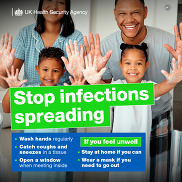
We have published our winter illness stakeholder communications toolkit 2025-26. This is currently being hosted on our Google Drive.
This toolkit compiles resources to help stakeholders communicate behaviours that help minimise the spread of infection this winter including key messages, social media assets and blogs which can be shared on your own channels. This toolkit will be updated with any further resources throughout the winter season, as we support the response to our winter surveillance.
We also have a new blog on how to avoid catching flu, COVID-19 and other respiratory illnesses this winter.
If you have any questions about this toolkit, or any difficulties accessing it, please email externalaffairs@ukhsa.gov.uk.
|
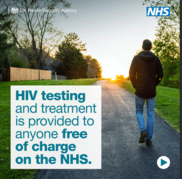
The new HIV Action Plan for England to tackle stigma and end transmissions in England by 2030 was unveiled by Health and Social Care Secretary Wes Streeting on Monday (1 December), backed by £170 million.
At the heart of the plan is a first-of-its-kind national programme that will find and support people who are not accessing lifesaving HIV treatment and bring them back into care. Around 5,000 people are no longer in care, with reasons including mental health issues, addiction, poverty or fear of judgement. This targeted support is particularly crucial for groups who are more likely to face problems including racism, stigma, poverty and housing issues that can make their lives more difficult.
To help promote awareness of HIV, we have social media assets promoting HIV testing available for download which you may find useful to use on your own channels.
|
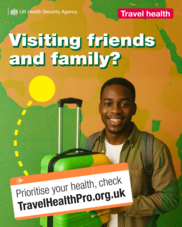
As we enter the festive period, more people will travel abroad to spend Christmas with friends or family or may simply be going away to get some winter sun. Every year, hundreds of thousands of people also travel to West Africa for Detty December, including tens of thousands from the UK's large West African community.
We are therefore encouraging stakeholders to share messaging from our travel health communications toolkit, to help reduce the impact of preventable travel-related illnesses by increasing awareness of pre-travel health advice and uptake of preventative measures. If you have trouble accessing the toolkit, please email us at externalaffairs@ukhsa.gov.uk.
The African Diaspora Malaria Initiative have also recently launched their Africans Against Malaria campaign. They are seeking to reach members of the African community travelling between the UK and African countries with high rates of malaria, reminding them of prevention measures including antimalarials. We are encouraging stakeholders who work with these communities to promote their campaign messaging.
The Travel Health Pro website, supported by UKHSA, also provides comprehensive information on health risks worldwide and is an excellent resource for trip planning.
|
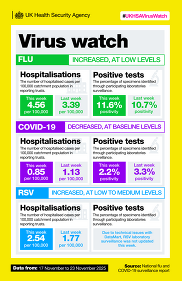
We are now publishing our COVID-19, flu and RSV surveillance bulletin every Thursday afternoon. This brings together the latest surveillance data, along with the latest public health advice for COVID-19, flu, respiratory syncytial virus (RSV) and other respiratory infections. This helps inform winter preparedness and response.
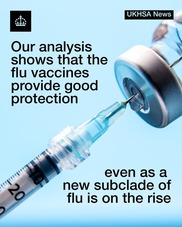
UKHSA is urging all eligible groups to make sure they are up to date with their vaccinations in the run up to Christmas, as levels of respiratory viruses including flu and RSV continue to increase.
In the week between 17 and 23 November 2025:
- influenza activity increased and is circulating at low levels
- COVID-19 activity decreased across most indicators and is at baseline levels
- respiratory syncytial virus (RSV) activity increased and is circulating at low-meduim levels
We continue to urge those eligible for vaccines this winter to get vaccinated. Vaccination remains our best defence against severe illness and hospitalisation
|
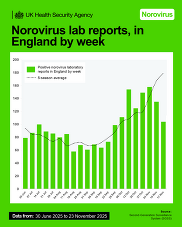
Norovirus surveillance data
The ‘Reducing inequalities in Sexual Health’ (RiiSH) 2025 survey is open. It examines the sexual health and wellbeing of men and gender-diverse people having sex with men and is open for participation through mid-December 2025.
Findings from RiiSH surveys have been used to inform sexual service access and the use of STI/HIV preventative interventions such as mpox vaccination. This short video describes how we have used information from the RiiSH surveys to support the public health response to STIs.
Those eligible to participate in RiiSH include men (cisgender or transgender), transgender women, non-binary or gender-diverse people registered male at birth reporting the following:
- Having had sex with men and/or other people registered male at birth
- Aged 16 or older
- Living in the UK
We kindly ask for your support in passing the link to the survey to any relevant community networks.
|
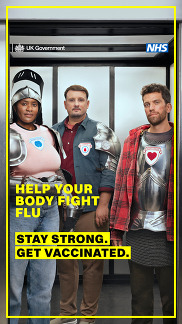
DHSC, UKHSA & NHS England's campaign continues to encourage people who are most vulnerable to stay strong and get vaccinated against flu.
The campaign targets people with conditions including heart, kidney and lung disease, diabetes, chronic respiratory disease, neurological conditions and immunosuppression.
The campaigns assets can be downloaded from the Campaign Resource Centre. The campaign uses the analogy of suits of armour protecting those vaccinated from the effects of flu. Each condition is displayed as a coat of arms to reinforce recognition.
These have been incorporated into our Winter Health Stakeholder Communications Toolkit 2025/26. This has been developed jointly by UKHSA and NHS England, designed to help with your communications around seasonal vaccines. The toolkit has recently been updated to include translations of maternity and long-term health conditions assets into 10 languages: Arabic, Bengali, Gujarati, Somali, Portuguese, simplified Chinese, Polish, Romanian, Punjabi, Urdu.
The toolkit is available to download from the Campaign Resource Centre. You can also download from GoogleDrive.
Please let us know if you cannot access and we can email over the Word or PDF version.
|
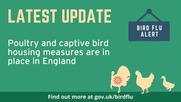
Last month UKHSA published updated guidance to the public on reducing the risk of catching avian influenza. This is an update to existing guidance on GOV.UK that was first published last year.
We have also published an updated version of our blog 'what is bird flu and how are we protecting people against it in the UK?'. This provides information about the symptoms of bird flu in humans, how we are protecting people against it, surveillance across the UK, and what people should do if they find a sick or dead bird.
The current risk to human health from avian influenza remains very low. Properly cooked poultry and poultry products, including eggs, are safe to eat. UKHSA remain vigilant for any evidence of changing levels of risk to humans.
There are a range of resources for stakeholders from the Department for Environment, Food & Rural Affairs & the Animal Plant Health Agency on avian influenza:
|
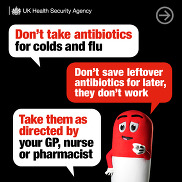
Join the UKHSA TARGET Antibiotics toolkit team and the Royal College of General Practitioners (RCGP) for two practical webinars designed to support clinicians practising in primary care settings in optimising antibiotic prescribing:
21 January 2026 – From guidance to practice: managing paediatric RTIs through clinical scenarios
Respiratory tract infections are the leading reason for consultations in children under five, yet most do not require antibiotics. This session will cover NICE guidance, clinical scenarios, and practical tips for managing parent expectations.
17 March 2026 – Clinical decision-making for skin infections: from Group A Strep to insect bites
Skin infections account for 7% of antibiotic prescriptions in primary care. Learn best practice for managing cellulitis, safety netting advice, and action planning for your practice.
Both webinars are free and online. Register now and cascade to your colleagues and networks.
|