| | Officials from Ukraine and the US meet for peace talks, Black Friday spending holds up, and India re͏ ͏ ͏ ͏ ͏ ͏ |
| |  Rostov-on-Don Rostov-on-Don | Hong Kong |  Ashgabat Ashgabat |
 | Flagship |  |
| |
|
The World Today | 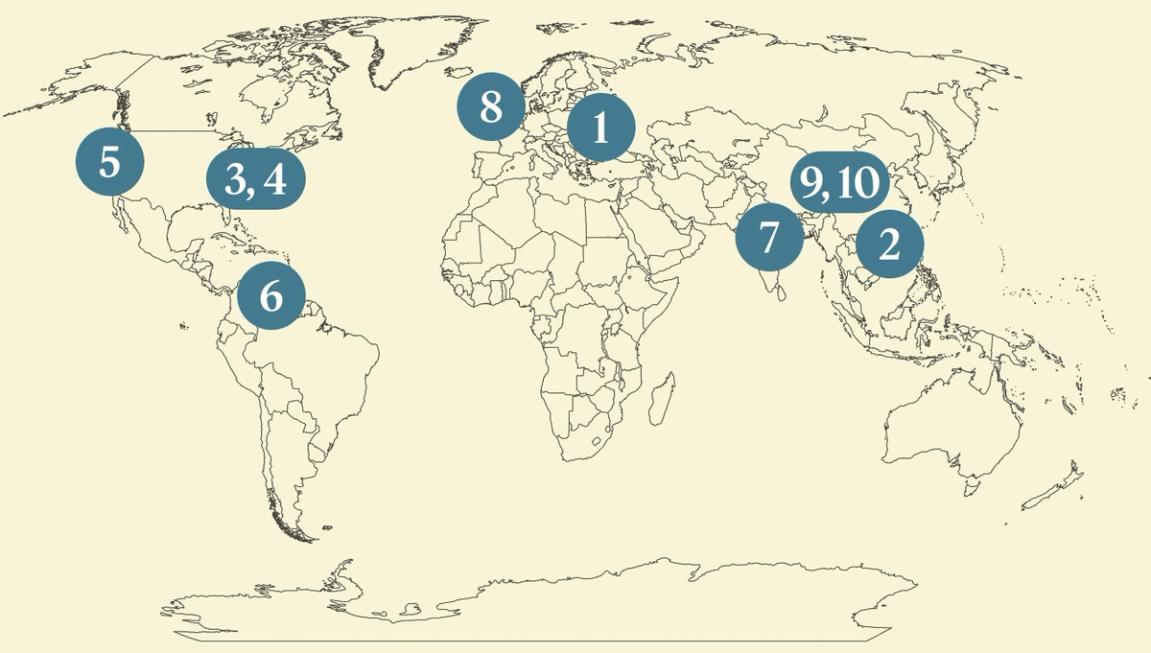 - Ukraine peace talks in US
- HK monitors anger over fire
- DC shooting motive probed
- Black Friday spending strong
- ChatGPT turns 3
- Business of a drug war
- India’s economic shock
- Politicization of autism
- China’s authoritarian balance
- Smartwatches for kids
 A new art exhibition embraces the sense of touch. |
|
Critical week for Ukraine peace talks |
 Eva Marie Uzcategui/Reuters Eva Marie Uzcategui/ReutersUS diplomats met with Ukrainian officials in Florida on Sunday to advance peace talks, kicking off a big week for negotiations aimed at ending the nearly four-year war. Kyiv and its European allies have pushed for changes to a US-brokered peace proposal that favored Russia, and Sunday marked their last chance to lobby Washington before US special envoy Steve Witkoff travels to Moscow for talks on Monday. But Russia may stick to its maximalist demands over territory and the downsizing of Ukraine’s military; Kyiv “remains concerned the US only has ears for Vladimir Putin,” Politico wrote. The flurry of diplomacy comes just after Ukrainian President Volodymyr Zelenskyy dismissed his chief of staff — and top negotiator — on Friday following a corruption scandal. |
|
HK looks to control anger over fire |
 Maxim Shemetov/Reuters Maxim Shemetov/ReutersThe death toll in last week’s massive apartment building fire in Hong Kong rose to 146 on Sunday, as mourners paid respect to the victims and authorities sought to quell public anger. The fire, the city’s deadliest since 1948, spurred calls for investigations and accountability, but officials are sensitive to potential unrest after protests in 2019 led to a wide crackdown on dissent. Police reportedly arrested a man who started a petition calling for answers over possible “regulatory failures” and accused him of sedition. Beijing warned “anti-China disruptors” against violating a national security law the Chinese government imposed on Hong Kong in 2020. Officials are especially fearful of the tragedy ballooning into a large corruption scandal, experts said. |
|
Authorities probe DC shooting motive |
 Annabelle Gordon/Reuters Annabelle Gordon/ReutersAuthorities worked to piece together why an Afghan man who once worked with the US government allegedly shot two National Guard members, one fatally. The Homeland Security secretary said Sunday the suspect was likely “radicalized” in the US. Rahmanullah Lakanwal, 29, previously served in an elite counterterrorism unit operated by the CIA during the war in Afghanistan; he arrived in the US in 2021 and was granted asylum this spring. The Trump administration escalated its immigration crackdown after Wednesday’s shooting in Washington. Officials halted immigration cases for Afghans and all pending asylum cases, and vowed to reexamine swaths of green cards. But collective punishment of Afghan refugees “won’t make America safer,” The Wall Street Journal editorial board argued. |
|
Black Friday spending K-shaped |
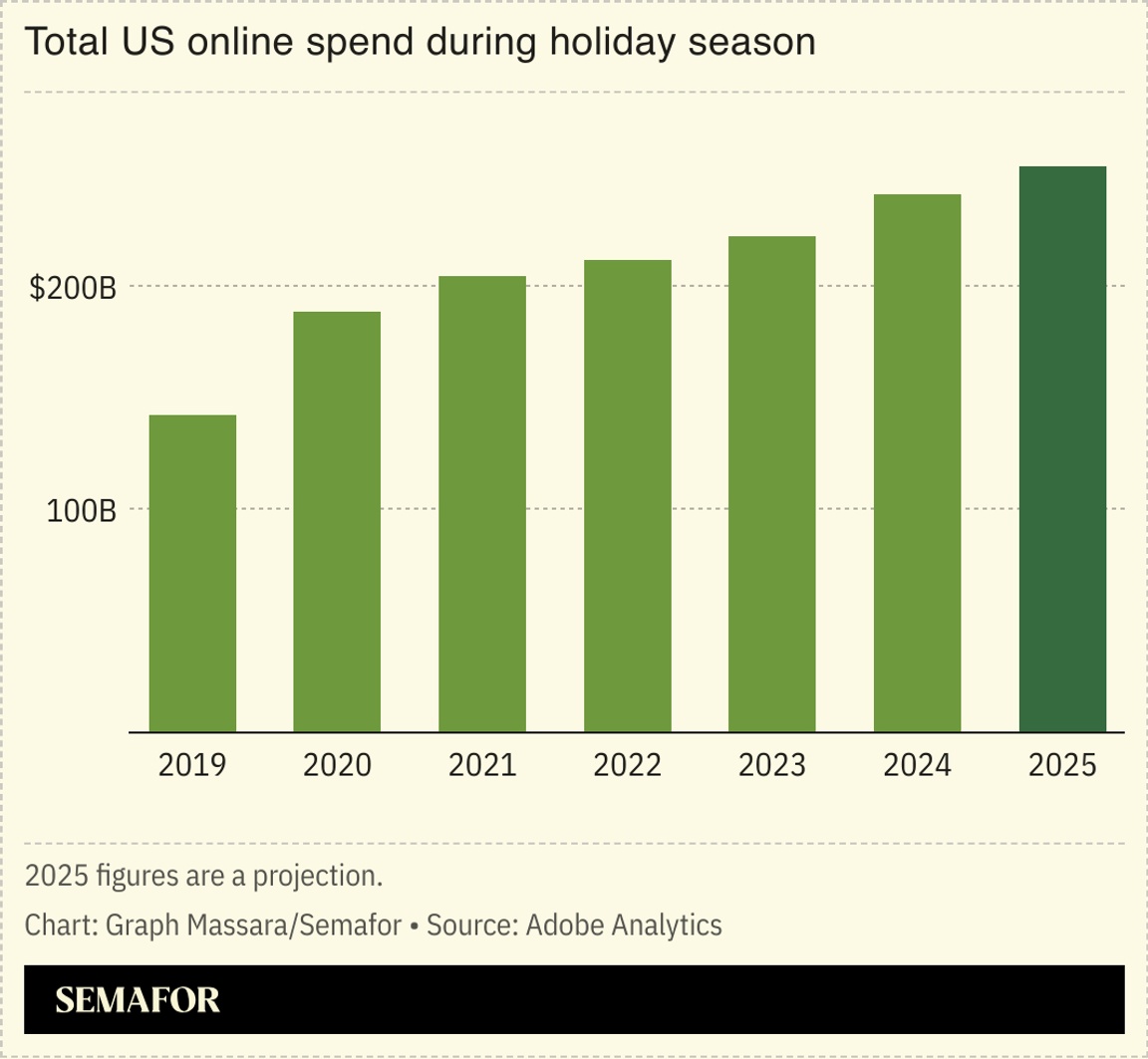 Black Friday spending reflected the forces shaping the US economy. Retail sales on the country’s busiest shopping day of the year climbed 4.1% compared to 2024, according to Mastercard, mirroring analysts’ assessments that US consumers remain resilient despite tariffs and a cooling job market. But the spending figures don’t account for sticky inflation, so actual gains may be marginal. Black Friday was also “K-shaped,” with wealthier Americans spending more and low- and middle-income consumers pulling back: The US Federal Reserve’s latest Beige Book of economic anecdotes showed this trend deepening. AI, which has boosted markets, is also propelling holiday shopping, as AI-driven traffic to US retail sites soared 805% on Friday compared to last year, Adobe Analytics said. |
|
 Dado Ruvic/Reuters Dado Ruvic/ReutersThe AI boom turned 3 on Sunday. ChatGPT was rolled out as a “low-key research preview” on Nov. 30, 2022, and despite the technology’s relative infancy, it has already transformed the world economy, geopolitics, education, and the internet, becoming a defining force of our time. ChatGPT’s creator, OpenAI, is now a household name but is under intense pressure as rivals catch up technologically and investors question the industry’s mammoth data center spending. Some, though, argue ChatGPT has a lasting edge by remaining the public’s favorite bot. AI has built “a world that is perpetually waiting for a shoe to drop,” The Atlantic’s Charlie Warzel argued, creating a neverending state of anxiety among boosters and doomers alike. |
|
Defense tech rebrands for US anti-drug focus |
 A V-BAT drone from Shield AI. Benoit Tessier/Reuters A V-BAT drone from Shield AI. Benoit Tessier/ReutersDefense tech companies are rushing to cash in as the US military focuses on stemming the flow of drugs from Latin America. Established firms and AI startups are rebranding weapons and technology initially designed for the battlefield in Ukraine or a future conflict in the Pacific as tools for the fight against “narco-terror,” The Wall Street Journal reported. The industry’s pivot follows months of US pressure on Venezuela; the military has struck alleged drug boats and bolstered its military presence in the region. US President Donald Trump on Saturday said Venezuela’s airspace should be considered “closed.” |
|
India’s economy surges ahead |
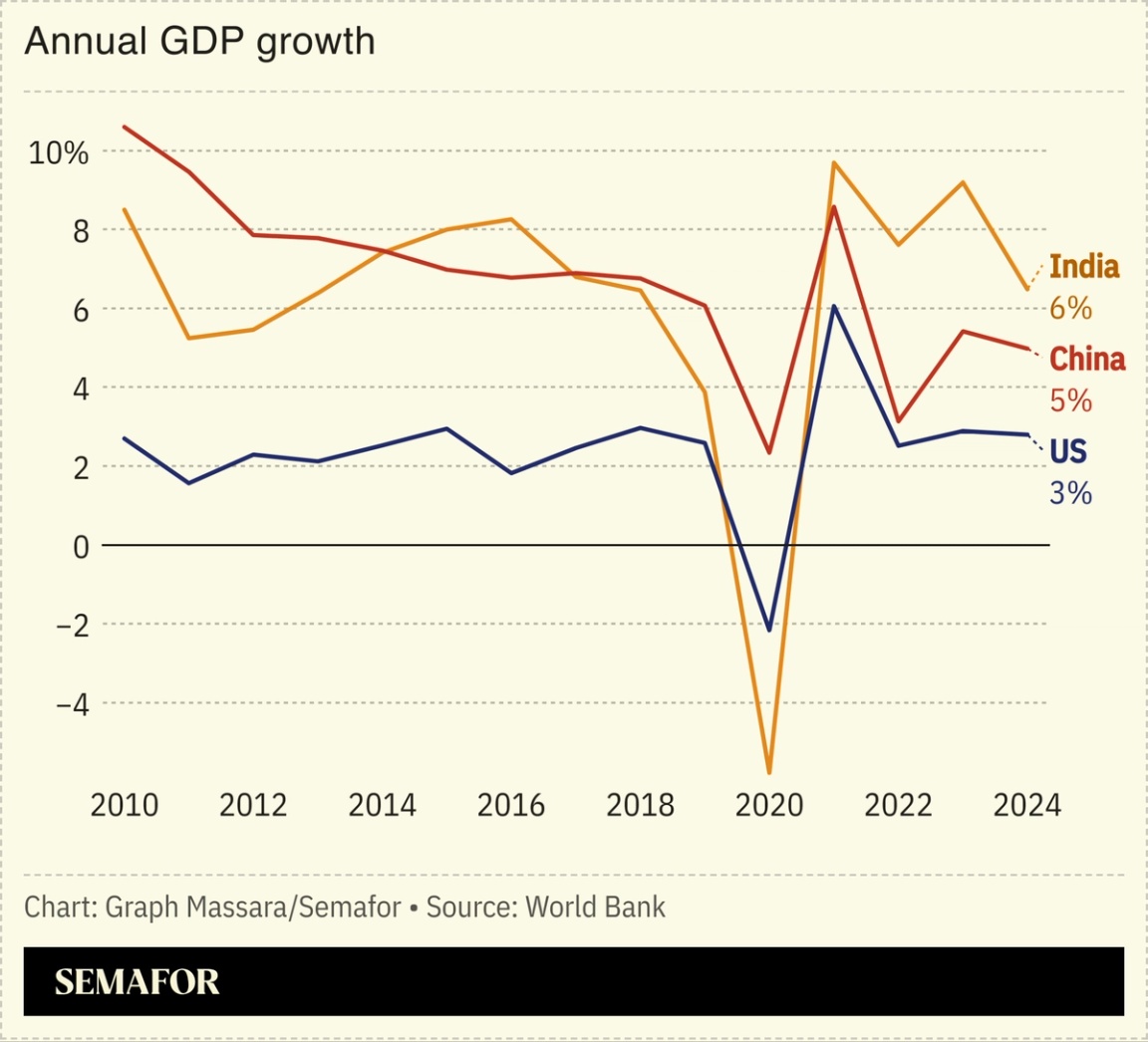 India’s economy grew at a faster-than-expected pace in the third quarter despite global economic turbulence. The 8.2% year-on-year growth, in the face of Washington’s 50% tariffs on Indian imports, means India can retain its spot as the fastest-growing major economy in the world. India is “one of the few reliable bright spots for economic growth,” Bloomberg wrote. New Delhi has implemented consumer-friendly stimulus measures and is accelerating economic reforms. But the International Monetary Fund has some reservations: It gave the country’s official statistics, which include GDP, a grade of C, the second-lowest, saying that the data the Indian government provided to the fund has “some shortcomings that somewhat hamper surveillance.” |
|
 Follow Vietnam’s “era of national rise.” This year saw Vietnam’s most ambitious economic reforms since the 1980s, with leaders laying the groundwork for double-digit annual GDP growth moving forward. Track the country’s increasingly critical global role through the Vietnam Weekly, written by Ho Chi Minh City-based reporter Mike Tatarski. Subscribe here. |
|
Autism becomes politicized in US |
 US health secretary Robert F. Kennedy Jr. US health secretary Robert F. Kennedy Jr.Changing the diagnostic criteria of autism has politicized the condition, a leading researcher argued. Simon Baron-Cohen wrote in the Financial Times that originally autism referred to intellectual disability; in 1994, a separate diagnosis, Asperger’s syndrome, was introduced for people with similar symptoms but without the same learning or language difficulties. But in 2013, these two conditions were combined into autism spectrum disorder, meaning highly verbal people now share a label with those who are severely disabled. As a result, diagnoses in the West have skyrocketed. Conspiracy theorists have blamed that rise on vaccines, even though the increase is almost entirely in the former Asperger’s group, Baron-Cohen wrote. He proposed introducing more neutral terms: Autism type 1 (with learning disability) and type 2 (without). |
|
The logic behind China’s rise |
 Maxim Shemetov/Reuters Maxim Shemetov/ReutersChina’s advances in technology hinge on a fragile balance between central authority and entrepreneurial freedom, a China scholar argued. The Chinese Communist Party practices “smart authoritarianism,” a logic that amounts to “allowing freedoms when you can and imposing controls when you must,” Dartmouth College’s Jennifer Lind writes in a new book. While some say Beijing’s tight control over its private sector stifles not just free expression but innovation and growth, Lind said that assessment is overstated: She pointed to China’s crackdown on the tech industry starting in 2020 — which the country has since reversed with little impact on its technological competitiveness — as an example of the “smart authoritarian” balance that helps explain how Beijing got to where it is today. |
|
Chinese youth compete on watches |
|
|


