| | In this edition: Dangote pursues inverters across Africa, uncertainty over Jacob Zuma’s health, and ͏ ͏ ͏ ͏ ͏ ͏ |
| |  Cairo Cairo | Ouagadougou | Pretoria |
| |
|
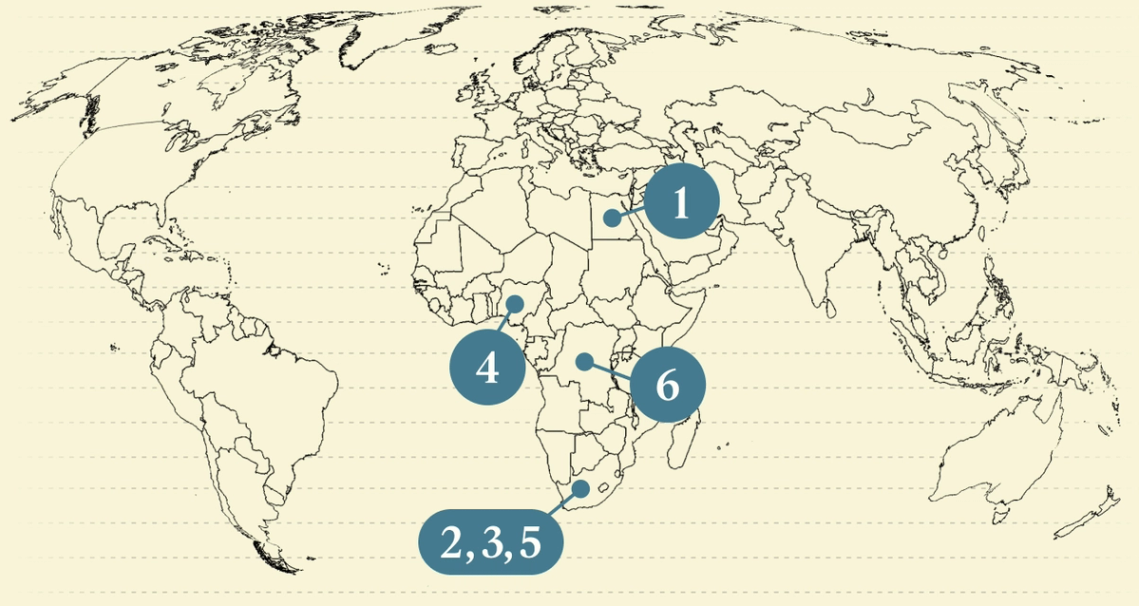 - Dangote courts investors
- Zuma’s health uncertainty
- Black business funding gap
- $200M SME fund
- Tighter rules on GLP-1 drugs
- Deforestation in Congo Basin
 Weekend Reads, and a group of deaf dancers make waves in Burkina Faso. |
|
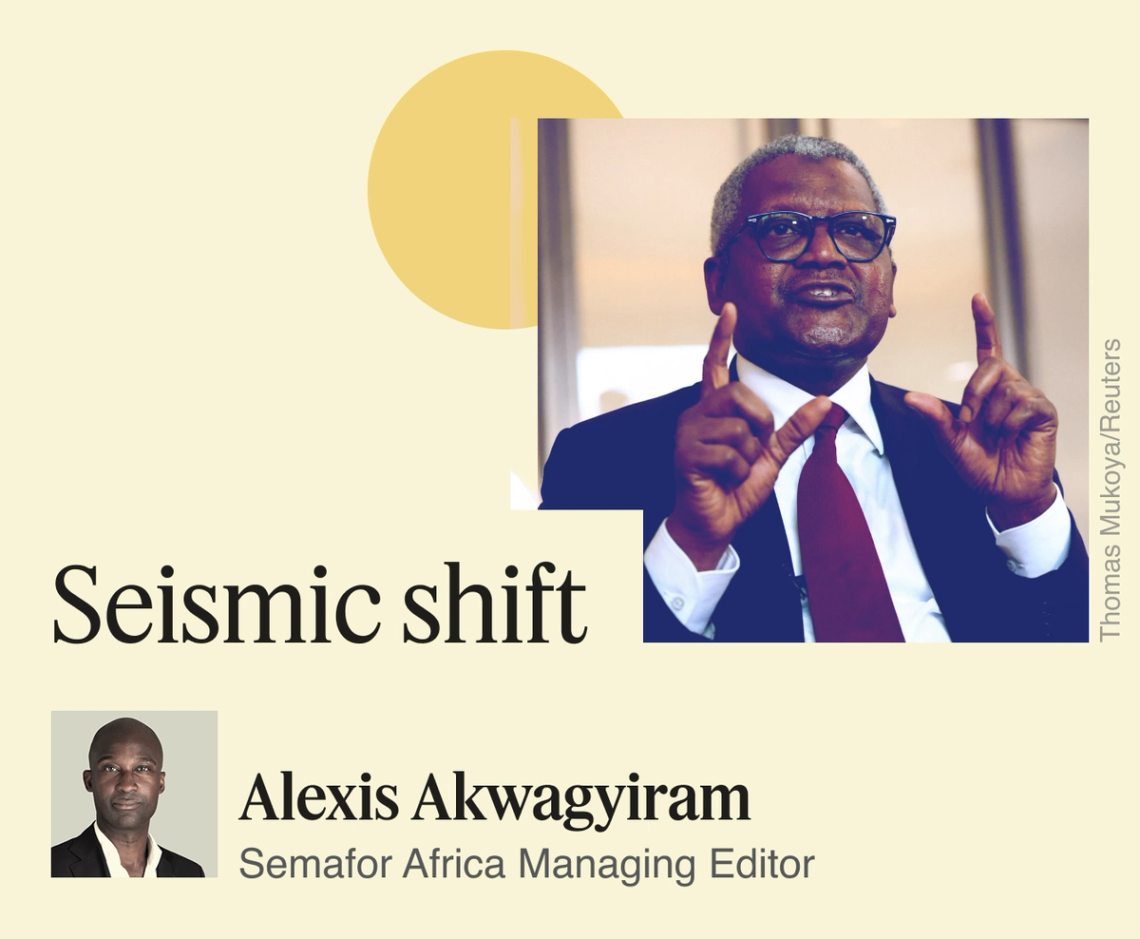 The Iran war is shaping up to be the catalyst of a seismic shift in Africa’s energy sector. And, in the case of the continent’s richest man Aliko Dangote, the conflict has proven the old adage that luck is what happens when preparation meets opportunity. Dangote’s mega-refinery on the outskirts of Lagos State has revealed the scale of a West African market underserved by locally refined fuel, while upending conventional thinking by showing African refineries can supply markets in Europe and Asia. At the same time, disruption in the Strait of Hormuz has exposed the vulnerability of nations that are heavily dependent on fuel imports: South Africa and Kenya have hiked prices, which runs the risk of driving inflation. Meanwhile, President Bola Tinubu’s removal of Nigeria’s subsidy three years ago has allowed prices to skyrocket, turning the cost of fuel into a key campaign issue ahead of January’s election. Policymakers have been quick to react to the altered energy dynamics. South Africa announced plans to increase its strategic oil reserves for the first time since the end of apartheid to mitigate supply shocks, Angola wants to implement faster exploration concessions while urging southern African governments to help finance a new refinery, and plans to build refineries in Uganda and Tanzania have gathered pace. Fola Fagbule, who heads the Kenya regional office of multilateral lender Africa Finance Corporation, which helped to finance Dangote’s Lagos refinery, called the impact of the Nigerian billionaire’s project a “Big Bang” moment. He told me various projects are being developed across the continent “as a result of the new realities in the energy market.” The shift has potential pitfalls. Daniel Evans, global head of fuels and refining research at S&P Global Energy, acknowledged the increased appetite for downstream investment across Africa, but warned difficulties remain around projects that require high levels of capital expenditure. But a new generation of refineries has the potential to transform economies, not only protecting countries from future energy shocks but providing the baseload power needed to ramp up manufacturing. As Fagbule put it, the legacy of this paradigm shift could be how it triggered “massive, large-scale industrialization in Africa that nobody expected.” |
|
Dangote pursues pan-African investment |
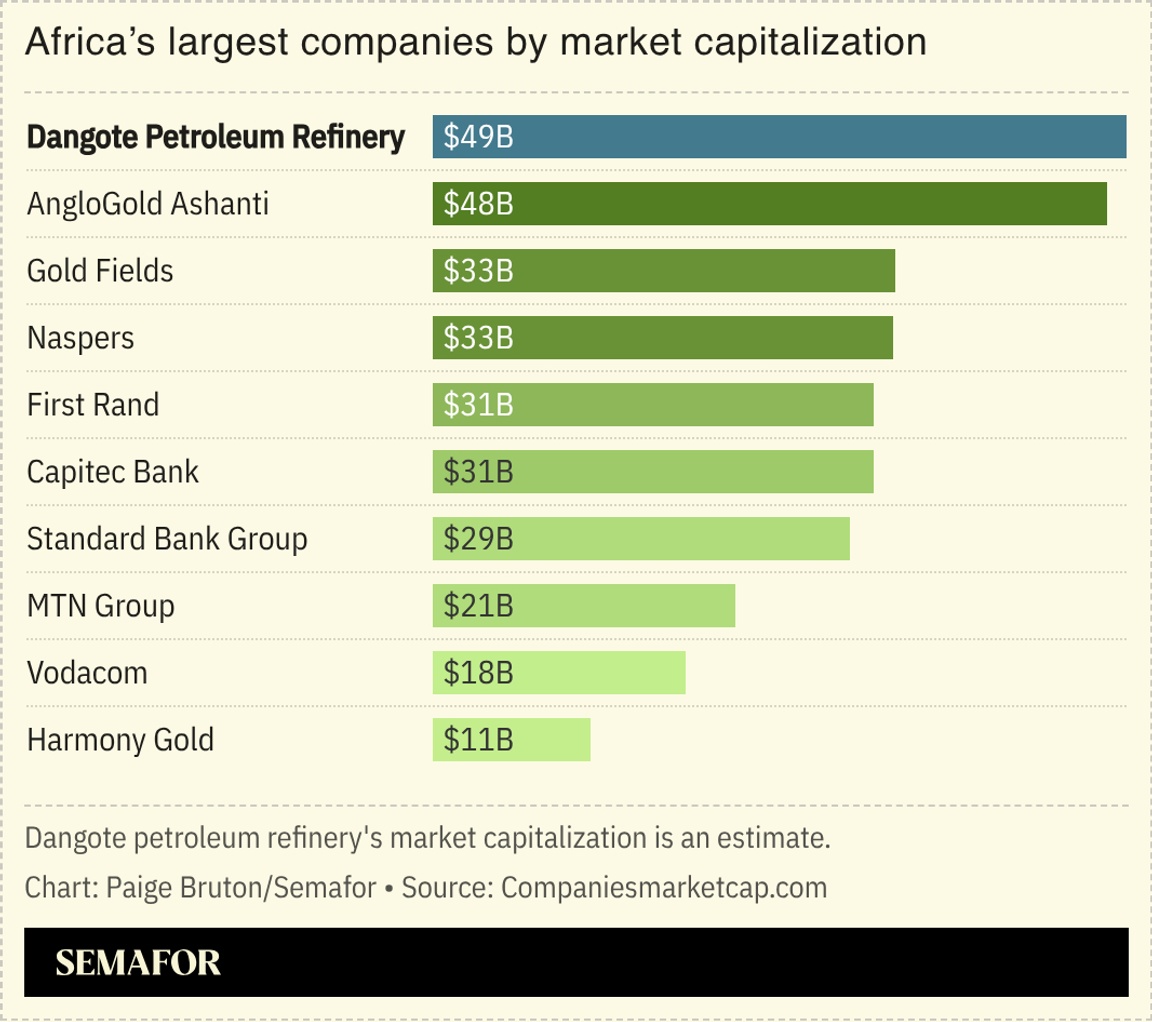 Africa’s largest initial public offering is set to take a more pan-African shape with the Dangote Refinery’s push to extend the sale of its shares to Egypt. The sale will involve the use of depositary receipts, the same instruments that will be used to offer ownership in the continent’s largest refinery to prospective shareholders in Botswana and Kenya. The IPO aims to raise $1.6 billion through the sale that started mid-September in Nigeria. The company has imposed a hard cap of $2.1 billion, but has “received subscriptions amounting to more than three or four times” the target, billionaire owner Aliko Dangote said this week. A two-week extension on the subscription period to Oct. 27 is designed to accommodate efforts to add more African bourses to the process, he said. Dangote set a minimum entry price of 40 cents per share to attract potential retail investors. Policymakers around Africa see in the IPO a sign that capital markets can be deepened by broad-based participation, but the process of creating sale instruments in individual stock exchanges has highlighted a need to simplify regulations to allow more cross-border investment on the continent. — Alexander Onukwue |
|
Zuma’s illness upsets S.Africa opposition |
| |  | Tiisetso Motsoeneng |
| |
 Jacob Zuma. Rogan Ward/Reuters. Jacob Zuma. Rogan Ward/Reuters.Concerns over the health of former South African President Jacob Zuma have raised questions about the future of uMkhonto weSizwe (MK), the populist party built around him that has redrawn the country’s political landscape. Conflicting statements have been issued about the 84-year-old since he was hospitalized two weeks ago. In a sign of the impact on the party, MK canceled its biggest rally planned ahead of municipal elections in less than three weeks. The uncertainty has become a political issue because of Zuma’s central role in the party he publicly launched nearly three years ago, after switching from the African National Congress (ANC). MK’s hard-left policies took a big chunk of the ANC’s vote share in the following general election, leading to the ANC losing its parliamentary majority for the first time since the end of apartheid and being forced to form a coalition government. Zuma’s absence from public campaigning has heightened questions about whether the movement can maintain its momentum without him. The ANC, which is widely predicted to be on course to lose further control of several cities in November’s elections, are the biggest beneficiaries of his absence from the public stage. |
|
S. Africa’s Black firms face funding gap |
 Siphiwe Sibeko/Reuters Siphiwe Sibeko/ReutersSouth African Black-owned businesses face a funding shortfall of $45 billion, a new report shows, citing “explicit investor bias” alongside barriers such as limited collateral and governance concerns. The findings come three decades after the democratic government introduced a raft of measures — known as Black Economic Empowerment (BEE) — aimed at reversing the dispossession suffered by Black people under apartheid and colonialism. Despite the efforts to redress the problem, South Africa remains one of the world’s most unequal societies. The study, published by British International Investment and Sweden’s Swedfund, both state-owned development finance entities, lands as Washington steps up pressure on Pretoria to dismantle BEE. US Ambassador Leo Brent Bozell III has put scrapping the policy on a list of demands tied to improving the investment climate. Pretoria has refused, despite disagreements within the coalition government. Instead the policy conversation has moved to creating a $60 billion fund to help scale up small Black-owned businesses. — Tiisetso Motsoeneng |
|
Nigerian firm launches $200M SME fund |
 Nigerian investment firm Cascador and lender Sterling Bank launched a $200 million fund for small and medium enterprises, in a bid to close a credit access gap that constrains the growth potential of a vital pillar of African commerce. More than 90% of African businesses are categorized as SMEs, accounting for more than half of GDP in most countries and the majority of employment. But a $331 billion SME financing gap means that, despite being the backbone of the continent’s economies, many African entrepreneurs lack capital to invest in production and generate growth revenue. Cascador recently published a paper that found only 22% of sub-Saharan Africa businesses hold a bank loan or line of credit, compared with 36% globally. The firm’s new facility with Sterling Bank will offer loans of up to $1 million per business in an attempt to help the enterprises secure larger and longer-tenor capital. — Alexander Onukwue |
|
S. Africa tightens rules on weight-loss drugs |
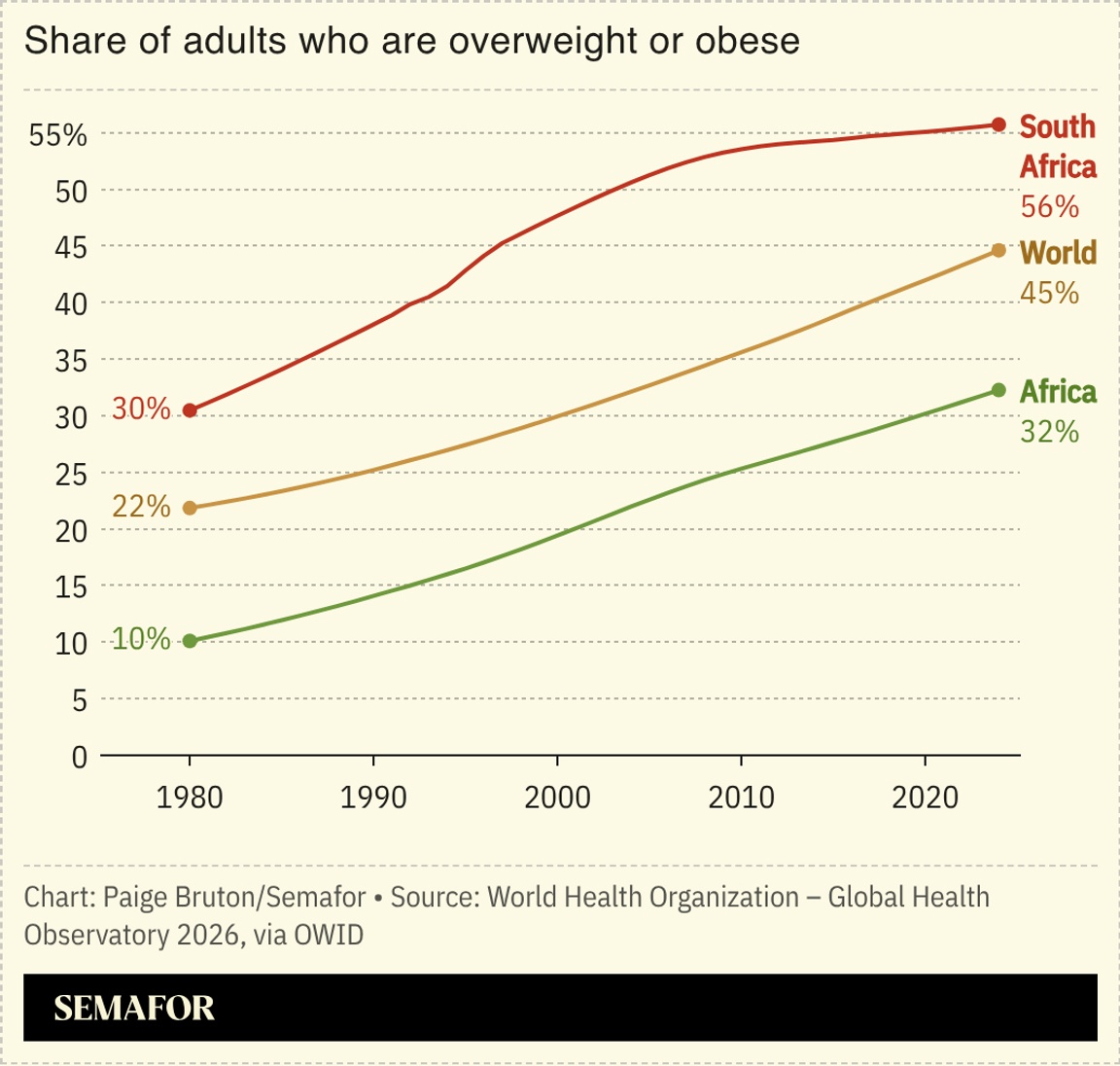 South Africa is planning to tighten the rules around pharmacies making their own compound versions of medicines, including the popular weight-loss and diabetes treatments Ozempic and Mounjaro, Reuters reports. The move is likely to be welcomed by pharmaceutical giants such as Novo Nordisk and Eli Lilly as they seek to curb the pharmacy-made products competing with their blockbuster GLP-1 drugs. South African Pharmacy Council CEO Vincent Tlala said his organization was working with the industry regulator to update standards governing the compounding of medicines because they are worried that some pharmacies have become, in effect, “small-scale manufacturers,” producing large quantities of treatments in advance, rather than for specific patients. The discussion on new guidelines, expected to be published around March next year, follows June’s court victory for Novo Nordisk against local compounding pharmacies making unauthorized copies. With the highest adult obesity rate in Africa, at 30%, the drugs are in high demand in South Africa, but the cost of the trademarked version puts them out of reach for most people. |
|
Congo Basin tree loss nears Amazon levels |
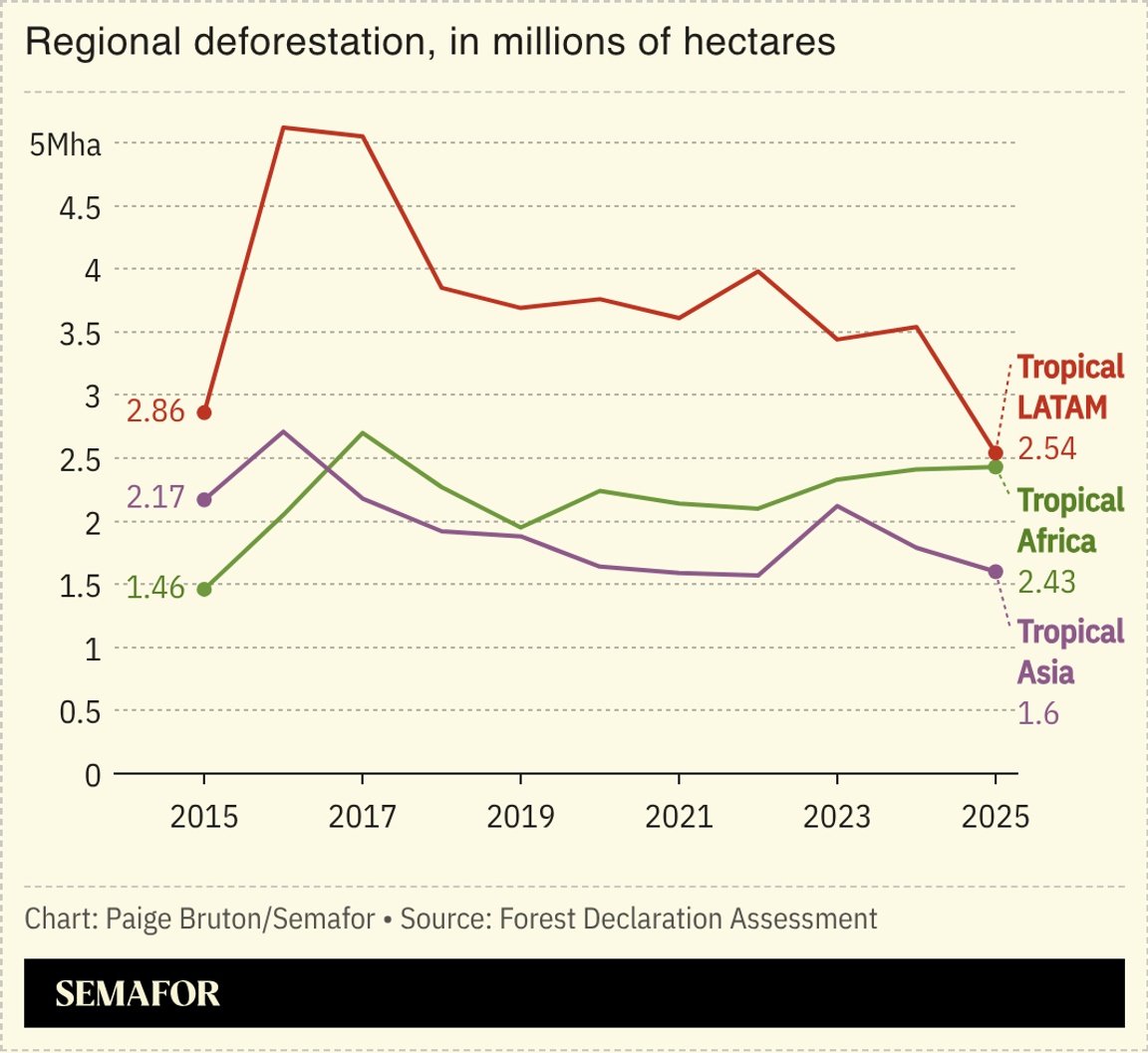 Forest clearing in the Congo Basin nearly matched losses in the Amazon for the first time in a decade of monitoring, even as deforestation slowed worldwide, a new study found. The destruction releases vast stores of carbon, adding to climate change that is already contributing to drought and forest fires across the tropics. Expanding farming, timber, and mining activities are driving the clearances in the basin, which is home to the world’s second-largest tropical rainforest, the Forest Declaration Assessment group said. In DR Congo, where most of the forest is situated, decades of conflict — along with poor oversight — have fueled uncontrolled logging, driving up the rate of tree loss in central Africa this decade. Meanwhile, there has been a steep decline in deforestation in Latin America and the Caribbean, leaving the two regions almost on a par. |
|
 - As Burkinabé junta leader Ibrahim Traoré has become a polarizing figure in African politics, Chris O. Ogunmodede argues that Western coverage fails to properly understand his appeal due to its fixation on disinformation and inauthenticity, without noting Burkina Faso’s history of activism and military intervention. Ogunmodede says these dynamics help to explain Traoré’s strong public relations but do not make up for poor governance — noting the country’s worsening security record and crackdowns on dissent. He concludes that democratic states must achieve service delivery, rather than just broken promises under the vague procedure of democracy.
- Eritrea’s rigid system of militarized schooling and indefinite national service is drawing renewed scrutiny as the country gains geopolitical weight, reports Reuters in a dispatch from Asmara. Reporter Giulia Paravicini and photographer Monicah Mwangi follow Education Minister Halima Mohammed, who was raised at a guerrilla boarding school, along with teenagers facing military camp and others who fled. As the Red Sea’s global salience rises, Eritrea’s officials signal openness while tensions with Ethiopia deepen and fighting renews in Tigray.
- Private security has become a huge business in South Africa, which has some of the highest crime rates in the world: 3 million people out of the country’s 63 million-strong population work in the sector. A new documentary published by The New Yorker offers a window into the lives of those employed to protect the country’s wealthiest. Violence is often met with harsher violence from guards, the documentary shows, suggesting that private security and crime are different sides of the same troubling coin: inequality.
- Why shouldn’t African cities look like Paris or New York? Togolese architect Rodolphe Tchakpala spoke with Ecofin Agency to explain why the continent shouldn’t be using foreign models when designing its own urban spaces.
|
|
|


