
|
 |
Thanks for signing up to be a free subscriber! This post in public so it’s free to access by all. If you want to, please heart-react this post, which improves its visibility to the platform, so this newsletter can continue to thrive and grow.
Why Are Women So Much Better at Making Fun of Men?
On misogyny masquerading as comedy, the female talent for spotting male absurdity, and why some men think calling women whores is a punchline.
|
| |||||||||||||||


On October 10, Shane Gillis went on Saturday Night Live and complained that women at the gym now dress like ‘whores’. He then spent several minutes describing their shorts, apparently under the impression that noticing a woman’s body and being offended by the experience constitutes a comedy routine. The audience basically got a joke that has been circulating since approximately the invention of women’s clothing.
One lovely twist though? Former SNL cast member Ego Nwodim responded with a gym selfie captioned ‘Whore reporting for duty’, followed by a picture of her breakfast and a reference to getting her protein in after ‘heauxing’. (Here’s the story.)
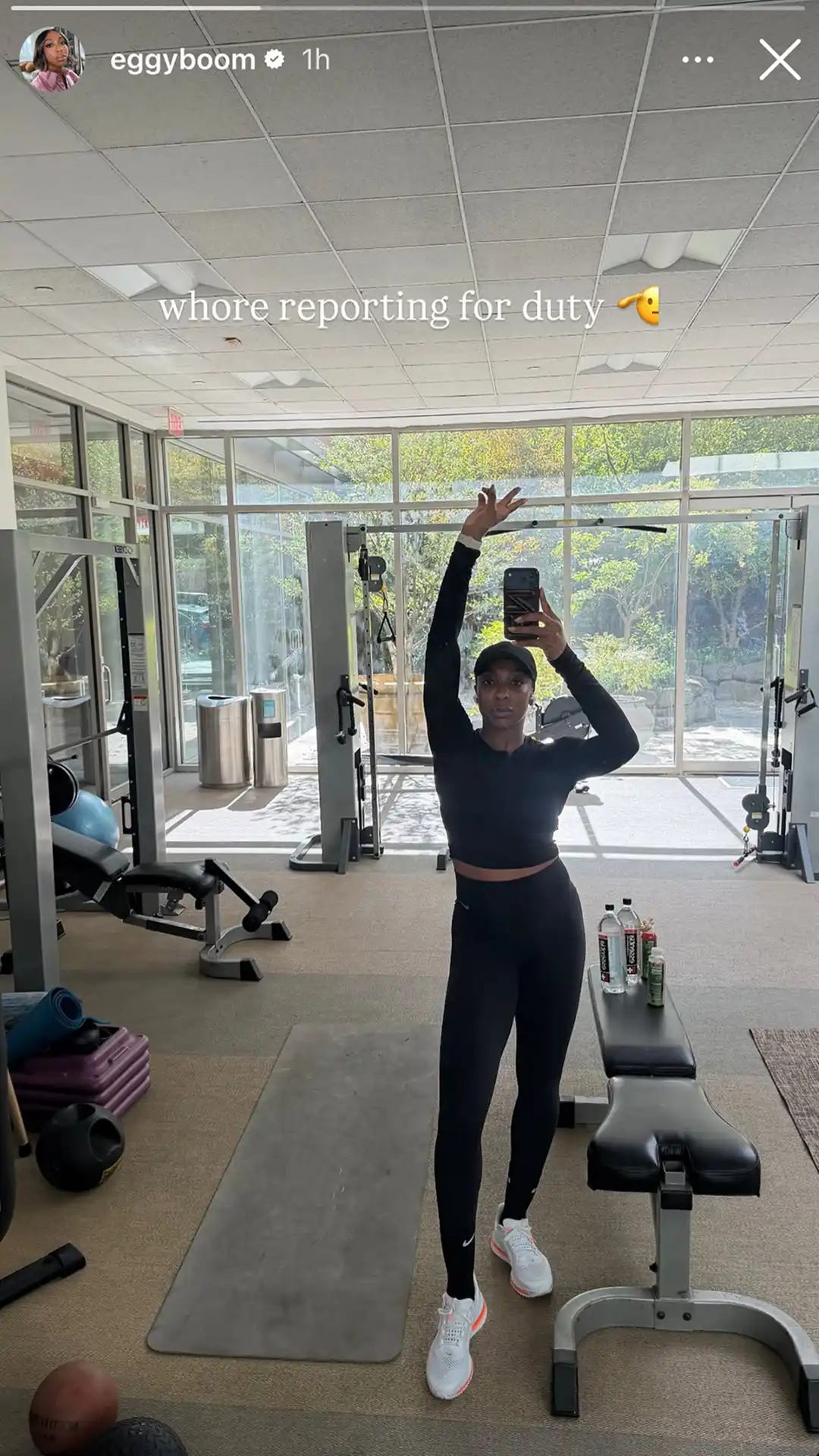 |
This is the difference between a man who thinks insulting women is funny and a woman who can make the insult itself funny. Gillis had a national television audience and several minutes of airtime. Nwodim only needed a selfie and a protein-rich breakfast. One of them managed to turn a tired misogynistic trope into an actual joke (spoiler: it wasn’t him!). The other needed to explain that women wearing tight shorts are sexually provocative, apparently having recently emerged from a cave where neither Lycra nor the concept of women having their own lives had ever been encountered.
I’m not claiming women are necessarily born funnier than men, but we certainly do develop it, much like the praised intuition, too. I think we’re great though at recognizing the absurdity of men’s behavior, partly because we’re expected to spend so much of our lives accommodating it. And once you start noticing how much of male comedy depends on women not noticing things, the whole genre becomes considerably less impressive.
Men keep confusing contempt for comedy
A remarkable amount of misogynistic humor follows the same formula: identify something women do, express contempt for it, and wait for the audience to reward you for saying something you’re apparently not supposed to say. (Although let’s be real: expressing contempt for women is the norm du jour in patriarchy, more or less overtly.)
Examples: Women wear makeup because they’re deceptive. Women don’t wear makeup because they’re ugly. Women have standards because they’re entitled. Women don’t have standards because they’re desperate. Women wear revealing clothes because they’re sluts, but if they don’t look attractive enough, they’re also failing at being women.
It’s not an extraordinary comedic achievement to construct a default imaginary system in which women are ridiculous regardless of what they do. The joke is always that women are wrong, and the punchline is that men get to judge them. You could replace the male comedian with a malfunctioning misogyny vending machine and probably get the same material, except the vending machine might occasionally dispense something original.
Before critics jump in, I’m not saying that comedy should never offend anyone. Plenty of brilliant comedy is offensive. The problem is that offensiveness is not the same with crudeness, and it isn’t a substitute for originality either.
Calling women whores is not some act of transgressive intellectual rebellion. It’s an ancient insult delivered with the confidence of a man who believes he just discovered fire.
Women actually are funny because we notice what men expect us to quietly tolerate
Women spend an enormous amount of time observing men because patriarchy is partially designed to eat our attention (in at least 7 ways, as I explain elsewhere). We learn to interpret and monitor their moods, anticipate their reactions, distinguish between the things they say and the things they mean, and recognize when a supposedly charming personality comes with a list of unpaid responsibilities. We learn to spot the difference between a man who wants an equal partner and a man who wants a mother who will also have sex with him.
This is excellent material for comedy. The man who describes himself as a “high-value male” but cannot tolerate the slightest hint of rejection. The boyfriend who calls himself a feminist because he once washed a pan without needing a parade. The husband who claims to be the head of the household but requires his wife to maintain the household, remember the appointments, organize the holidays, and explain to him why she’s tired. The self-proclaimed high IQ logical man who responds to a minor disagreement as though someone has personally dismantled Western civilization.
Women have been conducting fieldwork on male absurdity for generations. We simply weren’t always allowed to publish the findings.
Internet humor has given women a shared language for recognizing these patterns. Weaponized incompetence, the ick, mediocre men with extraordinary self-esteem, men who want traditional wives while contributing approximately one traditional teaspoon of effort: these running jokes all resonate with us because they turn what women have been encouraged to experience as private relationship failures into recognizable social patterns.
Sometimes laughter is the moment you realize that the thing you’ve been quietly enduring is actually ridiculous.
And when you live in a deeply hierarchical system like the patriarchy, the people relegated to underdog positions are best primed to notice absurdities and to develop better humor from it. The top dogs are too blinded by their privilege to ever be actually funny.