
|



We’ve looked at how the AI boom is keeping the market afloat, how it’s being financed, and some of the limitations it’s now hitting.
The obvious question now is why hasn’t the bubble popped yet?
To answer that we have to understand some shifts in market structure.

 |
We talked about some of this in my series on why Terry Smith is changing his strategy.
A lot of what’s keeping the market up is the constant influx of passive flows.
To understand why they keep coming, we need to look at how Americans save for retirement.
The De Facto National Pension
The most common retirement plan used to be a defined benefit pension.
In that system, your employer promised that if you worked for them for a set amount of time, that they’d send you a set monthly check for the rest of your life after you retire.
The company set aside money and hired a professional firm to invest it for them to fund the checks.
This still exists in some areas, like a lot of government jobs, and it’s still common in education.
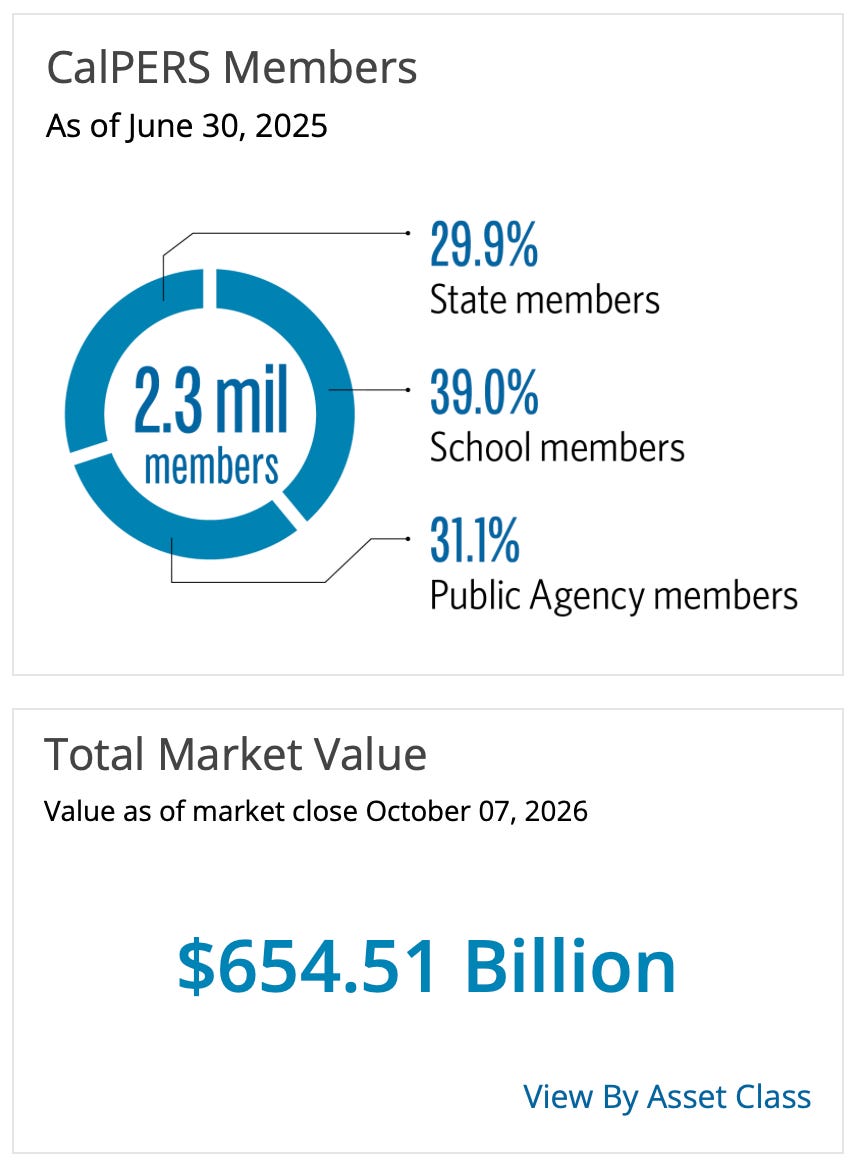
For example, the California Public Employees Retirement Plan, or CalPERS is the pension for firefighters, government employees, teachers, and state administrators.
It’s got 2.3 million members and manages more than $651 billion.
 |
But a an obscureprovision buried in the Revenue Act of 1978 intended to limit tax-deferred cash bonuses for corporate executives flipped the pension system on its head.
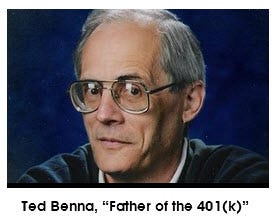
In 1980, a benefits consultant named Ted Benna figured out a loophole.
 |
He realized the code could be creatively used to let all employees defer parts of their regular salary into a tax-advantaged account, complete with an employer match.
The IRS officially approved his interpretation in 1981.
That section of code was section 401(k).
And that tax loophole is now the foundation of the American retirement system.
Instead of the company investing money for you and handing you a check, they deposit the money in your 401(k) account.
The responsibility for investing it, and the risk that comes along with it is now yours.
401(k) assets are now over $10 Trillion.
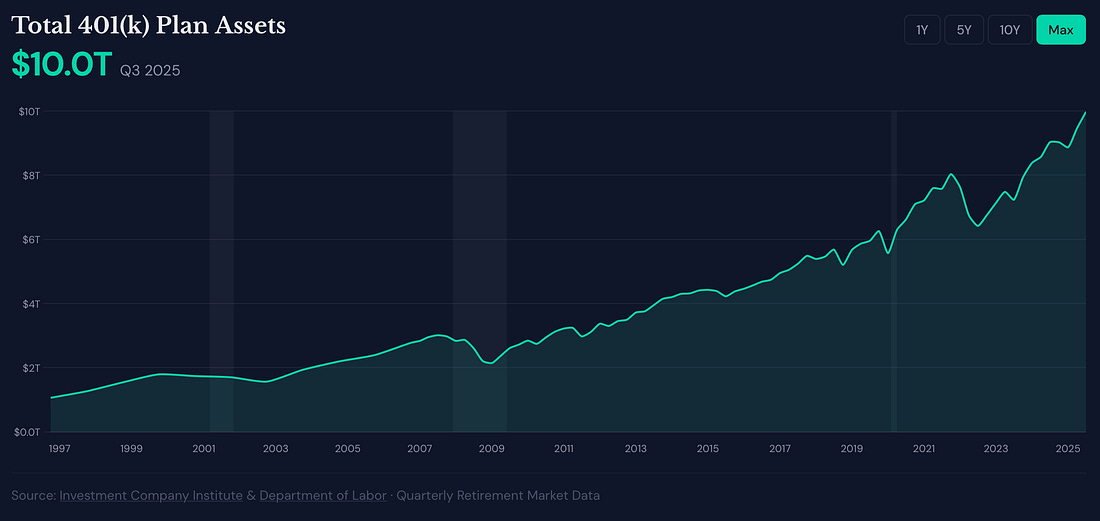 |
Look at the growth of the 401(k), labeled ‘Private Sector DC’ (for defined contribution), and IRAs (Individual Retirement Accounts) in the chart below.