trust issues
How Americans feel about science, as told in charts
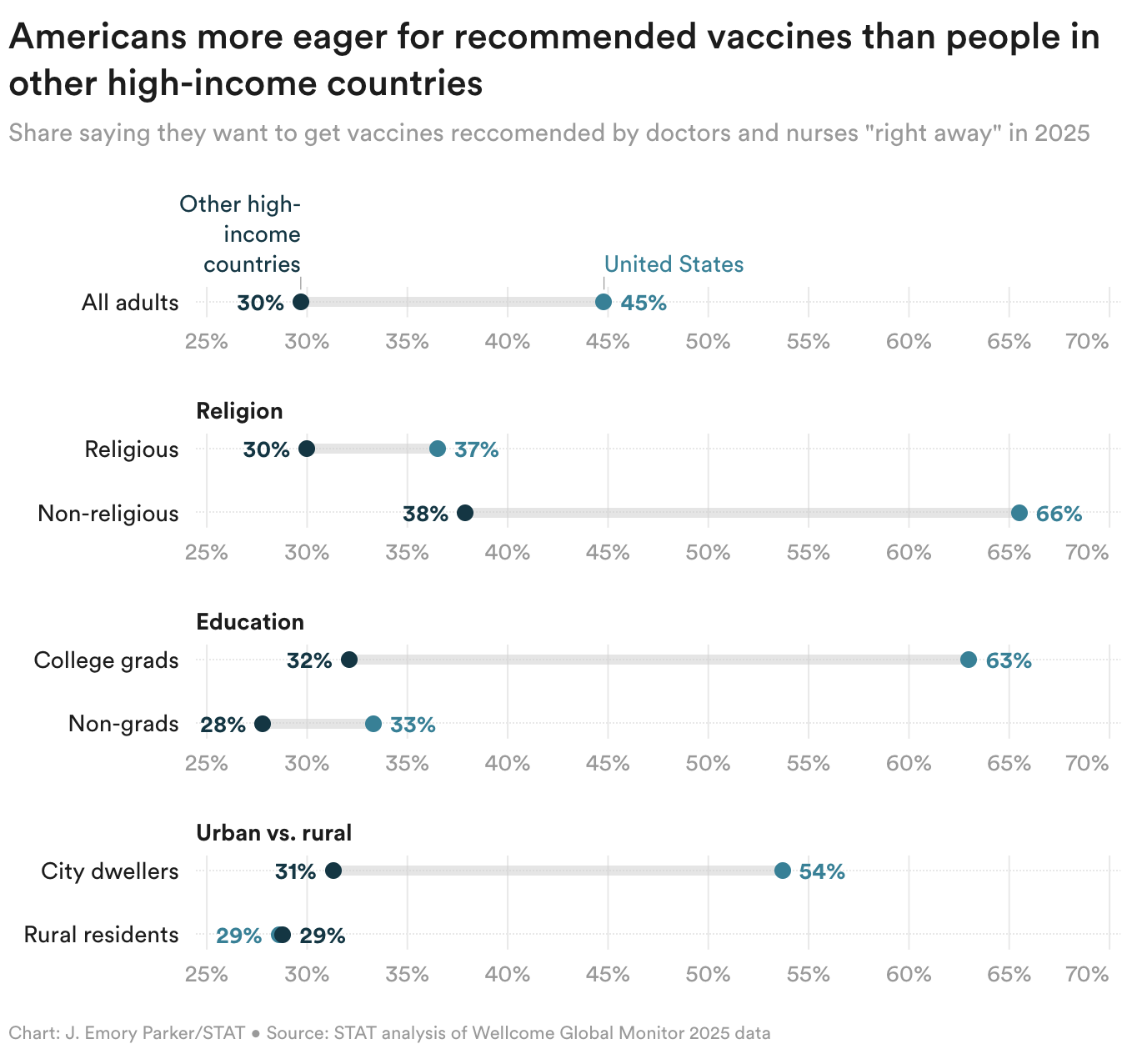
It can sometimes seem like Americans’ relationship to science is uniquely fraught, weighed down by the Trump administration’s deep cuts to research funds, the ever-present battle over vaccines, and our byzantine health care system.
Given all that, new data from the Wellcome Global Monitor surprised me. Those pollsters found that 52 percent of Americans report having “a lot” of trust in science. Across the globe, that number is 26 percent. Americans, in aggregate, are also more eager to get vaccines compared to peer nations; 45 percent of Americans say they would want to get vaccines recommended by a nurse or doctor “right away.” In Germany only 28 percent say the same.
To unpack what these numbers might mean, check out Nick Florko’s story.
helpless
Doctors are trained to be deferential. That follows them their whole careers
By the time doctors reach their residency programs, they have completed college and medical school, passing several rigorous exams. Many will be nearing 30, or older. And yet residents often have to ask permission to even use the restroom.
This infantilizing treatment is creating “something plaguing medicine: learned helplessness, a psychological state wherein a person stops trying to change an unfavorable or unsavory situation because they believe that they have no control over the outcome,” writes Frances Mei Hardin, a former ear, nose, and throat surgeon, in the debut of her new column Chief Complaint.
Hardin writes that today’s doctors inherit a sense of powerlessness that’s reinforced by “increasing layers of bureaucracy, hierarchy, metrics, and threats of retaliation or lawsuits that leave physicians with less and less control. And we don’t question it.” Read more about the problems that’s creating — and the possible solutions — here.