Dear Colleague,
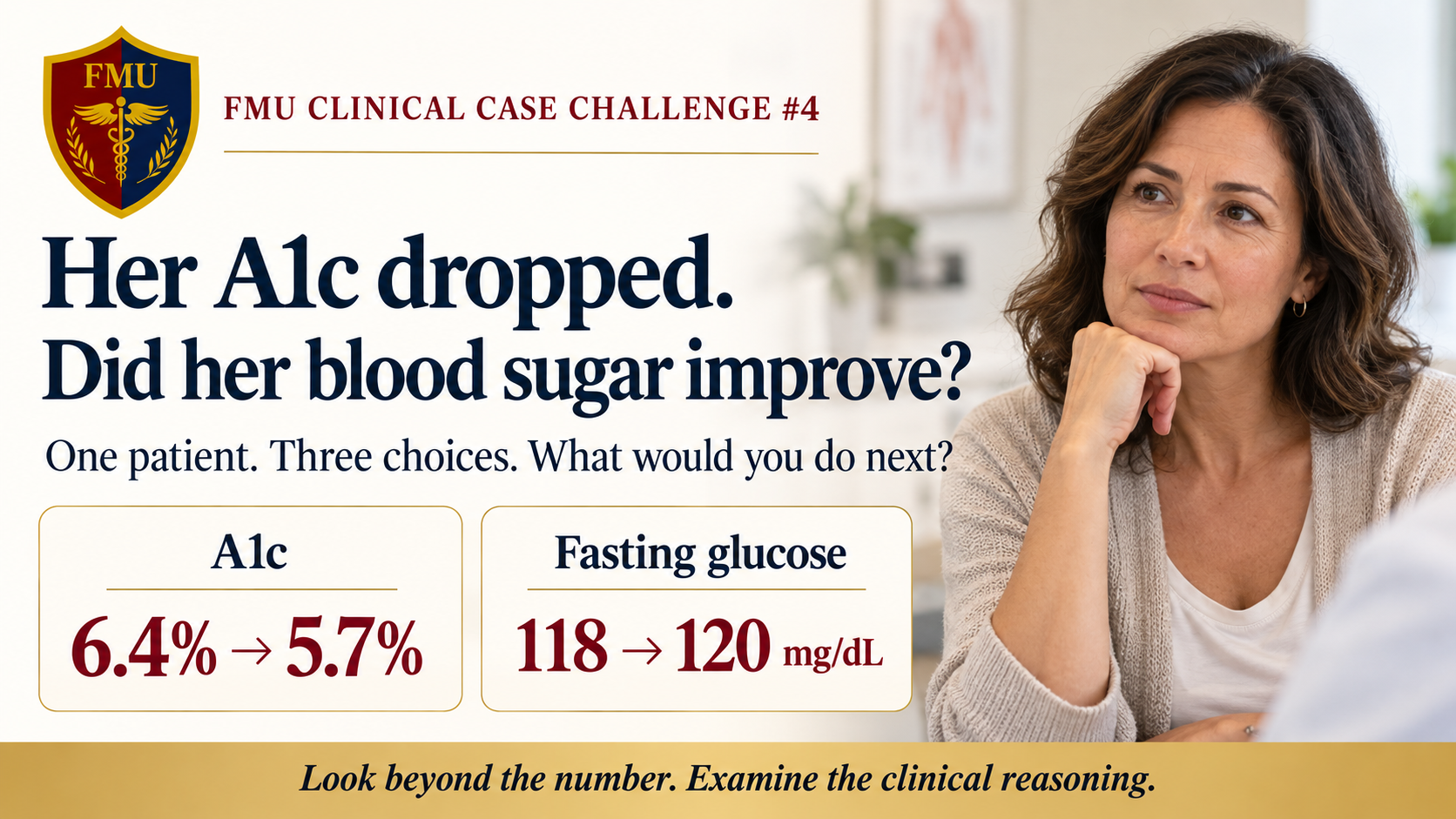
Challenge #4: Her A1c Improved. Can You Trust the Improvement?
Consider this clinical scenario.
A 46-year-old woman returns for follow-up after three months of nutrition counseling and treatment for iron-deficiency anemia. Her heavy menstrual bleeding is also being managed by her gynecologist.
She feels more energetic and says:
“My A1c dropped from 6.4% to 5.7%. Does that mean my blood sugar problem is almost gone?”
Her results show:
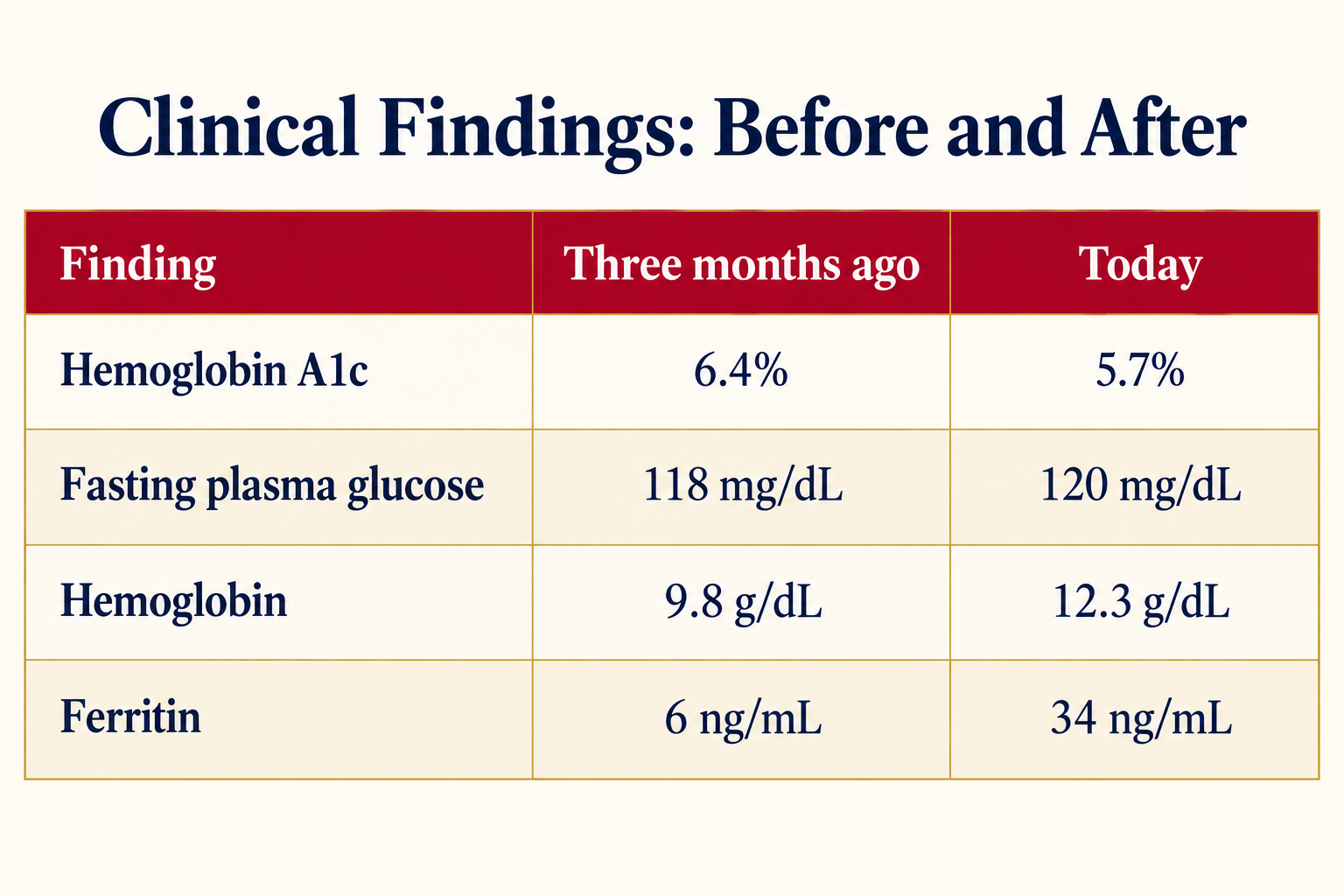
Her weight is unchanged. Home glucose readings remain similar to those recorded before treatment. She takes no glucose-lowering medication and has received no blood transfusion.
The A1c improved. The glucose readings did not.
What is the best interpretation and
next step?
A. The lower A1c confirms substantial improvement in glucose regulation. Continue the plan and reduce glucose monitoring.
B. The A1c change may partly reflect correction of her iron-deficiency anemia. Clarify her glucose status using appropriate glucose-based assessment
before concluding that metabolic risk has improved.
C. The unchanged fasting glucose proves the nutrition plan has failed. Intensify treatment without further assessment.
Choose your answer—and identify the finding that most
influenced your decision.
The Answer Is Only Part of What You’ll Discover
You may know FMU for sequencing. Today, explore opportunities and resources you may not realize your education
offers:
- Your free five-page FMU Foundations sample: See how blood sugar, insulin resistance, and cardiovascular risk connect—and how a practical patient playbook helps translate the science into clinical decisions.
- FMU’s Physician Diagnostic Partner Program: Discover this additional clinical support
opportunity and learn whom it serves and how it works.
- Clinical nutrition diplomate pathways: Explore how qualifying FMU education can support educational requirements toward the DACBN or DCBCN for eligible clinicians.
Come for the clinical reasoning. Discover more of what’s inside
FMU.
SEE THE ANSWER, EXPLORE FMU & ACCESS YOUR FREE SAMPLE →
Warmly,
Ron Grisanti, D.C.
Founder, Functional Medicine University
P.S. Before calling a result a success—or a treatment a failure—ask what changed besides the
number. Then take a closer look at the education and opportunities behind FMU. You may find something valuable you didn’t know was there.
P.S.S.Discover FMU’s professional recognition, educational credentials, exceptional curriculum, and expert instructors: Explore FMU.