| | OpenAI tries to calm investors, Zambia agrees a US health deal, and an anti-apartheid activist wins ͏ ͏ ͏ ͏ ͏ ͏ |
| |  | Flagship |  |
| |
|
The World Today | 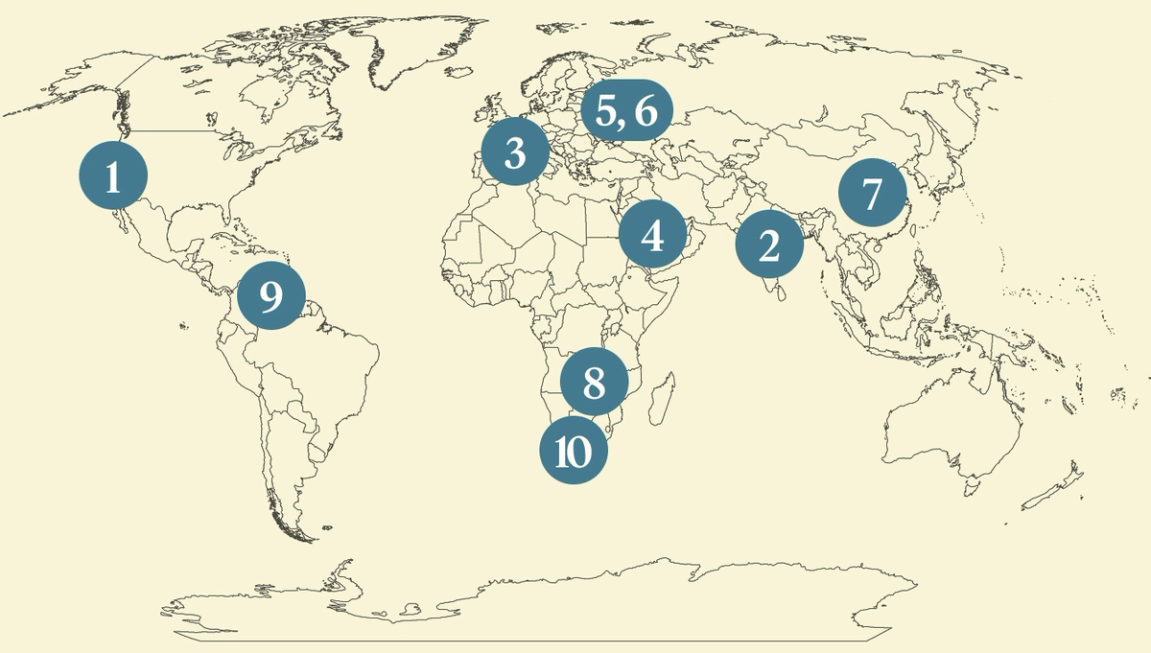 - OpenAI’s revenue outlook
- Indian tech challenges
- European economic hope
- Saudi economic obstacles
- Russia ‘hybrid war’ fears
- Russian economy’s war tilt
- Beijing’s Moscow lessons
- Zambia inks US health deal
- Venezuela erases Chavistas
- Nobel to S. African jurist
 A recommendation for a Stephen King remake that delves into ‘the fathomless potential for good and ill in the teenage heart.’ |
|
OpenAI tries to reassure investors |
 Carlos Barria/Reuters Carlos Barria/ReutersOpenAI reportedly assured investors it expects to reach a $70 billion annualized revenue target this year, an apparent attempt to assuage worries over it seeming to miss earlier projections, thereby casting doubt over the growth of the broader AI sector. The frontier lab’s figures are seen as key to understanding underlying demand for cutting-edge AI models, as well as justifying the huge global spending on tech infrastructure. Some analysts noted, however, that the annualized revenue metric is itself flawed, while others pointed to indicators that the AI boom shows no signs of slowing: Samsung this week estimated its third-quarter profit grew nearly ninefold, while Goldman Sachs raised its forecast for economic growth in Taiwan, a key hub in global chipmaking. |
|
India hits out at US comments |
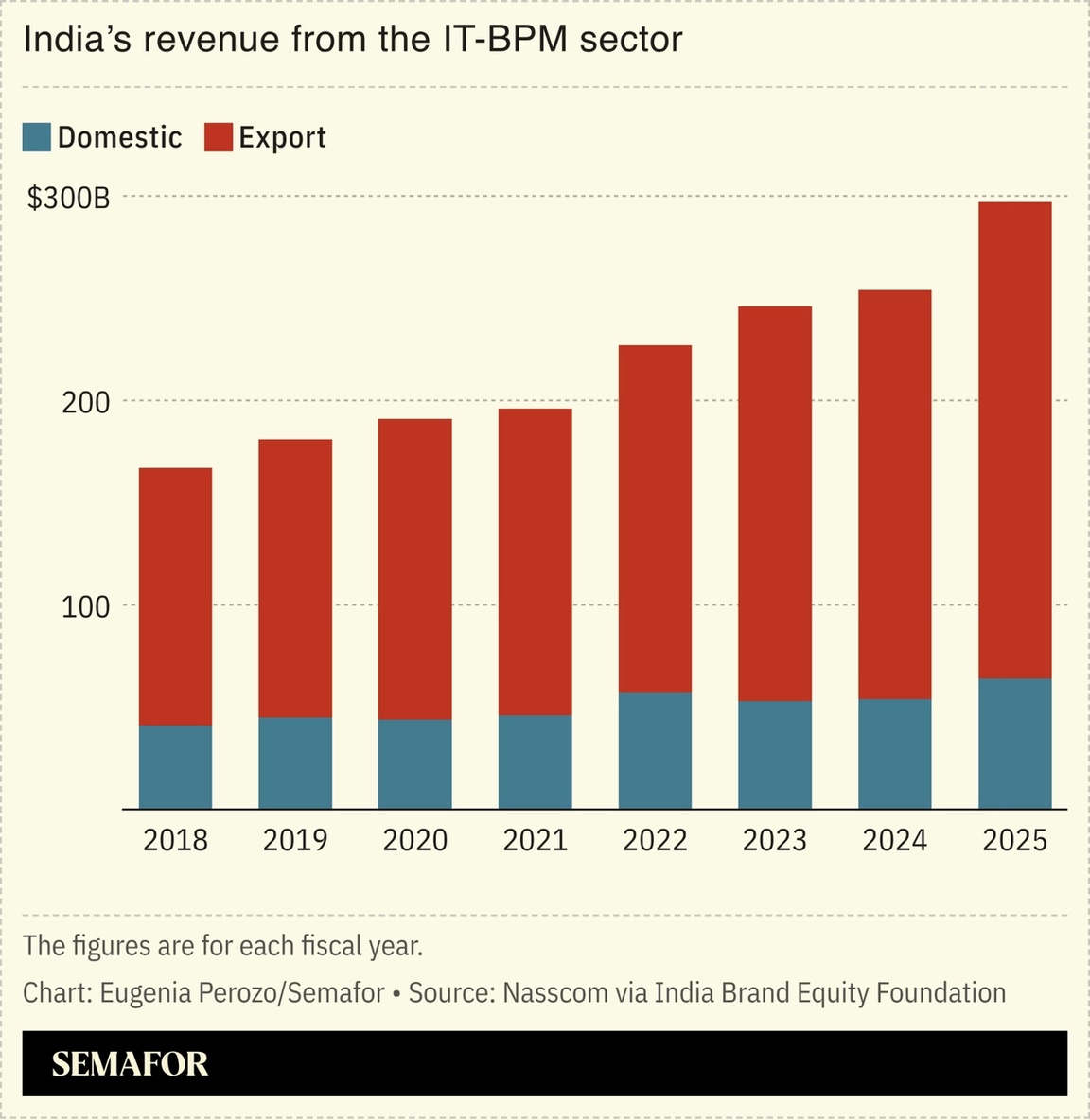 New Delhi rejected as “deeply offensive” Washington’s labelling of Indian workers in the US tech sector as “indentured servants,” as ties between the erstwhile partners frayed further. The two countries have been mired in deadlocked trade negotiations, have sparred over the US threatening sanctions over India’s purchase of oil from Russia, and are now at loggerheads over immigration. The dispute is one of a number of risks to India’s IT sector, which contributes roughly 7% of the country’s GDP: “Western firms hired Indian workers because they provided lots of value for the cost,” an OpenAI staffer wrote in Asterisk magazine recently. “AI, it seems, could provide even more value, for even less cost.” |
|
Germany raises growth forecast |
 Staff/Reuters Staff/ReutersGermany, Europe’s biggest economy, raised its growth forecast, a rare bright spot as regional economic worries abound. Berlin anticipates GDP will expand by 1.3% this year and a similar rate in 2027 — lackluster by global standards, but nonetheless significantly up from previous estimates, with the Iran war taking less of a toll than expected. Elsewhere in the EU, the news was less upbeat: France’s 10-year bond yields climbed to highs not seen in decades, raising worries that Paris “may have crossed the line from too big to fail to too big to save,” the Nobel Prize-winning economist Paul Krugman wrote. Political uncertainty pushed the euro toward its fifth weekly fall, capping a dismal run for European financial markets. |
|
Houthis hit Riyadh’s reputation |
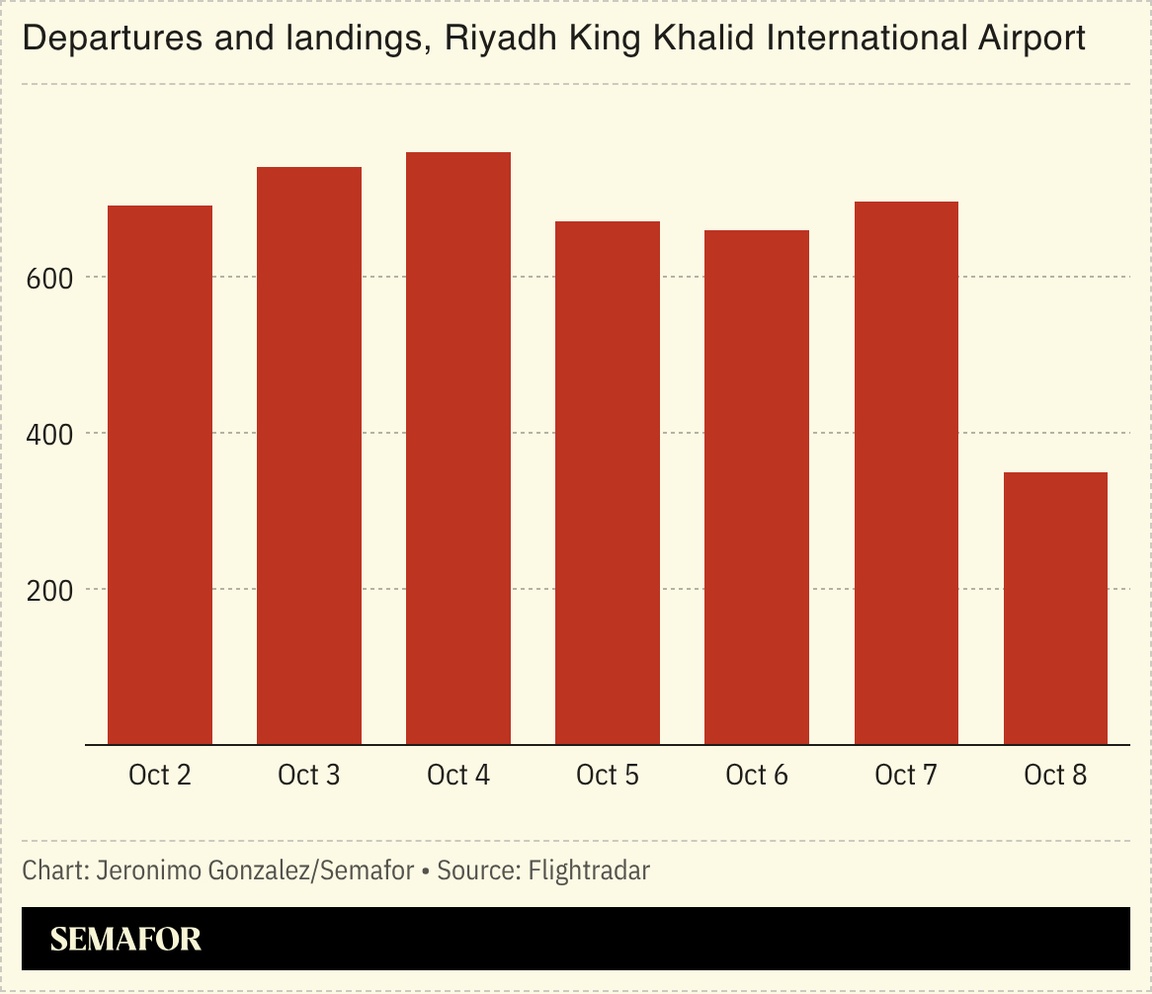 Governments warned against travel to Saudi Arabia and hundreds of flights were cancelled as Houthi attacks on Riyadh risked torpedoing the kingdom’s efforts to fashion itself as an investment destination insulated from Middle East unrest. Saudi Arabia had been the target of far fewer Iranian strikes than its Gulf neighbours since conflict erupted in February, but has recently faced increasing aerial assaults from the Tehran-backed fighters. The onslaught has resulted in Riyadh residents regularly hearing booms and seeing fires — one plane was reportedly left in flames at the airport — just as the kingdom readies to host global financial and energy titans for back-to-back conferences. “It’s harder to sell investors,” Semafor’s Riyadh bureau chief wrote, “when the capital is on fire.” |
|
 Semafor has announced new members and co-chairs of the Global Advisory Board for Silicon Valley & The World, a first-of-its-kind, multi-year initiative connecting the leaders building transformative technologies with the policymakers shaping their deployment. As the board expands, Sam Altman joins Silicon Valley & The World as a co-chair. The expanded board includes more than 50 global figures, among them Olugbenga “GB” Agboola, Bhavish Aggarwal, Pedro Azagra, John Ketchum, Pratyush Kumar, Yann LeCun, Fei-Fei Li, Amjad Masad, Penny S. Pritzker, Kevin Rudd, Eric Schmidt, KR Sridhar, Mati Staniszewski, and Raj Subramaniam. Designed to move the conversation beyond debate and toward action, Silicon Valley & The World will convene more than 350 founders, CEOs, investors, and policymakers in November, bringing together leaders with the ability to fund, scale, and implement new ideas. |
|
Europe fears Russian aggression |
|
Russia spends record $200B on war |
|
China learns from Ukraine war |
 Florence Lo/Reuters Florence Lo/ReutersChina is gaining key military insights from Russia’s war in Ukraine, leading security analysts noted. The People’s Liberation Army has not fought in major combat operations since 1979, when it battled Vietnam, though Western intelligence agencies warn that it is readying for the potential takeover of Taiwan by force. As a result, China’s military is learning from others’ experience, including sending teams to observe Russian exercises. In particular, the PLA is studying how mechanized maneuvers are affected by the use of drones on the battlefield. Ultimately, “China is running the most systematic effort by any outside power to convert the Ukraine war’s lessons into military advantage,” experts wrote in a report for the Washington-based Center for Strategic and International Studies. |
|
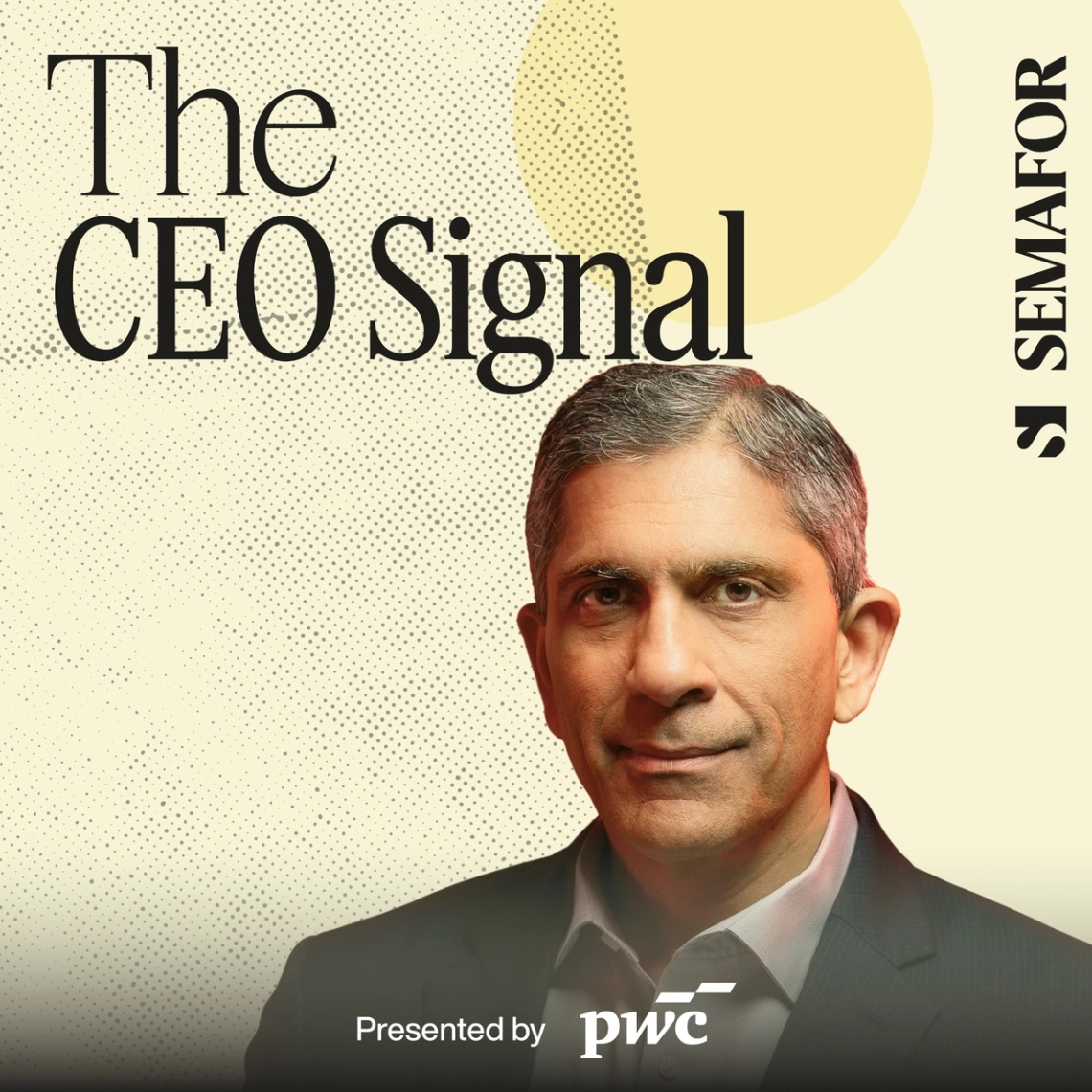 After four decades at Honeywell, Vimal Kapur was an unlikely CEO to break up the 140-year-old conglomerate, even with the activist investor Elliott at its gates. But he concluded that no common strategy could hold together a group serving such diverse markets, as he tells Penny Pritzker and Andrew Edgecliffe-Johnson on The CEO Signal. Kapur spun off his company’s aerospace and chemicals divisions, leaving himself in charge of Honeywell Technologies, which focuses on mission-critical automation. But he says the acquisitions he made through that process were every bit as important as the process of simplifying an overly complex corporate structure. A focused business won’t work without scale, he says — “and we need to scale from here.” |
|
|


