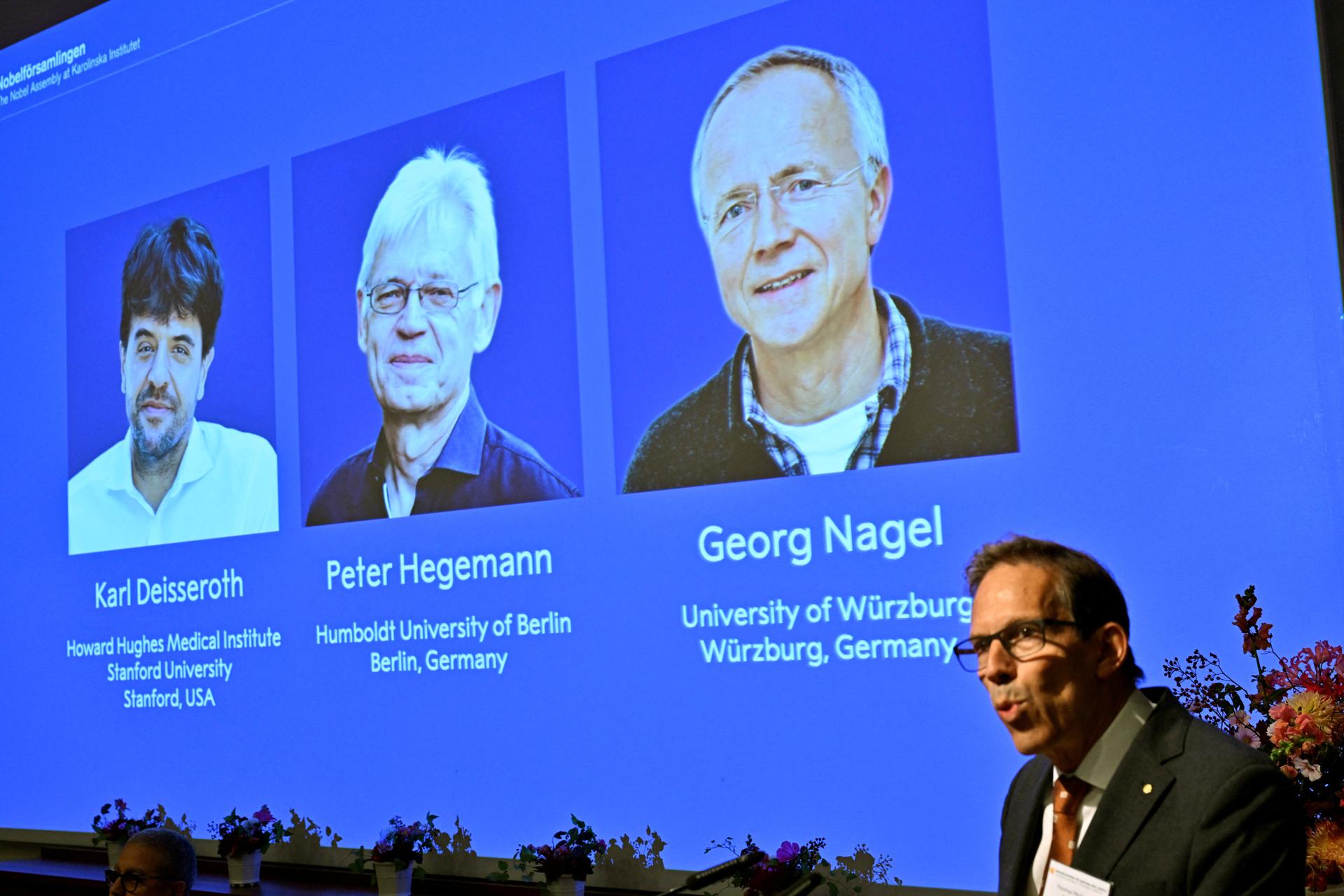
Patients with blindness due to retinitis pigmentosa who received a treatment based on research that won the 2026 Nobel Prize in Physiology or Medicine had their ability to detect objects restored in a small trial that demonstrated the potential of the novel approach.
So-called optogenetic therapy uses light to control brain cells. In the current study, researchers combined gene therapy that made surviving retinal ganglion cells sensitive to light with delivery of light to stimulate these cells.
The 10 trial participants each received an injection into one eye carrying genetic instructions for ChrimsonR, a light-sensitive protein from GenSight Biologics.
Patients then wore goggles that captured visual information, converted it into patterns of light at wavelengths that activated ChrimsonR in the modified retinal cells, and sent the patterns of light back to the eye.
Seven patients became more sensitive to light, with six achieving clinically meaningful improvements, such as being able to detect when an object was present, determine where it was located and reach toward it accurately.
One severe adverse event occurred immediately after injection and resolved within minutes, researchers reported in The New England Journal of Medicine.
While larger studies are needed to definitively prove the usefulness of ChrimsonR and the goggles, the findings show that even at a very advanced stage of blindness, surviving retinal ganglion cells can be made responsive to light and transmit visual information to the brain, the researchers said.
"Even in people with profound vision loss, the visual system retains a remarkable capacity to process new information," study leader Dr. José-Alain Sahel of the University of Pittsburgh said in a statement.