| | Rates for oil tankers reached a new record, as crude continues to exit through the Strait of Hormuz ͏ ͏ ͏ ͏ ͏ ͏ |
| |  | Energy |  |
| |
|
 - Record tanker prices
- Shopping for startups
- Waste management
- Flood management
- Fuel subsidies
 European renewables are vulnerable to hackers, and European regulators are amenable to delaying methane rules. |
|
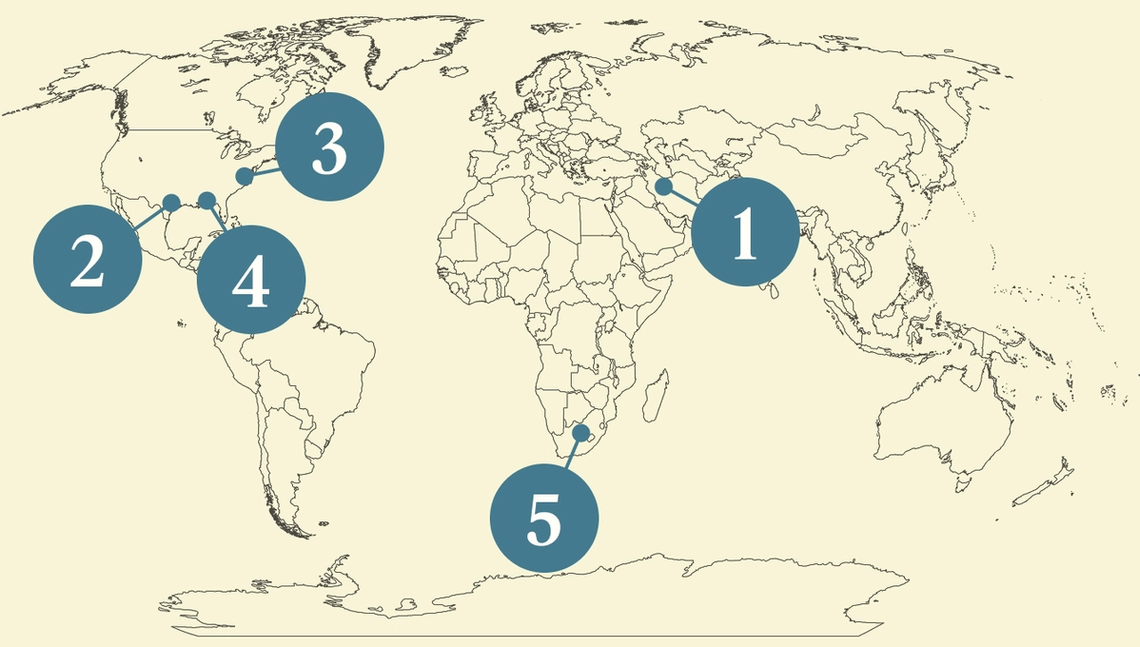
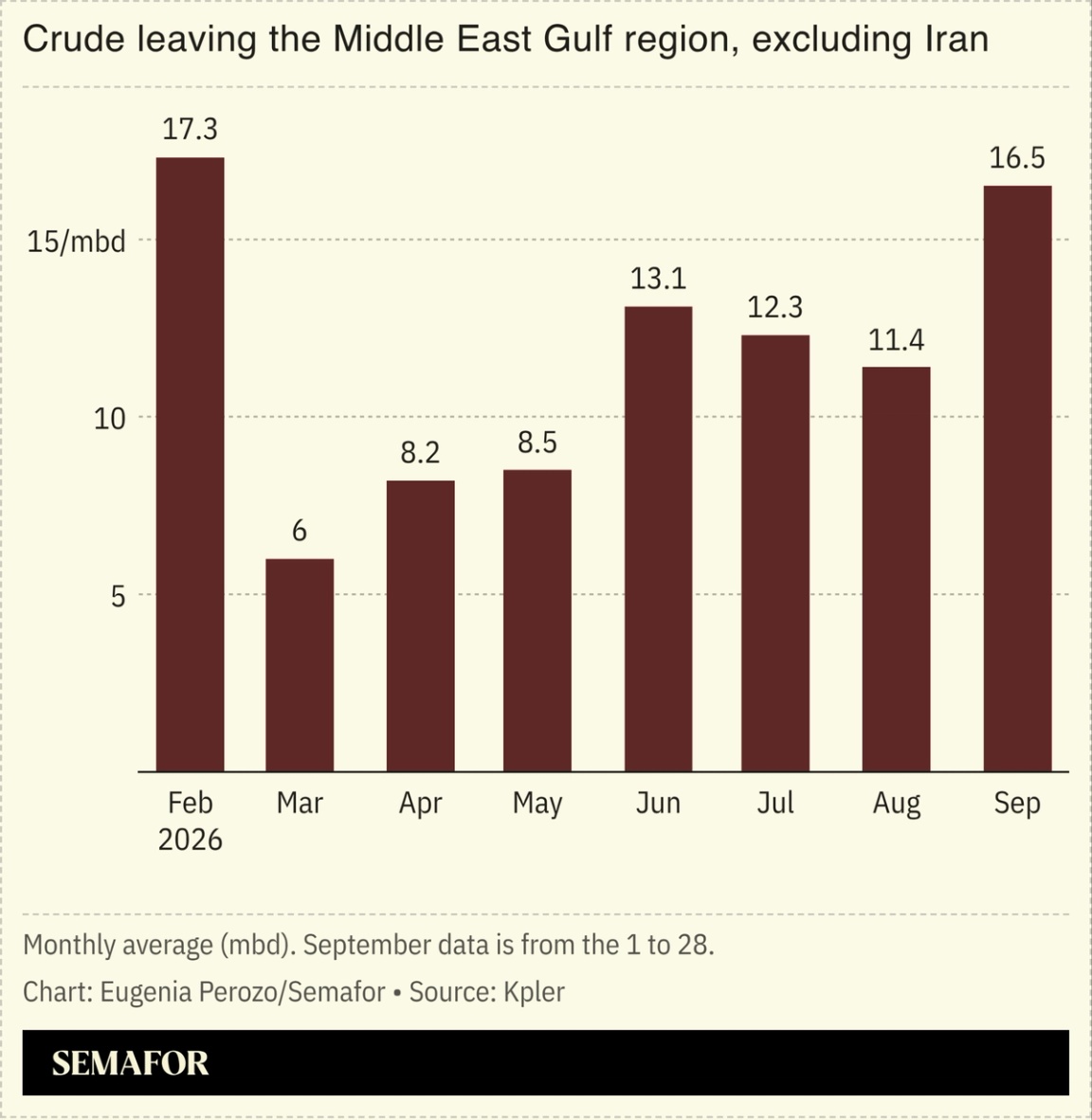 Charter rates for oil tankers hit a fresh record, driving a larger wedge between the nominal price of crude futures and what it costs to actually receive barrels. Crude oil exiting the Strait of Hormuz averaged about 10 million barrels per day over the past week, despite a rising number of attacks on tankers. But the time required for the largest tankers to rest outside the strait waiting for crude deliveries from smaller vessels has effectively created a tanker shortage. It now costs up to $77 million to hire a large tanker to move crude from the US to Asia, up from less than $10 million last year. Crude futures, meanwhile, fluctuated based more on traders’ perceptions of Trump administration statements than by the flow of physical barrels, which has made them “increasingly unreliable as a proxy for genuine supply,” analyst Amrita Sen wrote in the Financial Times; the gap between the “dated” and futures prices for Brent is now the highest since the war started. And because emergency crude stocks have already been drained, if Gulf exports fall again, “you do have that $200-a-barrel scenario,” the CEO of trading house Vitol warned. Meanwhile, the International Energy Agency clarified that last week’s G7 commitment to release diesel from strategic supplies will be drawn from the volume originally authorized in March, and not represent any new barrels; European diesel prices jumped 8% on the news. |
|
 Vincent West/Reuters Vincent West/ReutersOctopus Energy US is looking to acquire more software startups that can help utilities manage the influx of data center power demand, its CEO told Semafor. In March, the company bought the technology firm Uplight, which utilities can use to free up more power in the grid by subtly modulating their customers’ consumption. The company also recently rolled out a battery for homeowners in Texas that can release power to the grid at moments of high demand. “We’re just beginning to scratch the surface of how consumer flexibility can help solve the problem of data centers,” which have an economic disincentive to curb their own power demand, Octopus US CEO Nick Chaset said. Startups like Uplight “are batting above their weight in terms of solving the problem, but that value is not yet reflected in the companies themselves,” he said. “So we’re very much looking for interesting opportunities in that space.” |
|
Cutting electricity waste |
 Shelby Tauber/Reuters Shelby Tauber/ReutersPower-focused engineering firms are increasingly trying to cut down waste and optimize current systems as they position their commercial offerings for the huge demand growth of the coming decades. ABB has in recent weeks rolled out a portfolio of products aimed at addressing the needs of AI data centers, while Schneider Electric acquired a US industrial software firm for $22.6 billion. Some of these solutions are not entirely new, but the energy demand surge from AI data centers, industrial electrification, and the need for more climate-resilient infrastructure is creating momentum to improve current systems. “There is an opportunity to utilize existing assets more than we are today,” Schneider Electric’s CEO of digital grid Ruben Llanes told Semafor. ABB’s DC-powered data center solutions have been in development for over two decades, electrification president Giampiero Frisio said, but “the business and the market were not ready to do it” before. – Eugenia Perozo |
|
 Every $1 billion the US federal government invests in flood adaptation projects will save up to $4 billion in damages over the next 30 years, according to a report from the nonpartisan Congressional Budget Office. The Trump administration has significantly scaled back staff and funding for the Federal Emergency Management Agency, including the elimination of $3 billion in grants for disaster preparedness. But investments in flood protection more than pay for themselves, the CBO found, including through reductions in federal spending on disaster aid and in less spending on federal subsidies for insurance. The report concludes that “changes in climate conditions,” as well ongoing construction in vulnerable areas, will raise the costs of flood damage. |
|
S. Africa’s fuel pressure |
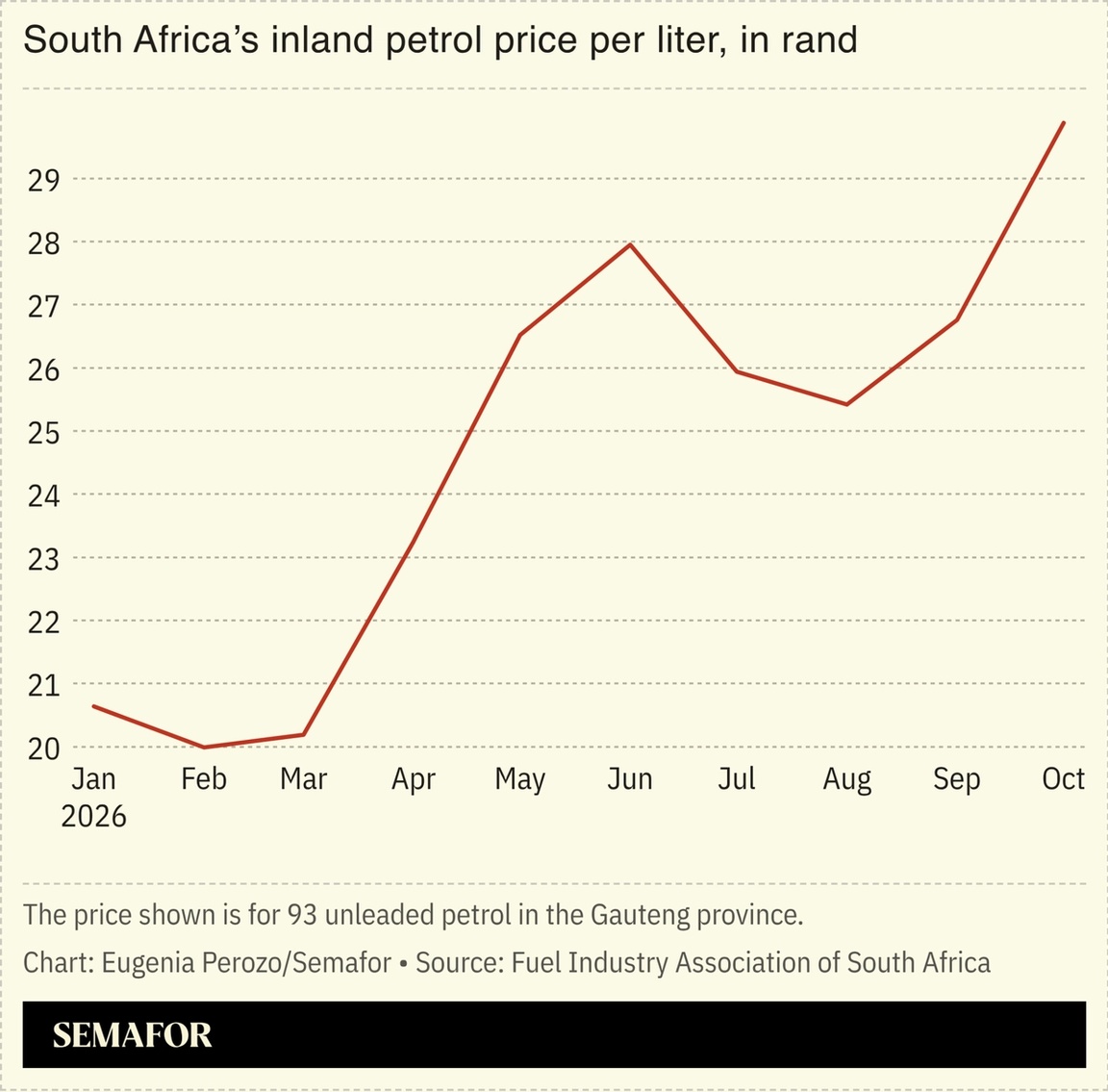 South Africa is facing growing pressure from labor unions and business groups to provide around $600 million in fuel relief, after the Iran war drove petrol prices to record highs in the continent’s biggest economy. The calls heap pressure on the coalition government to loosen its purse strings, threatening to undermine its reputation for fiscal discipline just as Finance Minister Enoch Godongwana prepares to present his three-year fiscal plan later this month. The central bank has raised its main interest rate twice this year and warned in its monetary policy review this week that it has adopted a “firefighting” stance before energy prices spill over into broader inflation. The raised borrowing costs apply a secondary squeeze on households and businesses demanding fiscal relief. — Tiisetso Motsoeneng |
|
 Technology is at an inflection point. From AI to the forces reshaping business, science, and daily life, the pace of change is accelerating. Future Proof from Semafor Technology offers a direct look at the breakthroughs, risks, and questions defining what comes next. Hosted by Semafor San Francisco Bureau Chief Reed Albergotti, each episode features conversations with the builders, policymakers, and industry leaders shaping how technology is developed, adopted, and governed. In Future Proof’s debut episode, Cognition CISO and former Facebook security chief Alex Stamos takes aim at Silicon Valley’s “nihilism” and separates AI’s real risks from those he sees as imagined, fueled by “almost religious beliefs.” Plus, he talks about how he plans to tackle cybersecurity’s coming “dark age” and why Aaron Sorkin’s version of Mark Zuckerberg wouldn’t attract employees. |
|
 New EnergyFossil Fuels Stringer/Reuters Stringer/ReutersFinanceTechPolitics & PolicyCOP31 |
|
|


