| | Oil prices rise as Gulf tensions spike, protests surge in France, experts warn of AI-driven inflatio͏ ͏ ͏ ͏ ͏ ͏ |
| |  Paris Paris |  San Francisco San Francisco | Brasília |
 | Flagship |  |
| |
|
The World Today | 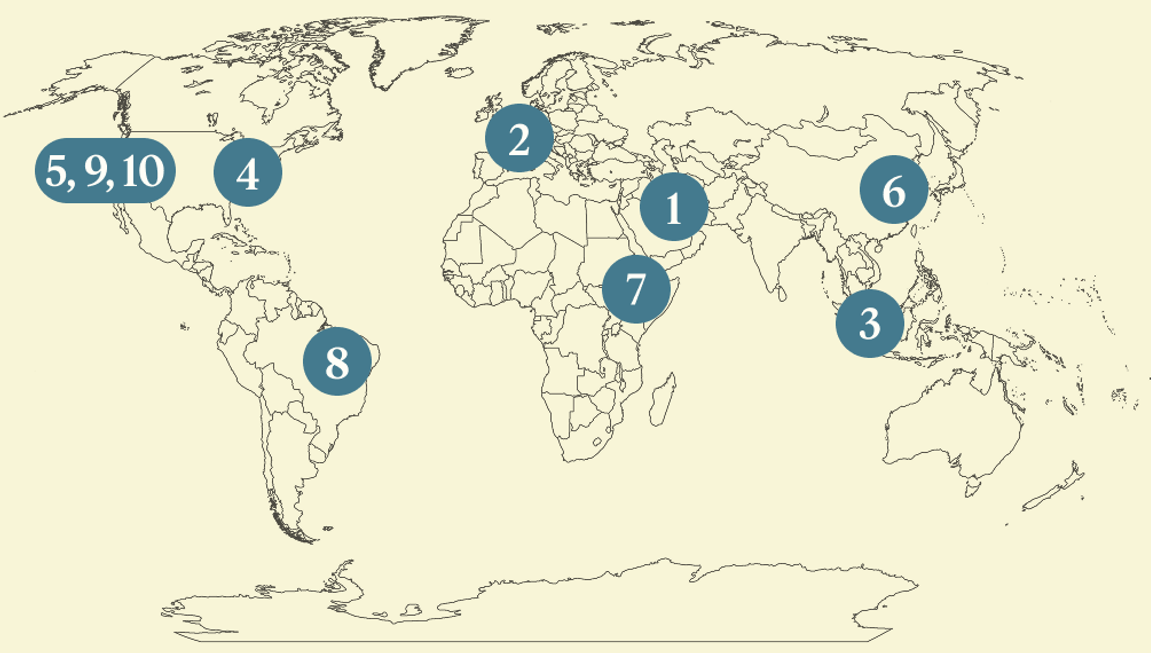 - $100 oil on Gulf tensions
- France pledges budget cuts
- Fears of AI bubble mount
- Inflation risks from AI grow
- Big Tech raises spending
- China aims to ease tensions
- Africa’s new ratings agency
- Brazil candidates’ overlap
- Downside of doomerism
- New AI math breakthroughs
 A recommendation for a 20th-century documentary series on the Middle East peace process. |
|
Oil elevated on Mideast tensions |
 Mohammed Aty/Reuters Mohammed Aty/ReutersOil prices held over $100 a barrel as reports of increased supply from the Gulf were outweighed by signs that regional conflicts were merging, amplifying risks to key energy supply routes. Analysts said Iranian attacks on vessels traversing the Strait of Hormuz were increasing, and while Saudi-backed forces retook territory in Yemen from the Iran-backed Houthis, the latter group nevertheless remained able to launch attacks on Saudi sites and remained a threat to ships moving through the Bab el-Mandeb waterway. Alleged Gulf involvement in conflicts in Sudan and Ethiopia also means that “instability will continue to ricochet in both directions,” an International Crisis Group expert wrote in Foreign Affairs, warning that “the overlapping conflicts and disputes will become harder to resolve.” |
|
France scrambles to tackle debt |
 Abdul Saboor/Reuters Abdul Saboor/ReutersFrench politicians insisted the country would get to grips with its debt issues, but economists — and markets — signaled skepticism. Spreads on French bond yields over German ones have narrowed somewhat, but remain at elevated levels, a result of traders’ worries that French political polarization would hamper efforts to rein in a mammoth deficit and a legacy of state spending that has left a huge debt pile. France’s finance minister told The Wall Street Journal that Paris would do “whatever it takes” to push through spending cuts, including bypassing parliament, though previous governments have been felled by divisions over the budget, while ING was unconvinced that far-right leader Marine Le Pen could actually deliver her plan for even more aggressive austerity. |
|
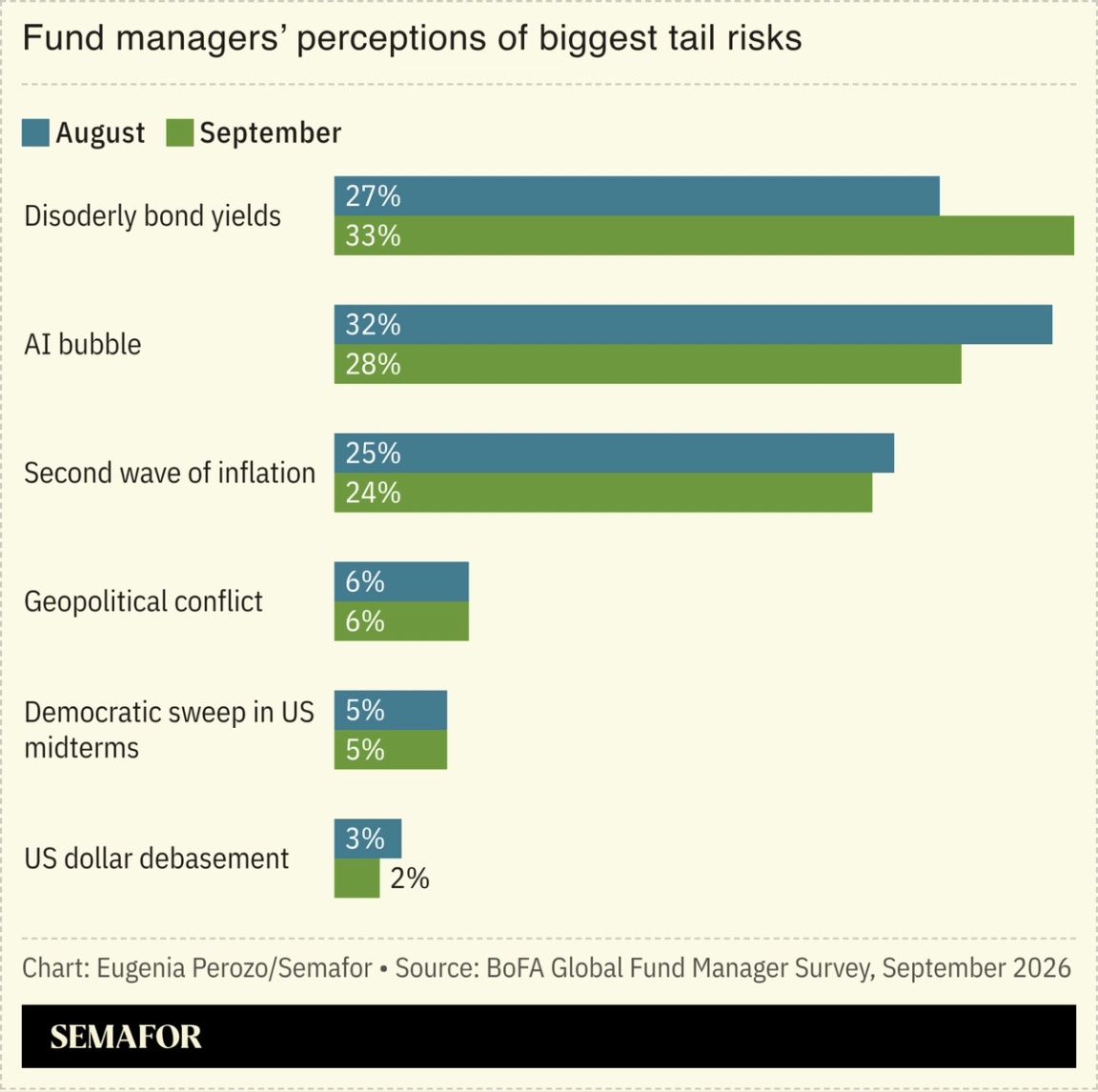 High-profile investors warned of an impending AI bubble after tech stocks drove the S&P 500 and Nasdaq to all-time highs. Gains for AI firms have overcome declines for financial, healthcare, and consumer-focused companies: “Increasingly, the market is running on one engine,” The Wall Street Journal reported, while “just about everything else is going down.” That has driven fears that any fall in tech stocks, which now represent a huge portion of many investors’ portfolios, could have dire consequences. Bridgewater founder Ray Dalio told a conference in Singapore that he saw a “classic bubble” market that was close to bursting, while Temasek’s chief investment officer argued that an unwinding of the AI trade was the biggest risk to markets in 2027. |
|
AI inflation warnings crescendo |
 Shelby Tauber/Reuters Shelby Tauber/ReutersEconomists warned over signs of accelerating inflation resulting from the global AI buildout. Speaking at an event in Singapore, the IMF’s managing director said the AI data center construction boom was “inflationary,” while the president of the Federal Reserve Bank of San Francisco told Axios she was also concerned about the rising price of chips feeding through into broader cost increases: Indeed, low-cost smartphone manufacturers are already raising prices or cutting their cheapest models entirely. The latest worries come with inflation already at elevated levels, bond yields on the rise worldwide, and central banks including the Fed, Bank of Japan, and European Central Bank hiking interest rates. |
|
Big Tech’s massive AI deals |
 Karen Pulfer Focht/Reuters Karen Pulfer Focht/ReutersMajor tech firms signaled their unabated appetite for building out AI infrastructure, with one readying a giant purchase of chips and the other signing a huge new power deal. SpaceX is looking to borrow $40 billion to buy Nvidia chips as part of its expanding data center ambitions, the Financial Times reported, while Google agreed a $4.3 billion deal with Constellation for a 20-year nuclear power purchase agreement, the latest sign of Big Tech’s seemingly unlimited demand for electricity. Public backlash may, however, slow their growth: Heatmap reported that at least $260 billion worth of US data center investments have been cancelled in 2026 because of local opposition. |
|
 Technology is at an inflection point. From AI to the forces reshaping business, science and daily life, the pace of change is accelerating. Future Proof from Semafor Technology offers a direct look at the breakthroughs, risks, and questions defining what comes next. Hosted by Semafor San Francisco Bureau Chief Reed Albergotti, each episode features conversations with the builders, policymakers, and industry leaders shaping how technology is developed, adopted, and governed. In Future Proof’s debut episode, Cognition CISO and former Facebook security chief Alex Stamos takes aim at Silicon Valley’s “nihilism” and separates what he sees as the real — and imagined — risks of AI. Plus, he talks about how he plans to tackle cybersecurity’s coming “dark age” and why Aaron Sorkin’s version of Mark Zuckerberg wouldn’t attract employees. |
|
China woos US ahead of summits |
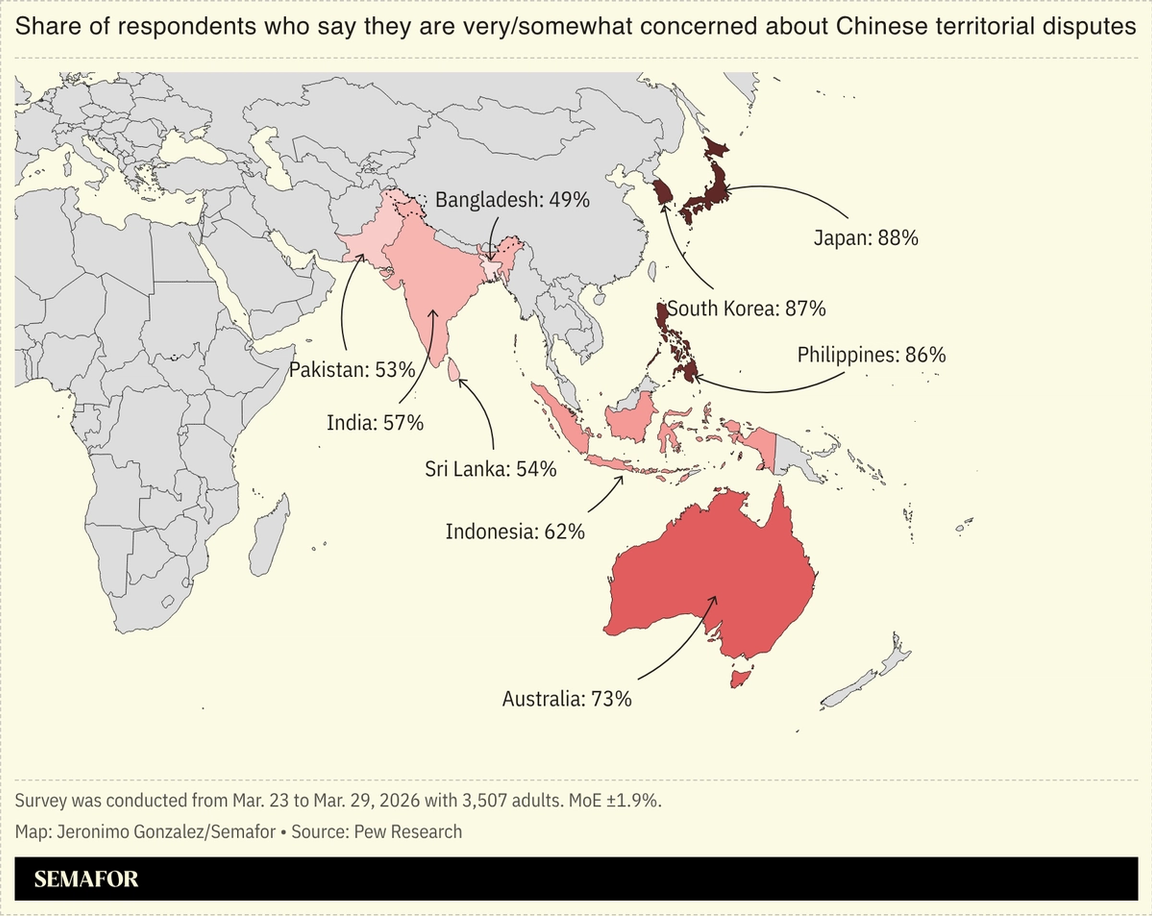 China appeared to move towards improving ties with the US ahead of two summits between the superpowers’ leaders due to be held by year end. Members of the Asia-Pacific Economic Cooperation forum voiced fears that their concerns — including disputed territorial claims — were being deprioritized by China, which is exploring moving key elements of an upcoming APEC meeting online in order to prioritize talks with Washington, the Financial Times said. While a recent summit in the US failed to deliver significant breakthroughs, the two countries are nevertheless considering reciprocal nuclear site inspections when their leaders meet in Shenzhen next month, CNN reported; Beijing has in the past been reluctant to enter into any arms control regime with Washington. |
|
Africa’s first credit rating agency |
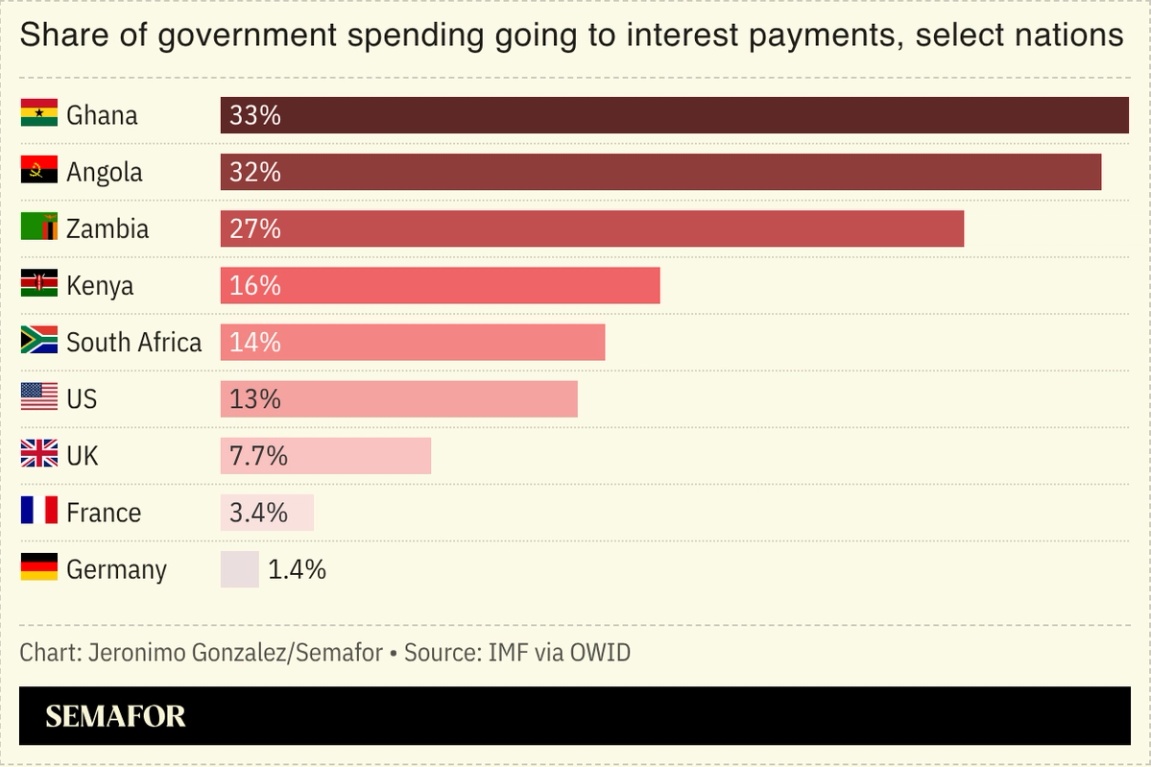 The African Union today launches the continent’s first credit rating agency, which regional leaders say will redress decades of unfair pricing. African countries have long sought alternatives to the “Big Three” rating agencies, accusing the US-based organizations of unfairly overrating the risk of lending in the continent and of paying insufficient attention to it generally: Africa had just 4,000 credit ratings at the end of 2025, compared to more than 140,000 for Europe. Questions surround the new Africa Credit Rating Agency — including over its transparency and governance — but it could quickly quieten those fears and boost its credibility with “an early, well-argued downgrade of one of the governments that cheered the launch,” Semafor’s Southern Africa correspondent argued. |
|
Brazil hopefuls agree on US, China |
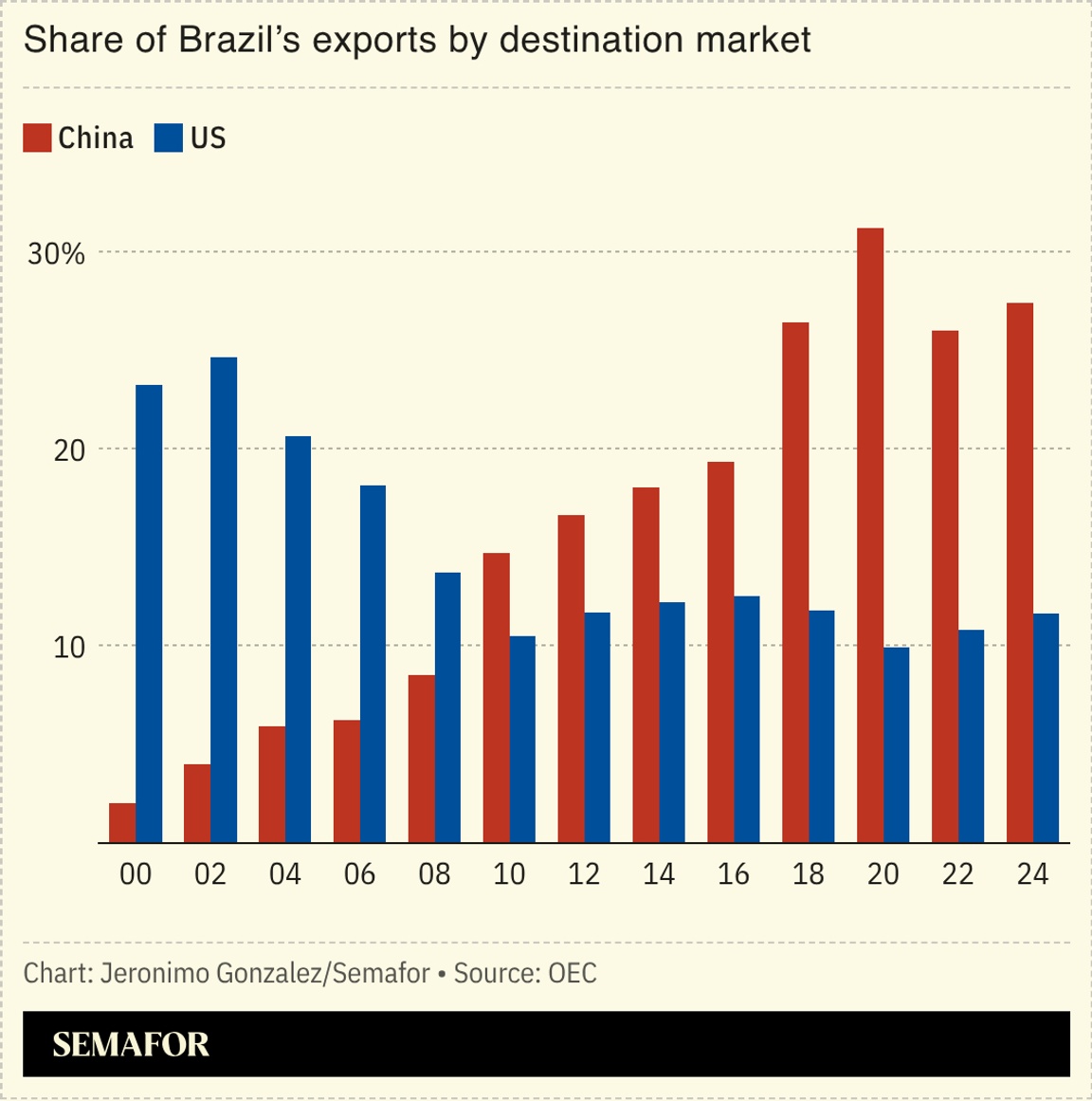 Polarization is rising in Brazil as the country’s presidential candidates race to secure a win in the Oct. 25 runoff, but signs of consensus on key issues are emerging too. Both leftist incumbent Luiz Inácio Lula da Silva and conservative challenger Flávio Bolsonaro have made preserving critical minerals deals with the US a priority, as they look to boost economic growth and national security. And while Bolsonaro has vowed to restore ties with Washington — they frayed after US President Donald Trump imposed tariffs — he, like Lula, has also made maintaining booming trade with China a priority. “Despite all the talk of polarization, the country’s political spectrum still largely agrees on trade,” an expert wrote in Americas Quarterly. |
|
|


