
|



I’ve always thought that spending too much time on macroeconomics is a waste of time and energy.
It’s too complex and there are too many moving parts.
Trying to predict inflation, what the Fed will do at their next meeting, or where the S&P 500 will close out the year is usually a fool’s errand.
 |
It’s almost always better to spend you time looking at businesses, and understanding the moat, the cash flows, and how management allocates that capital.
Notice that I said almost always.
Every once in a while, things have shifted around enough that it’s worth taking a look at the macro.
I think we’re at one of those points right now.
There are big trends and shifts happening under the surface of the headline indices that I think will be important for returns going forward.
I’ve been thinking about them quite a bit, so I think it’s worth me writing some articles about them.
It will help me clarify my own thinking and it will help you understand where I’m coming from.
To be clear, I’m not about to make any predictions, or tell you what’s going to happen.
As Howard Marks says:
“We may never know where we’re going, or when the tide will turn, but we had better have a good idea where we are.”
Over the next few articles, we are going to figure out exactly where we are.
And to do that, we have to start by looking away from Wall Street, and paying attention to what the actual consumer is doing on Main Street.
Let’s start broad.
Before the pandemic, consumers were saving somewhere between 5% and 8% of their income.
Consumer loan balances rose from $720 Billion to $850 Billion over about 3 years.
That’s about 5.7% growth per year.
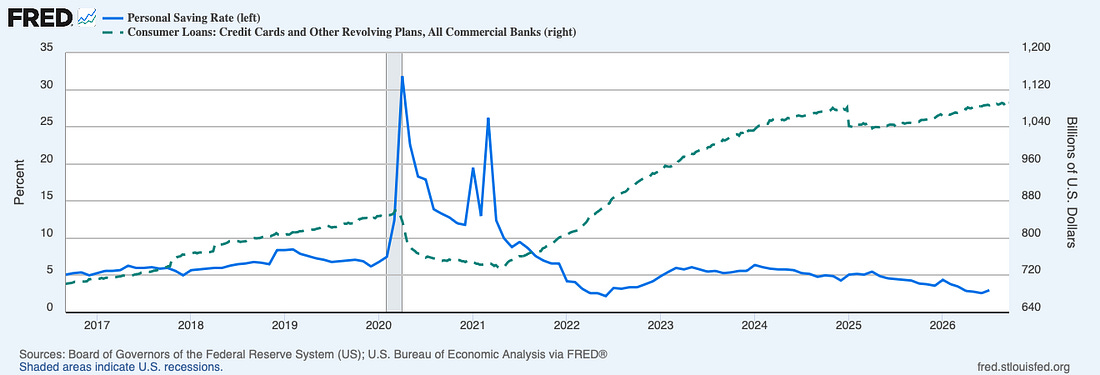 |
Since the pandemic, savings rates have barely gone above 5% and are now at 3%.
Loan balances were back at about $800 billion in 2022 and are now about $1.1 trillion.
That’s about an 8.3% growth per year.
So consumers are saving less and borrowing more.
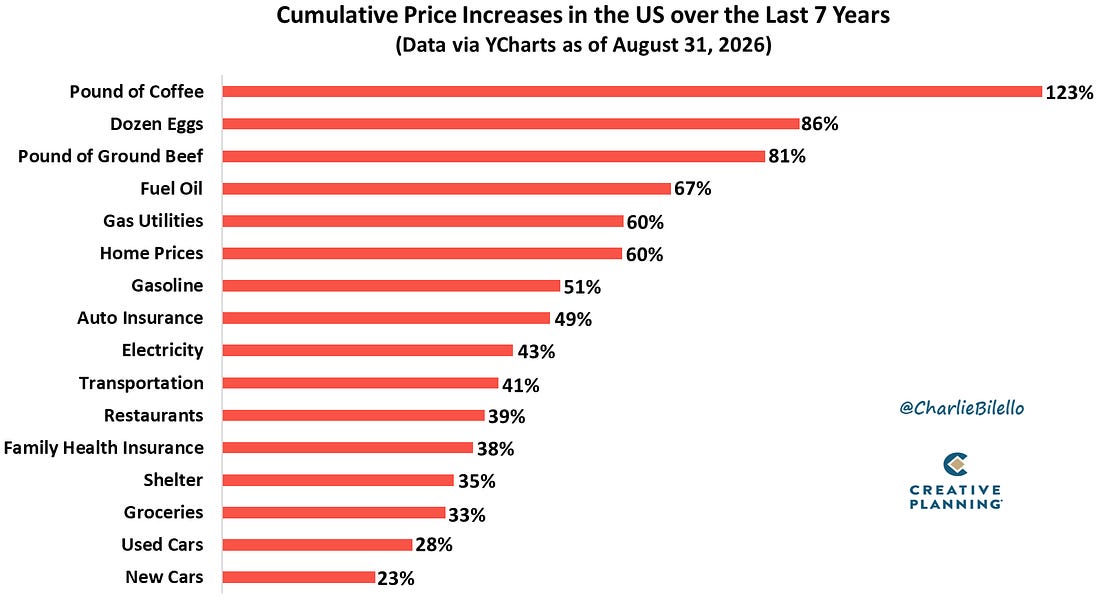
Clearly inflation is an issue.
 |
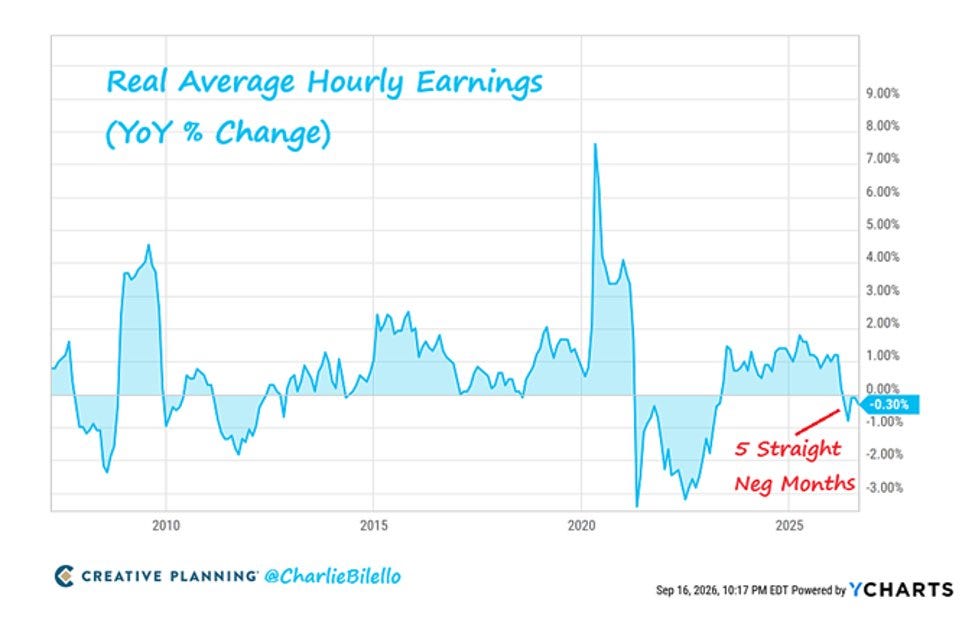
Wages haven’t kept up.
 |
They don’t feel good about it.
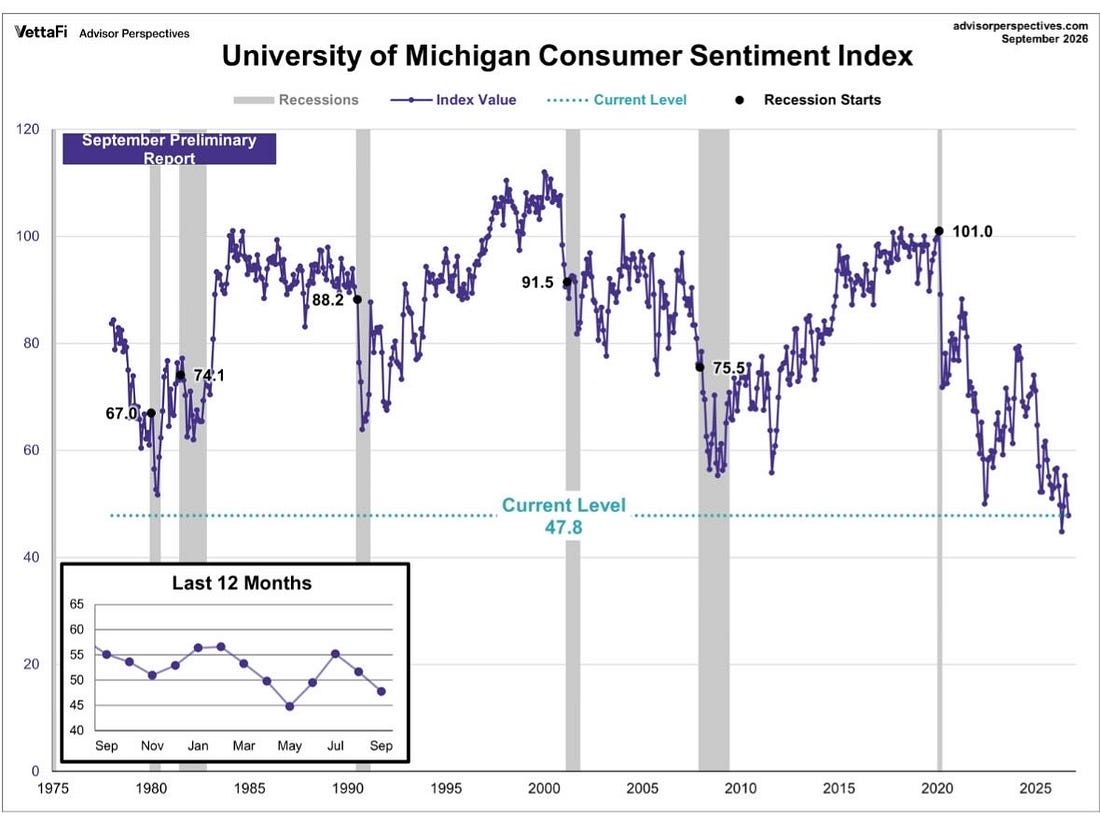 |
The narrative is that the economy is K-shaped.