
|



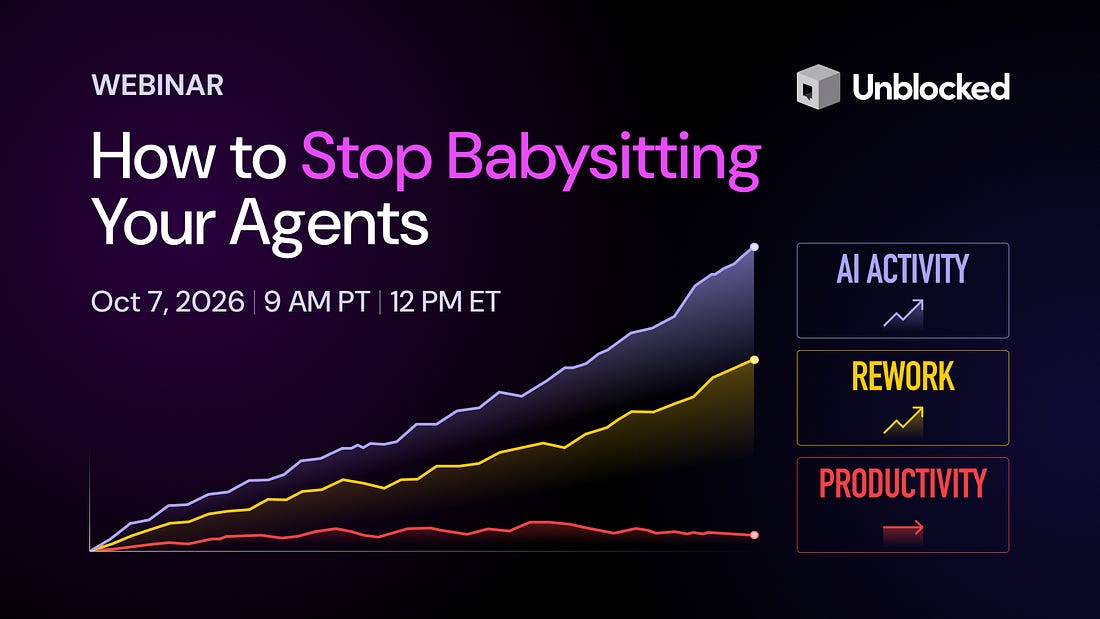
[Webinar] How to stop babysitting your agents (Sponsored)
 |
Agents can generate code. Getting it right for your system, team conventions, and past decisions is the hard part. You end up wasting time and tokens in the correction loops.
More MCPs, rules, and bigger context windows give agents access to information, but not understanding. The teams pulling ahead have a context layer to give agents exactly what they need for the task at hand.
Join us for a FREE webinar on Oct 7 to see:
Where teams get stuck on the AI maturity curve and why common fixes fall short
How a context layer solves for quality, efficiency, and cost
Live demo: the same coding task with and without a context layer
If you want to maximize the value you get from AI agents, this one is worth your time.
This week’s system design refresher:
Top 9 Places to Use Jev
LLM, RAG, AI Agent & Agentic AI
Ex-YouTube Engineer Rebuilds YouTube in 45 Mins (Youtube)
MCP vs Function calling
If Claude Code is a burger...
Top 9 Places to Use Jev
Jev is TypeSafe AI’s first System One Model. It is 100x faster and cheaper than frontier LLMs.
That opens up a lot of use cases people usually skip because the big models are too slow or too expensive for them.
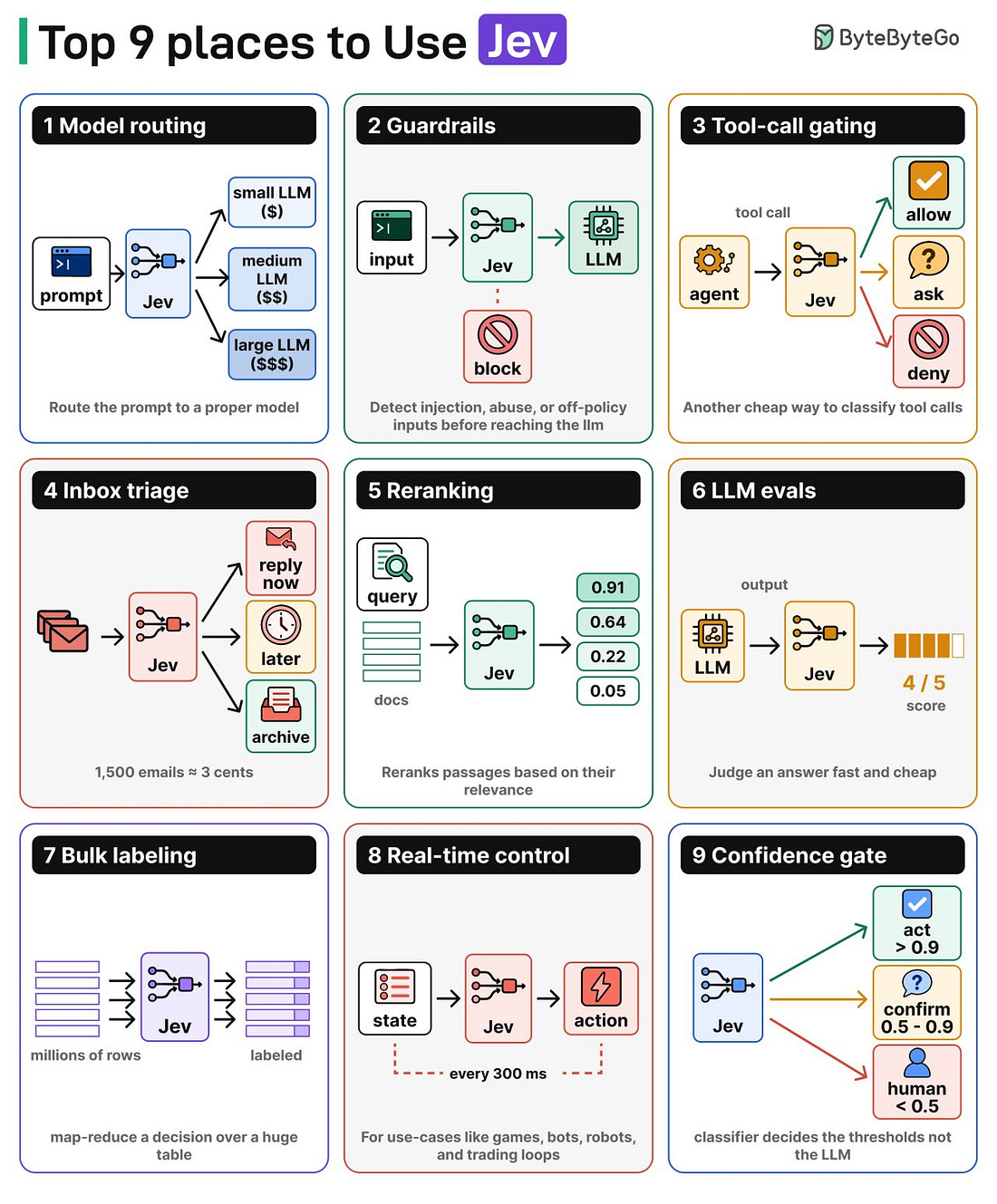 |
Here are the top 9 places to use Jev instead of an LLM:
Model routing. Jev takes the prompt as input and routes it to a proper LLM.
Guardrails. Detect security risks in the prompt first. Then pass it to the LLM.
Gating tool-calls. Classify agent tool calls into one of their permission categories.
Triage inbox. Classify lots of emails into categories (e.g., spam, urgent, archive).
Reranking. Score passages against a query (prompt) so we can rank them by relevance.
LLM evals. Evaluate an LLM’s output and return a score within a range.
Bulk labeling. Label lots of rows from a huge table fast and cheap (map-reduce style).
Real-time decisions. Use cases where a fast decision is needed in a loop (e.g., trading).
Confidence gate. Classify anything based on confidence and act properly.
The bottomline is to use the LLM for generations and use Jev on the decisions around it.
What are other places to use Jev instead of an LLM?
LLM, RAG, AI Agent & Agentic AI
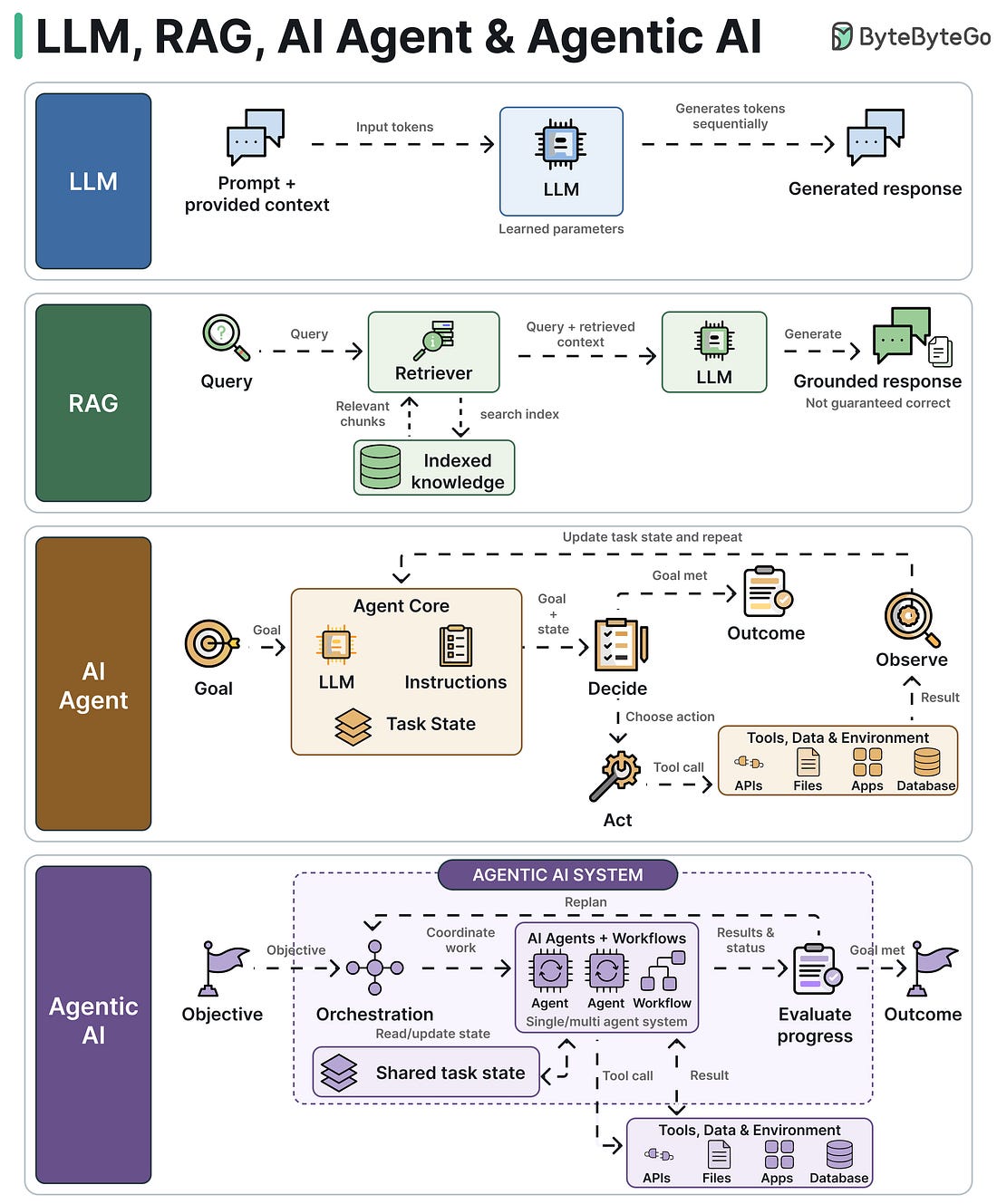 |
LLM: An LLM takes a user prompt and generates a response from its learned parameters. It does so by predicting tokens one at a time.
RAG: In RAG, the user query goes to a retriever before the LLM. The retriever fetches relevant information from the indexed knowledge base and passes it to the LLM along with the query. The LLM generates a grounded response, but it does not guarantee correctness.
AI agent: It has a goal and keeps track of the current task state. It can plan about what to do next, call tools, get a result back, observe it, and repeat until the goal is met. This feedback loop allows the agent to observe the results and adjust its actions accordingly.
Agentic AI: Putting one or more AI agents to meet a shared objective is what makes an AI system agentic. It is achieved through planning, tool use, and feedback. You add an orchestration layer, which coordinates work across multiple agents and workflows. Agents read and write to shared task states and can access tools, data, and the environment.