Thanks for reading The Briefing, our nightly column where we break down the day’s news. If you like what you see, I encourage you to subscribe to our reporting here.
Greetings!
If Meta Platforms wants to raise money by selling equity, now is the time. Meta shares have gone on an incredible run lately, jumping 27% since Sept. 8, when the company released its Muse personal AI agent. Meta stock is now up 18% so far this year, a bigger gain than that for Alphabet, Amazon or Microsoft—quite the turnaround for a company that not too long ago was in Wall Street’s doghouse for its seemingly out-of-control AI spending.
It’s no secret why investors have fallen back in love with Meta—the company has done a good job of marketing Muse, prompting lots of glowing reviews and headlines about app downloads. Wednesday’s Connect conference, where Meta CEO Mark Zuckerberg unveiled new virtual reality and AI hardware—including a device called Charm designed around Muse—appears to have reinforced the positive sentiment. But let’s not overinterpret the current state of play. In AI, no one stays on top for very long.
Remember how OpenAI’s launch of ChatGPT put Google on the back foot, sparking lots of chest-thumping about the bleak future for the tech giant—until Google’s Gemini eventually caught up? Starting around November of last year, Gemini was the hot new model. But Google’s moment in the AI sun didn’t last. With Gemini appearing to lag behind, some now say Google isn’t even in the frontier AI race!
Meta has ridden the same roller coaster. Back in late 2023, when Meta released its Llama 2 model, it got such a positive reception that some saw it as taking market share from OpenAI’s GPT models. Reaction to Llama 3 in early 2024 was also upbeat. But Meta’s reputation fell into the toilet in 2025 after the company ran into problems with Llama 4.
The current burst of enthusiasm for Meta is a bit nuts. A headline on Bloomberg Opinion on Thursday suggested that the new Charm device “could be Meta’s iPod moment.” Huh? The iPod was a revolutionary device for listening to music, filling a need everyone had. The Charm offers another way for people to interact with an agent, in addition to their phone and Meta’s AI glasses. Who needs a separate device just to talk to Muse? Chances are Charm will quickly be nicknamed Charmless.
Whether Muse’s popularity is enduring is also a big question. We reported earlier this week that more than 500,000 people had tried out Muse a week after launch, which is an encouraging number. But how many of those will still be using it in a month or six months’ time? We have good reason to be skeptical about Muse’s prospects over the long term, given the widespread antipathy consumers are expressing toward AI.
And even assuming Muse remains popular, will it make or lose money for Meta? Don’t forget the agent is free to use within certain limits. A report by Rosenblatt Securities on Thursday suggested that for Muse to be profitable, either computing costs would need “to drop substantially” or an average user would have to spend more than $1,000 a month buying stuff through Muse, “well above current e-commerce averages or spending on Amazon.” (Meta plans to take a cut of transactions done through Muse).
All that means Meta’s current stock rally won’t last. If Zuckerberg is smart, he’ll get Meta to sell a few billion dollars’ worth of stock, raising much-needed cash for its costly AI expansion.
Jensen Huang’s Memory
Nvidia CEO Jensen Huang is never out of the news, but he got attention in the past day or so for his claim, in an interview with the New York Times’ Ezra Klein, that he doesn’t know his own address. When Klein expressed doubt, Huang doubled down, saying, “It’s completely true” and insisting that a “few years ago” he had to pump gas and didn’t know his own ZIP code. He also doesn’t know his phone number, he claimed.
The Nvidia CEO said, “I forget these things.” (Maybe he has early-onset Alzheimer’s—joke!!!) Huang cites knowing your home address as an example of basic skills people don’t really need in an era of AI. (He puts basic math skills in the same boat).
It’s a bit hard for an ordinary being to understand how anyone can go through life not knowing where they live. Sure, a CEO like Huang, who is constantly traveling, likely has people who drive him everywhere and handle his every need. But still, is he really that disconnected from ordinary life?
In Other News
• Chris Malone, OpenAI’s former head of data centers, joined Nvidia as vice president of its DSX platform this month, according to his LinkedIn profile. DSX is the division that helps customers design and build AI data centers according to Nvidia’s specifications.
• Oracle, which is set to lease a New Mexico data center on behalf of OpenAI, sent a notice to the developer asserting its contractual rights to withhold payments if project delays persist, according to Bloomberg.
• New York has sued Polymarket for allegedly running an illegal gambling operation, expanding the state’s fight against prediction markets after it earlier sued rival startup Kalshi and others.
• Merchants that sell on Amazon can now use Amazon’s software tools to manage their inventory at rival retailers, including Walmart, Shopify, eBay and TikTok, Amazon announced Thursday at its annual conference for sellers. Merchants will be able to update their product listings and track orders for all retailers from their Amazon Sellers Central dashboard.
• Databricks is acquiring Row Zero, a five-year-old Microsoft Excel competitor that sells spreadsheet software that’s designed for analyzing massive amounts of data.
Today on The Information’s TITV
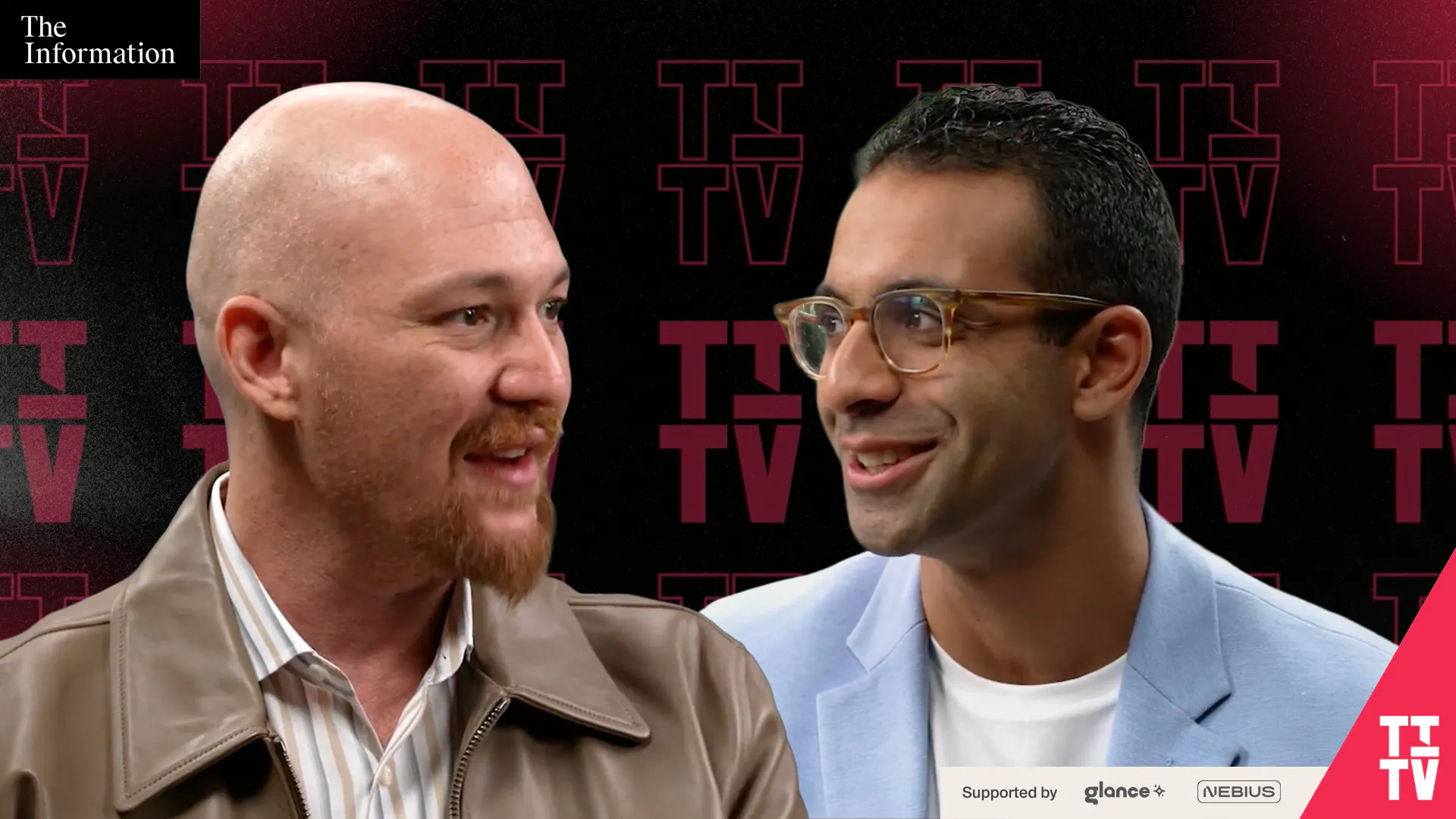
Check out today’s episode of TITV in which we speak with the CEO of Replit about his view on AI safety regulation at our AI Agenda Live conference.
Recommended Newsletter
Start your day with Applied AI, the newsletter from The Information that uncovers how leading businesses are leveraging AI to automate tasks across the board. Subscribe now for free to get it delivered straight to your inbox twice a week.