Lumina Foundation is working to increase the share of adults in the U.S. labor force with college degrees or other credentials of value leading to economic prosperity.
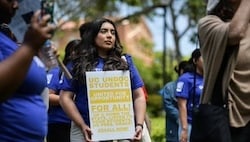
California college students without legal immigration status still cannot work at public colleges and universities after Gov. Gavin Newsom again vetoed a bill that would have given them that right.
Assembly Bill 713 would have adopted an untested legal theory that argues that a 1986 federal law barring employers from hiring workers in the country without authorization doesn’t apply to state governments. The logic? That 40-year-old law doesn’t mention state governments as a type of employer that cannot hire workers without proper status. But for the second time in three years, Newsom decided that adopting that theory for California would expose the state’s higher-education system to the wrath of the federal government.
Higher education’s response to artificial intelligence has been uneven. Some colleges are creating new AI-centered majors, some are banning its use in coursework, and some are leaving policy decisions up to individual professors.
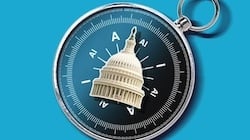
As some colleges delay their response and others embark on the new academic year with patchwork campus policies, Congress has remained largely hands-off. Until now. This week, U.S. Rep. Suzanne Bonamici, an Oregon Democrat, will introduce the Artificial Intelligence Education and Workforce Readiness Act to regulate AI in education.
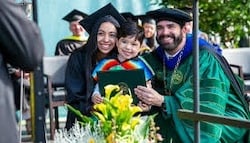
Student parents often face challenges accessing college resources and participating fully in campus life while balancing classes, parenting and, in many cases, paid work. In response, the California State University system is funding projects at 11 campuses aimed at expanding resources, strengthening belonging, and making college more family-friendly.
The funding will support a range of projects during the 2026-27 academic year. For example, California State Polytechnic University, Humboldt, will provide diapers, wipes, shoes, and winter clothing to student families, while San José State University will expand parenting support through its food pantry and conduct a student-parent needs assessment.
A group of researchers sued the National Institutes of Health last week, arguing that the agency violated their First Amendment rights by targeting work focused on diversity, equity, and inclusion and other subjects disfavored by the Trump administration.
The lawsuit alleges that NIH is screening grants for 235 keywords related to DEI, gender identity, climate change, vaccines, misinformation, and other topics. If grants are flagged, researchers often must either scrub mentions of those subjects from their work, modify their projects, or risk having their grants terminated, according to the complaint.
Long before this administration, hundreds of colleges built a remarkably fragile business model—raise the sticker price, discount it heavily, compete for students with ever-more-expensive facilities, use merit scholarships to lure families who could afford to pay more, borrow for buildings meant to attract the next class, and hope enough students, especially full-paying ones, keep showing up to make the arithmetic work.
For years, it worked. Now, several of its load-bearing assumptions are being tested at once—and that may say more about the future of higher education than the latest fight between universities and Washington.
Recent high school graduates who enroll in college increasingly are staying for a second year, according to a new report from the National Student Clearinghouse Research Center.
The 2026 High School Benchmarks report looks at enrollment, persistence, and completion trends among high school graduates. The research shows steady rates of overall college enrollment among recent high school graduates and an uptick in persistence, particularly for graduates of high-poverty schools.