London’s joint-tallest building, Trump’s billion-dollar Saudi F-35 deal and autumnwear from Asha Jasper.
|
Tuesday 22/9/26
|

|
|
London
Paris
Zürich
Milan
Bangkok
Tokyo
Toronto
|
|
|
|

Good morning from Midori House. For more news and views, tune in to Monocle Radio. Here’s what’s coming up in today’s Monocle Minute:
THE OPINION: Making a case for formal dinners
IN THE BASKET: Trump’s billion-dollar Saudi F-35 deal
URBANISM: The London skyscraper planned to reach great heights

DAILY TREAT: Looks sharp in Asha Jasper’s autumn collection
AFFAIRS: The chairman of Euronews on the role of media during conflict
|
|
A tale of two cities: What can London learn from the ritual of a New York dinner service?
By Ben Drinkwater
|
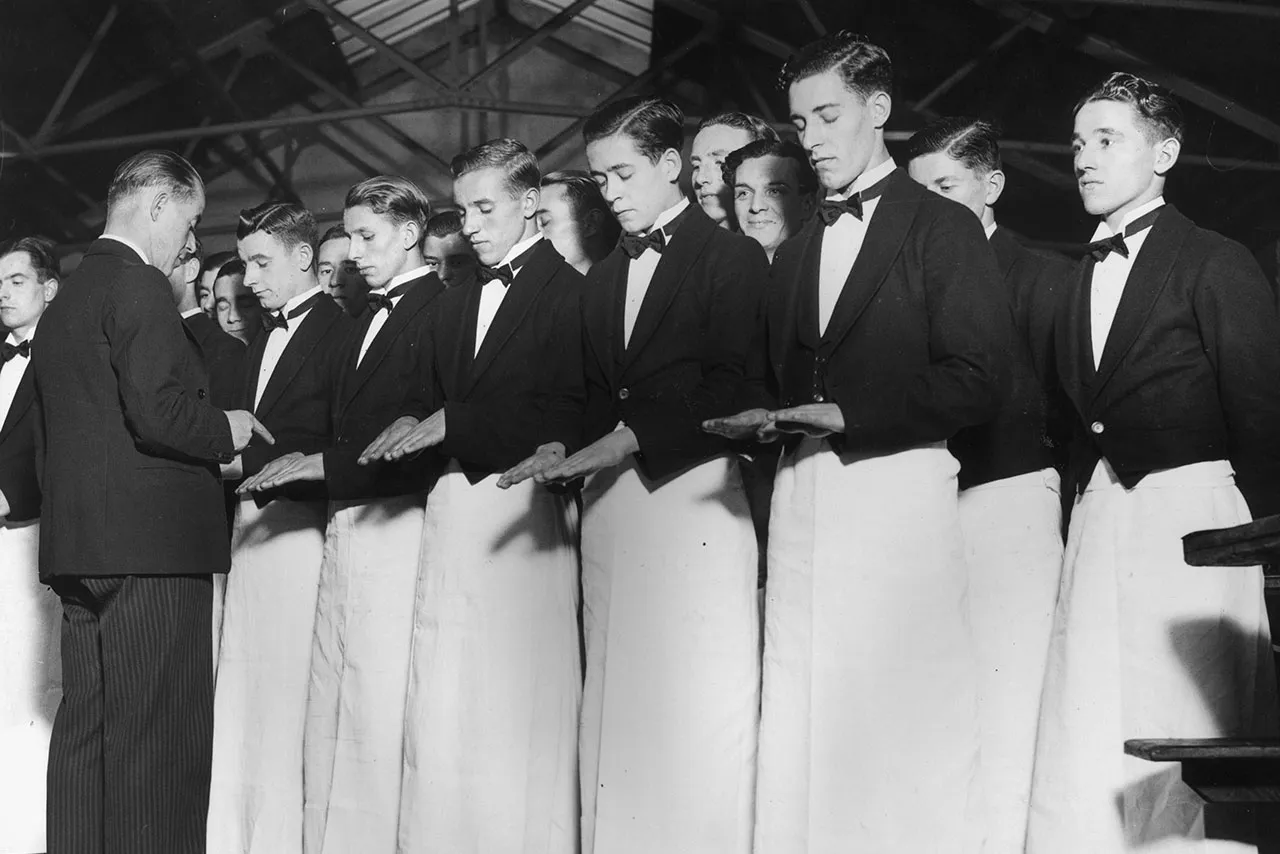
The army of waiters descending on our table makes me choke on my very dry, very dirty vodka martini. Hundreds of them are marching in arm-tucked formation just to fillet a Dover sole. One splinters off to portion the carrots and peas. Another tilts a napkin-draped silver boat until its dill-flecked contents forms a little puddle on my plate.
I’m at Oslo Court, St John’s Wood institution and flag bearer for a bygone age of silver-service, where lunch is a state visit and nobody
asks you to scan a QR code. By contemporary standards, its hospitality ought to have atrophied – antiquated at best and Last Night of the Proms at worst. But as another spotless waiter refills a glass I had barely noticed finishing, I can’t lie – I’m having a fabulous time.
Not that Oslo Court gives a toss about how anyone thinks a dining room should operate. When Tony and José Sánchez took over the cream-drenched dining room of an art deco tower block in 1982, they dug their heels into the plush pink carpet and declined every invitation into “the future”. Even as London’s restaurants cycled through competing ideas of modernity, Oslo Court’s dessert trolley trundled on, past the chic River Café of the 1990s, the communal-table Ottolenghi-ism of the noughties and the post-recession Jamie Oliverfication of the
waiter-diner relationship. Eventually the city made a U-turn, returning to Oslo Court in a dinner jacket to be asked, “Would sir like another martini?”
|
|
|
Plate expectations: Trainee waiters inspected before service
|
|
Now the hallmarks of what you might call “formal” service are so ubiquitous that I keep having to
check the dress code before a night out. White tablecloths are back. So too are sommeliers, whom the job search website Reed recently listed among the country’s “roles on the rise”. At 45 Jermyn St, caviar and beef Wellington arrive on wheels; at
Maison François, diners went so feral for the pudding trolley that it now has a steak-tartare sibling. And then, inevitably, there’s
Simpson’s in the Strand where the return of its much-vaunted master carvers has been met with critical fanfare.
The chatterati’s precipitous embrace of yesteryear’s service is more than a little about-face. In 2014 one story declared the era of “haughty waiters, hushed rooms and starched tablecloths” over, relics of a time restaurants would be wise to forget. Jay Rayner even asked why anyone would waste money on “battalions of waiters”, before signing off, “It’s called progress.”
And who’s not for progress? Especially when core tenets of formal British hospitality are inexorably linked to a shameful past of empire and exclusion. Simpson’s, lest we forget, barred women from the Grand Divan until 1984. But I’m less keen on the critics who once proclaimed “modernity!” only to return to the past in their droves, swooning over the “properness and regalness” of a passing beef chariot. Their oscillation is, however, reflective of British culture’s dysfunctional relationship with nostalgia, and of a much deeper failure to reconcile the pleasure of service with the society that created it. But instead of a real reckoning, we lurch between the simpler – and impermanent – moral positions of repudiation and restoration. We strip off the tablecloth for the sins of everything that happened above it, then lay it back out with a cheeky wink to a bygone world.
It occurred to me, squeezed into a booth on East 60th Street in New York, that there may be a third way through this impasse. Le Veau d’Or reopened in 2024 after Lee Hanson and Riad Nasr – the men behind
Frenchette and Le Rock – took over the nearly century-old bistro. Like the Sánchez brothers, they talk about ownership as stewardship and as such have resisted the restaurateur’s
urge to transform everything within reach, from the lipstick-red banquettes and offal-led menu to the gleaming Upper East Side service.
Almost preposterously present, it’s the kind of unabashed hospitality that could only belong to a culture in which the question of service is settled. Which is not to say that the American restaurant has a spotless past; quite the opposite. It has grown out of a labour system riven by inequality, traces of which remain visible in who serves whom. But because the US at its best has always believed that the circumstances of one’s birth ought not to define your place in the world, its restaurants have proven more adept at prising apart the ritual of service from the class hierarchy. There is less guilt and more enjoyment, which is why tremendous care will be lavished upon you – from Bucksnort, Tennessee to Park Avenue – without any pretence that it makes you superior. Because, as one waiter put it to me, “the pursuit of hospitality is a commendable one.”
It’s a simple statement, but in the context of London’s neurotic relationship with service, a rather prescient one. Instead of treating each new fashion as an absolute moral correction of everything that came before, New York suggests that the cycle can be broken. That you can reckon with a complicated history, then decide once and for all what’s worth carrying forward. To me, that’s closer to progress.
Ben Drinkwater is a culture, food and travel writer and editor based in London. For more opinion, analysis and insight, subscribe to Monocle today.
|
|
Own the thing. Behind the next big thing
|
in the basket: Saudi Arabia & USA
Riyadh’s deal for F-35 fighter jets risks angering Israel
In the basket: 48 Lockheed Martin F-35A Lightning II fighters
Who’s buying: Saudi Arabia
Who’s selling: USA
Price: $24.3bn (€21bn)
Delivery date: Circa 2033-2035
This is not a done deal yet – the Royal Saudi Air Force is officially pondering other options for upgrading its fighter fleet, including the latest iterations of the Eurofighter Typhoon, Dassault’s Rafale and Boeing’s F-15EX Eagle II. But American approval of an F-35 sale – pending Congressional review – gives Saudi Arabia the option that it has long coveted.

|
If it goes through, the sale would make Saudi Arabia the Middle East’s second operator of the world’s most advanced fighter jet. This prospect has gone over predictably badly with the region’s first (and presently only) operator. Israel employed its F-35s extensively in recent operations against Iran and while relations with Saudi Arabia are not as frosty as they once were, the two countries do not yet have formal diplomatic relations.
Voices from Jerusalem are already reminding Trump’s administration that the US is obliged by its own laws to help Israel keep a so-called “qualitative military edge” over actual and potential regional rivals: this US administration will probably be happy to sell whatever Israel thinks it needs to maintain this.
|
|
urbanism: uk
One London will bring a head for heights – and history
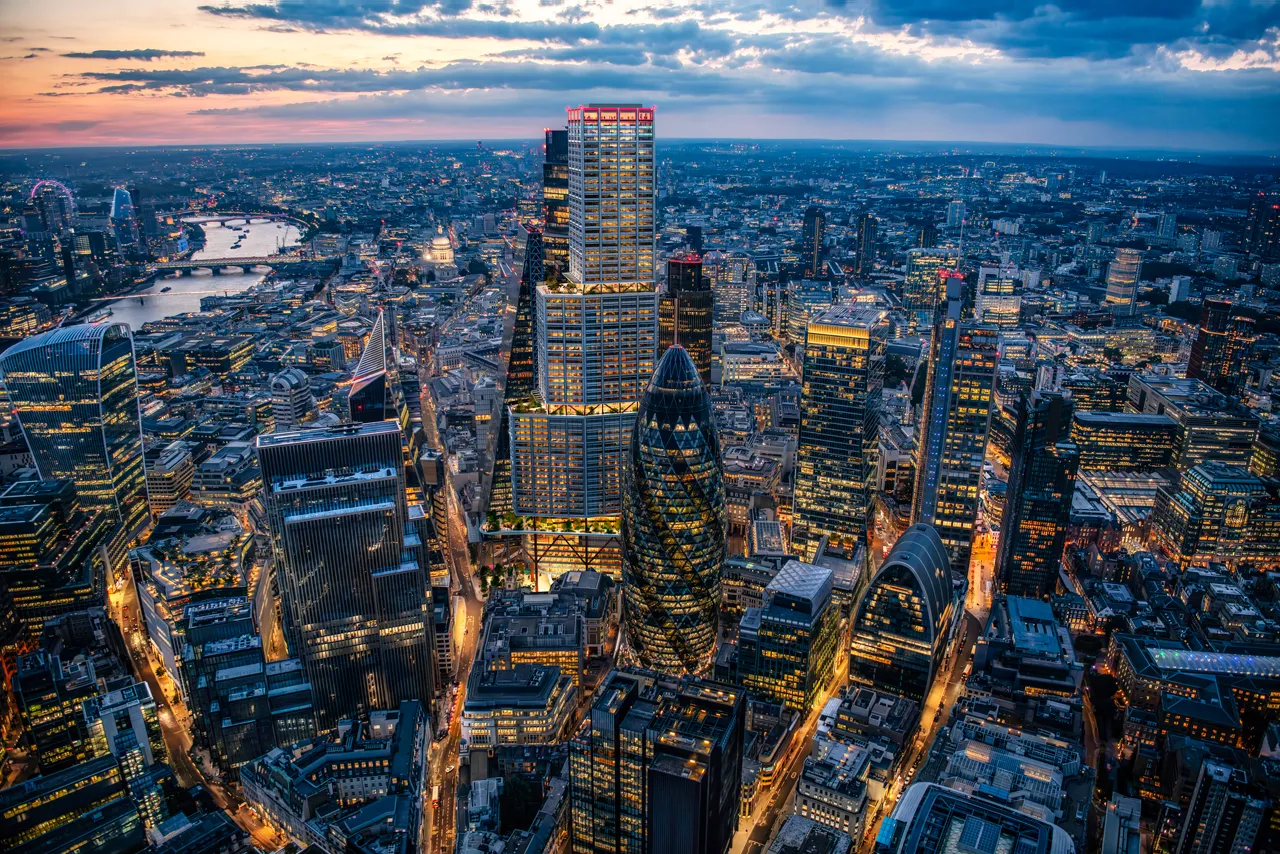
When completed in 2033, One London will be the joint-tallest building in the UK capital, matching The Shard across the Thames at 309.6 metres (writes Andrew Tuck). Sitting in the heart of the City, London’s financial district, it’s a testament to the sustained demand for premium office space and the Square Mile’s economic allure. But in an interview for Monocle Radio’s
The Urbanist, architect Eric Parry and developer David Camp, the CEO of Stanhope, underline how dramatically design demands have changed in the area. The building will also be a public amenity – a marrying of civic and corporate.
|
|
|
Tall order: One London will become the city’s joint-highest skyscraper
|
|
As part of this shift, One London will host classrooms in the sky, created in partnership with London Museum. “Every child in London can come to these classrooms and see where they’re coming from – it will be a fantastic opportunity,” says Parry. This sense of belonging, knowing how you fit in, will be across the continuum of time too: staring down at the roads below, you will also be able to discern the paths of the old Roman roads and alleyways that still follow a medieval street plan.
To hear the full interview, listen to the latest episode of ‘The Urbanist’.
|
|
• • • • • DAILY TREAT • • • • •
Pick up fine fabrics from Asha Jasper
When it comes to building the best menswear collections, sourcing deadstock threads and knowing the right mills have become just as important as fashioning a well-crafted garment. Asha Phillips, founder and creative director of Sydney-based brand Asha Jasper, designs collections from the weave and weight of textiles hand-picked from Japanese and Italian mills.
With the perfect fabric to hand, Phillips shapes pieces using classical tailoring methods and modern utilitarian references. We particularly like Asha Jasper’s straight-cut, made-in-Australia trousers that would fit everything from a boardroom to a bar.
ashajasper.au
|
|
| | |