What to Watch For at UNGA 2026 |
By Ivana Saric
Digital Editor, Council on Foreign Relations |
Heads of state and government are converging on New York City as the UN General Assembly (UNGA) kicks off annual high-level meetings tomorrow—one of the year’s biggest weeks of international diplomacy.
This year’s summit comes as the world grapples with wars in the Middle East and Europe, a global energy crisis, and heightened fears around artificial intelligence (AI). To cap it off, President Donald Trump will meet with Chinese President Xi Jinping for a highly anticipated state visit in Washington later this week.
The Daily Brief reached out to hear what CFR experts consider most important about the week ahead. -
Linda Robinson said she’ll be focused on the succession race for the next UN secretary-general and whether UNGA allows for “behind-the-scenes discussions” over the UN’s most powerful position to intensify this week.
-
One of the most anticipated meetings on the sidelines of UNGA is between Trump and Ukrainian President Volodymyr Zelenskyy. Stephen Sestanovich told the Daily Brief he expected Zelenskyy to push Trump to implement the recently signed Russia sanctions bill and to pressure Russian President Vladimir Putin to de-escalate. Ukraine also hopes to secure a deal allowing it to resume grain exports by sea.
- Paul Stares said he believed Trump will press Zelenskyy to “tamp down the escalating Ukrainian drone attacks on Russian energy facilities,” which he said are helping drive up energy prices “at the worst possible time” ahead of the U.S. midterms.
-
Trump is expected to meet with the acting leader of Venezuela, who took on the role after U.S. forces ousted former President Nicolás Maduro at the start of the year. Interim President Delcy Rodríguez will be “hoping to achieve global legitimacy and shed the pariah status her regime acquired under Maduro,” Will Freeman told the Daily Brief. For Trump, the aim of the meeting is less clear, Freeman said. But it could provide an opportunity to frame the Venezuela intervention as “his defining foreign policy success, at a time when there is much more focus globally on the fiasco in Iran.”
-
Canadian Prime Minister Mark Carney—currently engaged in a trade war with the Trump administration, and poised to become an associate member of the European Union—could use UNGA to diversify Canada’s international partnerships even more, said Jeremy McDonald. “It will be difficult for Carney to achieve any major policy victories through roundtables in New York,” McDonald said, “but he will continue to benefit from improved public perception as a supporter of international cooperation and multilateralism."
-
Xi’s visit to Washington Wednesday will mark his first trip to the United States in three years. Katie Sizemore anticipated both leaders will aim to preserve the “strategic stability” they agreed to at their Beijing summit earlier this year. While “Xi will seek to keep Taiwan in the forefront,” she said, “it is unlikely Trump will want to engage on the issue.”
- Gerald Brown agreed that China likely sees the bilateral talks as an “opportunity to gain key concessions on the U.S. approach to Taiwan.” This could include steps like reducing arms sales to Taiwan.
-
AI tech leaders are expected to attend Thursday’s state dinner with Trump and Xi. Michael Horowitz said he anticipated the Trump-Xi talks might yield “incremental progress on AI cooperation,” but “geopolitical mistrust and the economic stakes will make a substantive breakthrough challenging.”
- David Scheffer told the Daily Brief that UNGA comes amid an “exceptionally difficult year on human rights.” The body may adopt resolutions this week to shore up protections in distressed regions, but “implementing those resolutions will remain highly problematic.”
-
Finally, Clara Gillispie said that while climate change may not rank highly on formal agendas this year, it will still inform the week’s conversations. “We may not hear many world leaders say ‘climate change’ from the main stage,” she said, but “we are likely to hear them pay notable attention to issues such as rising demand for electricity and growing strains on key energy infrastructure.”
The Daily Brief will bring you the latest from UNGA as it comes.
|
|
|
|
Thoughts on Today’s Newsletter? |
|
|
|
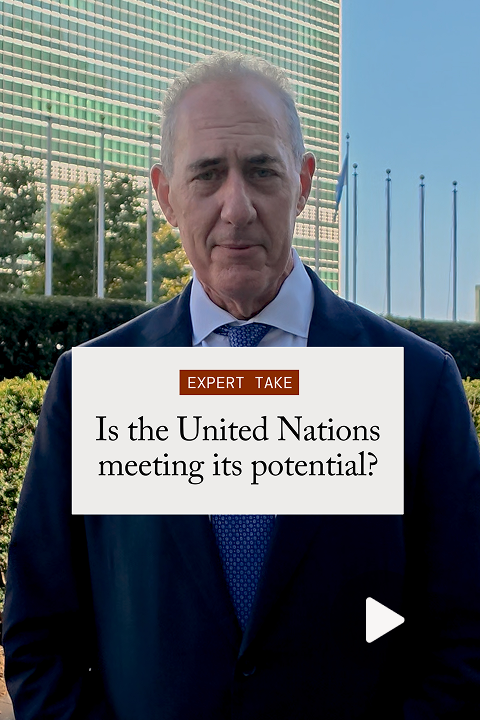
Given the many wars being waged around the world today, “the answer has to be no,” CFR President Michael Froman said in this new YouTube short.
The work of the United Nations is “a tale of two institutions”—one a gridlocked political body, and the other a network of agencies doing “real, important work in the field,” Froman said. (To learn more, check out another CFR YouTube short about the creation of the United Nations.) |
|
| |
|
Every day, the Daily Brief brings you a curated list of the top stories from around the world. |
- Ethiopian Rebel Groups Form New Alliance. Seven groups, including some that are adversaries, have declared an alliance aimed at overthrowing the government.
-
Amnesty International Accuses M23 of Possible War Crimes in Congo Mines. The rights group has accused the Rwanda-backed militia of unlawful killings and trafficking critical minerals.
|
-
Suspects in Killing of Haitian President Extradited to the United States. Eighteen people will face charges in a Florida court over the 2021 killing. More than a dozen additional suspects are still awaiting trial in Haiti.
-
Bolivia’s Congress Adopts $1.9 Billion International Monetary Fund Loan. The move marked a victory for the country’s conservative government, though unions threatened to protest.
|
-
Explosion Injures South Korean Soldiers in DMZ. Three officers sustained injuries inside the demilitarized zone (DMZ) that separates North Korea and South Korea, Seoul said. The area is heavily laden with landmines.
-
Pakistan Claims Deadly Strikes in Afghanistan. Islamabad announced that it struck suspected militant targets in eastern Afghanistan and killed twenty-eight people it said were militants. Kabul, as well as the UN mission in Afghanistan, reported that three civilians were killed.
|
-
Denmark, Greenland, and the United States to Sign Greenland Deal. While the text of the agreement has not been released, it reportedly gives NATO greater stewardship over Arctic security. The deal is expected to be signed during UNGA week.
-
AP: The Netherlands Braces for U.S. Sanctions Over ICC. The country, which hosts the International Criminal Court (ICC) in The Hague, is expecting potentially significant financial measures from the Trump administration, which has expressed displeasure over what it sees as the tribunal’s overreach.
|
-
Houthis Pledge Not to Strike U.S. Vessels. The Iran-backed militia is engaged in land fights with Saudi-backed Yemeni government forces, seeking additional territorial gains after seizing key points in and near the Red Sea last week. A senior Houthi official pledged not to target U.S. ships but urged others not to join the Houthi-Saudi conflict.
-
Fears of Renewed U.S. Campaign in Iran Sparked. Tehran claimed yesterday to have received intelligence that Washington was planning a new bombing campaign, while Trump told Fox News he was in “deciding mode” over next steps in the war.
|
|
|
|
Host: Ivana Saric
Editor: Xian Chiang Waren
Email Operations: Eric Rojas
Editorial Director, News: Phil McCausland
Editor-at-Large: Robert McMahon
Chief Digital Content Officer: Millie Tran |
|
|
|
58 East 68th Street, New York, NY 10065 |
1777 F Street, NW, Washington, DC 20006 |
|
|
|
|