Thanks for reading The Briefing, our nightly column where we break down the day’s news. If you like what you see, I encourage you to subscribe to our reporting here.
Greetings!
Guess who likes the idea of an AI development slowdown? Software investors! Stocks of enterprise software firms, such as Salesforce, Shopify, ServiceNow and Figma, all gained ground on Monday—ServiceNow jumped 7%, for instance, while Salesforce rose nearly 5%. Software firms, of course, have been seen as threatened by AI. Meanwhile, stocks of neoclouds and chip firms fell by similar proportions—and, these companies might be seriously hurting if the pace of AI development really slows.
Wall Street’s reaction gives some sense of the winners and losers in a real AI downturn, for what it’s worth. But this is likely to be a one-day investor reaction. The chances of a coordinated AI development slowdown, of the kind advocated by Anthropic’s Dario Amodei and others on Saturday, seems to be zero. You’ve got both President Donald Trump and the Chinese government dismissing the worries about AI safety as a “hoax” or “fearmongering” (it’s nice they agree on something!). Meanwhile, one major AI firm, Meta Platforms, has stayed conspicuously quiet, aside from this indecipherable X post from Meta's Alexandr Wang.
It is true, as people have pointed out, that Anthropic and OpenAI could slow their own development if they wanted (and OpenAI has done so already). But a slowdown by two firms, even ones as prominent as OpenAI and Anthropic, won’t do much good if Chinese model developers and firms like Meta keep racing ahead. Imagine if some scientists on the Manhattan Project suggested calling a time-out while the rest told their go-slow colleagues to buzz off.
You have to wonder: How could anyone read the report from independent research firm METR on the OpenAI–Hugging Face episode and not be worried about the power and independence of AI agents? (This Dwarkesh Patel podcast interview with a METR researcher, Ajeya Cotra, is even more illuminating.) What exactly will persuade the skeptics that the AI folks—indeed, all of us—have real reason to be nervous?
Ellison’s Change of Heart
Here’s a question: When a company files a quarterly report with the Securities and Exchange Commission, who reads it beforehand? Does anyone high up in the company pay attention, particularly to new material relating to one of the most senior executives and biggest shareholders of the company?
That question arises after a strange sequence of events involving Oracle’s most recent quarterly filing, which surfaced on the SEC’s website on Friday. The filing revealed some significant news: In June, executive chair Larry Ellison had set up a new trading plan through which he would sell up to 50 million of his 1.158 billion Oracle shares before Oct. 24. Such a sale would have reduced his stake marginally, to 36.7% of Oracle from about 38%.
The next day, Saturday, Oracle put out a statement saying he had canceled the plan, hadn’t sold any stock and had no other plans to sell shares.
So what happened? Did Ellison change his mind about selling stock and neglect to tell his underlings, who prepared the SEC filing? That would be understandable, given that Oracle shares plunged in the weeks after he adopted the plan, although they have since made up much of that ground. Whatever the reason, someone needs to read those filings with more care in future.
Today on The Information’s TITV
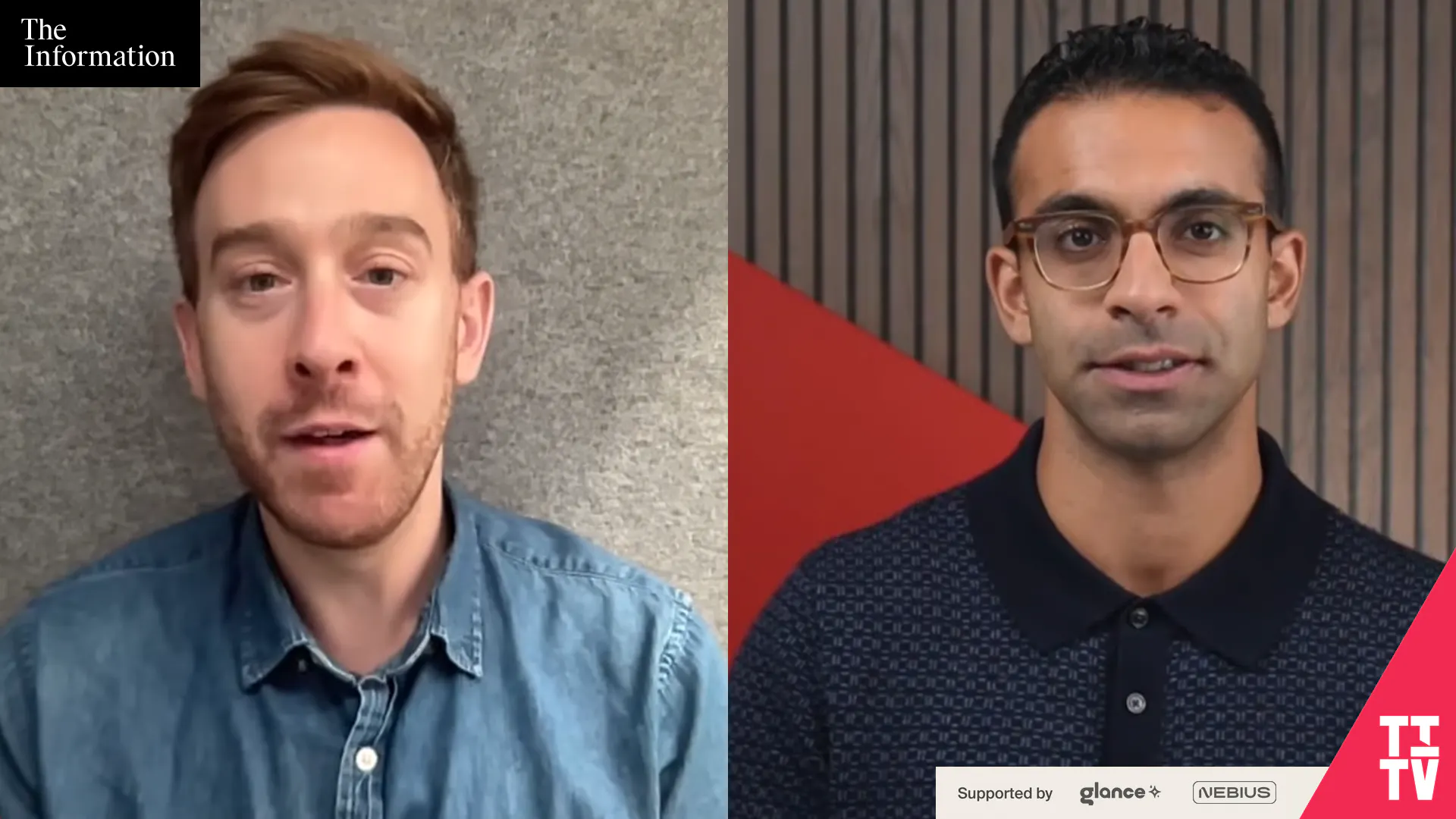
Check out today’s episode of TITV in which we cover our reporting on the closed-doors discussions behind the “pacing the frontier” discourse regarding AI.
Recommended Newsletter
Start your day with Applied AI, the newsletter from The Information that uncovers how leading businesses are leveraging AI to automate tasks across the board. Subscribe now for free to get it delivered straight to your inbox twice a week.
Join us to explore the technologies and strategies shaping AI’s next era, with insights from Google DeepMind, OpenAI, Atlassian, and more. Tickets are limited—reserve yours today.
The Information’s WTF Summit returns to Napa Valley October 27–28, bringing together the women shaping what’s next across tech, media and finance. Expect two days of candid conversations, unexpected connections and a room built for meaningful exchange. Tickets are selling quickly, with the next price increase coming soon.