Thanks for reading The Briefing, our nightly column where we break down the day’s news. If you like what you see, I encourage you to subscribe to our reporting here.
Greetings!
Nvidia’s AI chip design rival, Broadcom, may be forecasting rocketing growth. But Nvidia CEO Jensen Huang needn’t worry. He’s deftly parlayed Nvidia’s early AI winnings into what’s likely to be an enduring role as kingmaker in the sector, as he demonstrated by confirming the $12.9 billion purchase of Hugging Face on Thursday, a week after we first reported it.
Hugging Face is a popular archive of open-source AI models—yes, the name is a distraction—used by developers to make applications and tailor them to specific AI chips. The purchase could theoretically give Nvidia the power to influence the chips those developers use, although Huang insisted in a blog post on Thursday the company won’t do that.
“Hugging Face will remain an open platform for the entire AI ecosystem,” he said. Still, as one commenter on X pointed out Thursday, Nvidia could set things up so that models work fastest on its hardware, giving it an edge over its rivals.
There’s no question chip rivals aren’t thrilled. As one executive at a rival firm told Phoebe, Hugging Face is “100%” important to hardware designers, which might find it hard to trust the business once Nvidia owns it. Those rivals are likely to be the ones complaining the loudest to antitrust authorities, we’d bet. (The U.S. Department of Justice started looking into various other complaints from Nvidia competitors a couple of years ago, but that didn’t seem to go anywhere.)
The argument in favor of the deal is that American business needs a thriving open-source AI sector, if only to keep a lid on costs. Given how hard it is to make money in open source, there’s no guarantee the sector would thrive on its own. But Nvidia is emerging as an open-source champion—with this deal; with the Nemotron open-source models it is developing; and with billions of dollars it has handed over to open-source AI developers such as Thinking Machines Lab, Poolside, Reflection and others so they can continue to afford its pricey chips.
That makes Nvidia a counterweight to the rich closed-source AI firms, namely Anthropic and OpenAI, which also depend on Nvidia hardware but are racing to develop their own alternatives (with Broadcom’s help). Indeed, Hugging Face hopes Nvidia will help it expand its user base to 100 million from 18 million currently, according to Clem Delangue, Hugging Face CEO.
Still, there’s no getting around the amount of power Nvidia is amassing, with sizable stakes in neoclouds such as CoreWeave and Nebius; AI firms OpenAI, Anthropic and SpaceX; hardware makers such as MediaTek and Intel; and a slew of firms in the data center field that are helping it lock in its hardware bundle. Chances are Nvidia will get this deal past U.S. regulators, given the Trump administration’s focus on AI progress. How it fares with regulators in other countries—particularly in Europe, where Hugging Face has a big presence—is a whole other question.
Broadcom’s Sell-Off
You can’t win over Wall Street just with ambitious forecasts of revenue doubling every year. That’s one lesson from the 2.7% decline in Broadcom shares on Thursday, a day after CEO Hock Tan suggested the company’s AI revenue could reach $230 billion in fiscal 2028—compared with $20 billion in fiscal 2025. Wall Street, though, has reason to be skeptical.
After all, one of the big concerns right now—which Elon Musk, among others, is highlighting—is the prospect that power shortages in data centers will mean chips shipping next year can’t be turned on. If that happens, you can expect a slowdown in orders, meaning some of the bullish forecasts will turn out to be overdone. Hock Tan seemed to recognize that issue in his commentary on Wednesday night, saying the question of whether shipped chips will be “deployed on a timely basis…[is] always very much in our mind when we give you” forecasts.
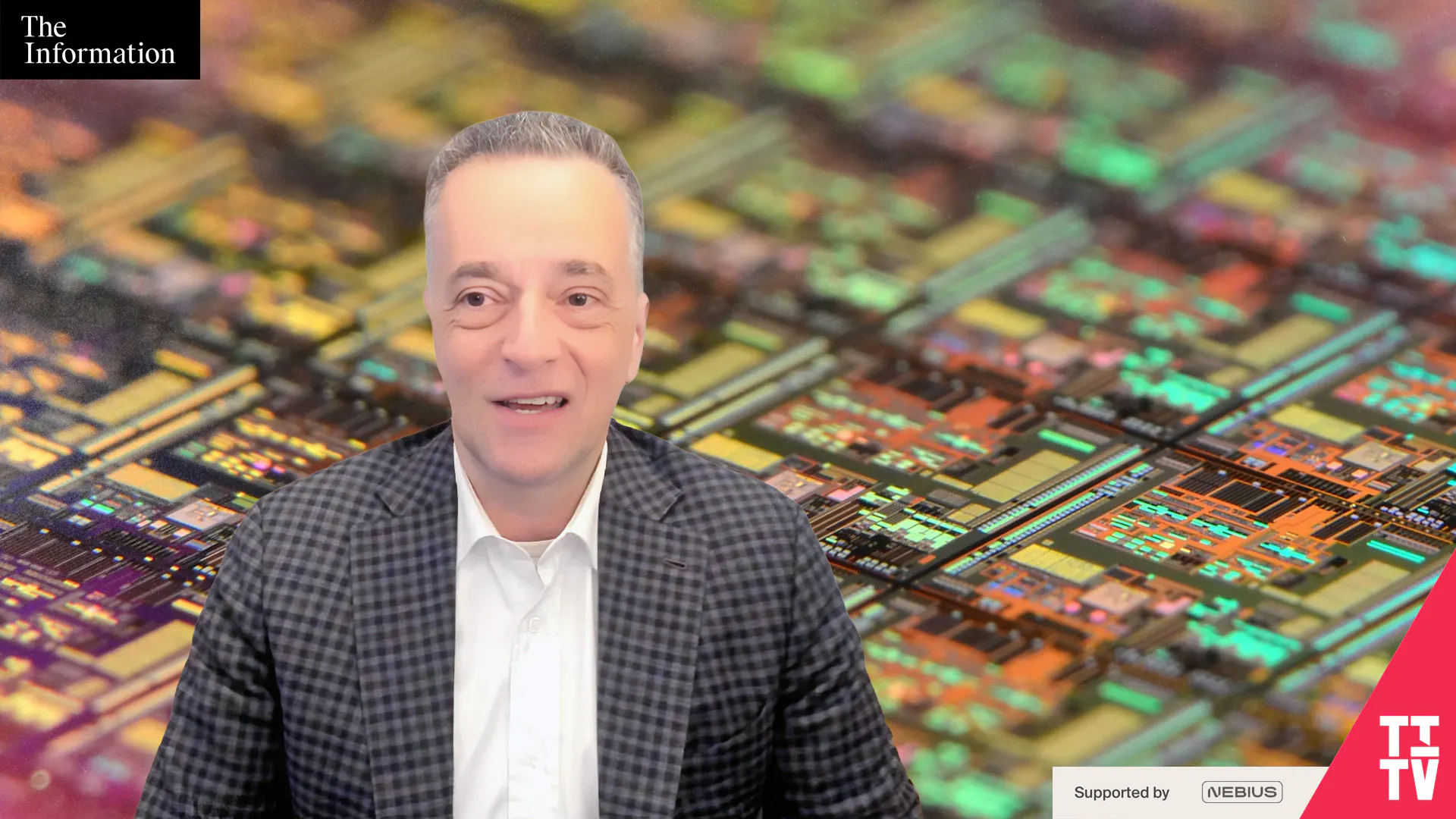
Even so, some analysts are skeptical. Baird’s Tristan Gerra said on The Information’s TITV Thursday that his estimate for Broadcom’s 2028 revenue was “slightly below Broadcom’s forecast…to account for some of those risks.”
Gerra said the other factor likely depressing Broadcom’s price was Google’s shift of some of its chip design business—currently handled primarily with Broadcom—to MediaTek of Taiwan, which Hock Tan alluded to in his commentary on Wednesday night. While word of the change circulated last year, Gerra said it’s now clear MediaTek was going to work on a new version of Google’s AI chip for training AI models, while Broadcom would work on the version for inference, or running the models.
The good news for Broadcom is that AI computing for powering existing models will gain share against computing to train new ones in the coming years, Gerra said.
In Other News
• OpenAI on Thursday started releasing its new GPT-6 Astra model, billing it as a major advance in commercial tasks from financial modeling to engineering design. The new flagship model, which OpenAI said also has significant cybersecurity capabilities, will initially be available to a limited number of organizations, including those that are part of OpenAI’s Daybreak Access cybersecurity program, the company said in a blog post.
• Tesla is holding a launch event for its Cybercab, the company’s first vehicle designed to operate without a steering wheel or brake pedals, in Austin, Texas, on Thursday.
• Adobe named Anil Chakravarthy as CEO, succeeding Shantanu Narayen, effective Dec. 1.
• SpaceX’s AI division said one of its Memphis data centers experienced an outage on Thursday. The news comes after several different AI models faced outages the same day. It is unclear if the outages are related.
• Oura, the company that sells rings tracking people’s health and activities, has turned into an enormously profitable enterprise. Its IPO filing, disclosed on Thursday, showed it generated $262 million in free cash flow in the nine months ending June 30.
Today on The Information’s TITV
Check out today’s episode of TITV in which we talk about Broadcom’s growing competition and why the stock slumped even on doubling AI revenue.
Recommended Newsletter
Start your day with Applied AI, the newsletter from The Information that uncovers how leading businesses are leveraging AI to automate tasks across the board. Subscribe now for free to get it delivered straight to your inbox twice a week.
Join us to explore the technologies and strategies shaping AI’s next era, with insights from Google DeepMind, OpenAI, Atlassian, and more. Tickets are limited—reserve yours today.
The Information’s WTF Summit returns to Napa Valley October 27–28, bringing together the women shaping what’s next across tech, media and finance. Expect two days of candid conversations, unexpected connections and a room built for meaningful exchange. Tickets are selling quickly, with the next price increase coming soon.