
|



Going to Omaha for the Berkshire weekend is always a great learning experience.
It’s not just about the Berkshire meeting either, you get to hear from a lot of smart people.
One of them was Tom Gayner from Markel - let’s share what I learned from him in Omaha with you today!
 |
Who Is Tom Gayner
Tom Gayner is one of the most successful investors in the world you probably never heard of.
He is currently the CEO of Markel Group, a company often described as a mini Berkshire Hathaway.
Born in 1961, Gayner developed his interests in business, investing, and accounting at an early age.
He studied accounting at University of Virginia and became a Certified Public Accountant (CPA) before entering the investment world.
In 1990, he joined Markel to manage the company’s investment portfolio.
At the time, Markel was a relatively small specialty insurance company.
Over the following decades, Gayner helped transform it into a diversified conglomerate with insurance operations, public stock investments, and dozens of wholly owned businesses.
What makes Tom Gayner special is his long-term track record.
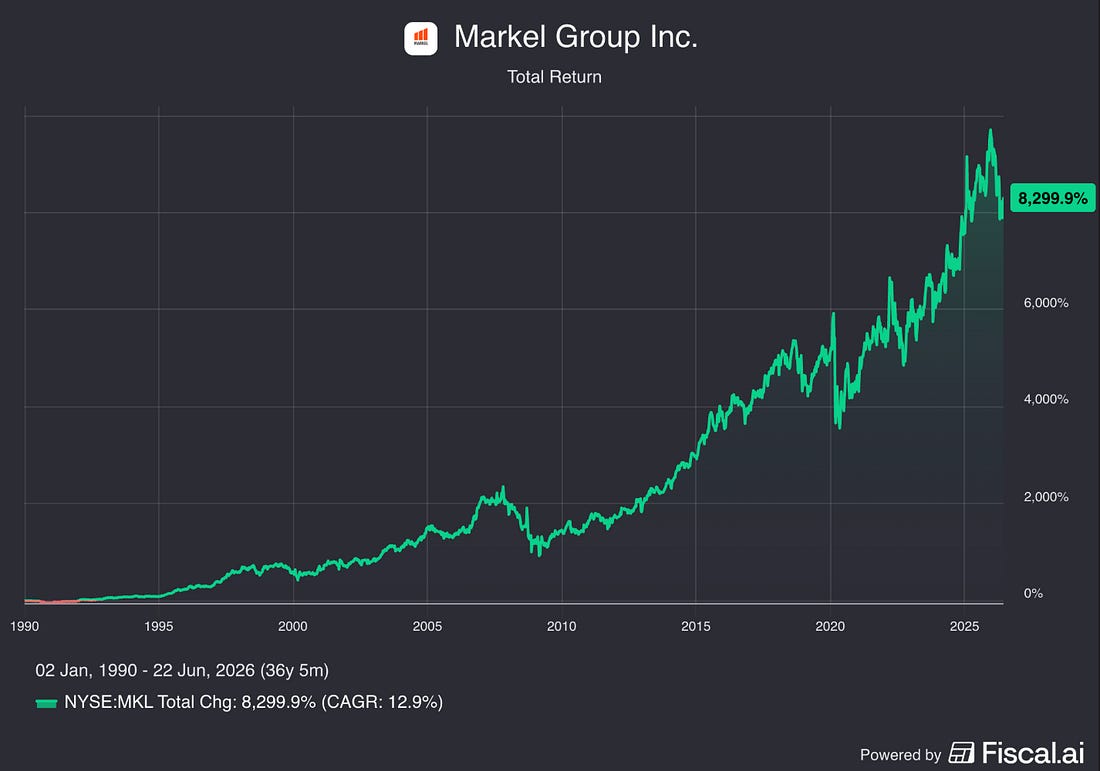
Since joining Markel, the company’s book value per share compounded at roughly 13% annually for more than 30 years.
 |
Like Warren Buffett, Gayner believes investing is simple, but not easy.
He focuses on buying high-quality businesses, run by honest and capable managers, and holding investments for long periods of time.
Gayner spends his time studying businesses and thinking about capital allocation.
That focus is what has made Tom Gayner widely regarded as one of the greatest capital allocators of his generation.
What I Learned From Tom
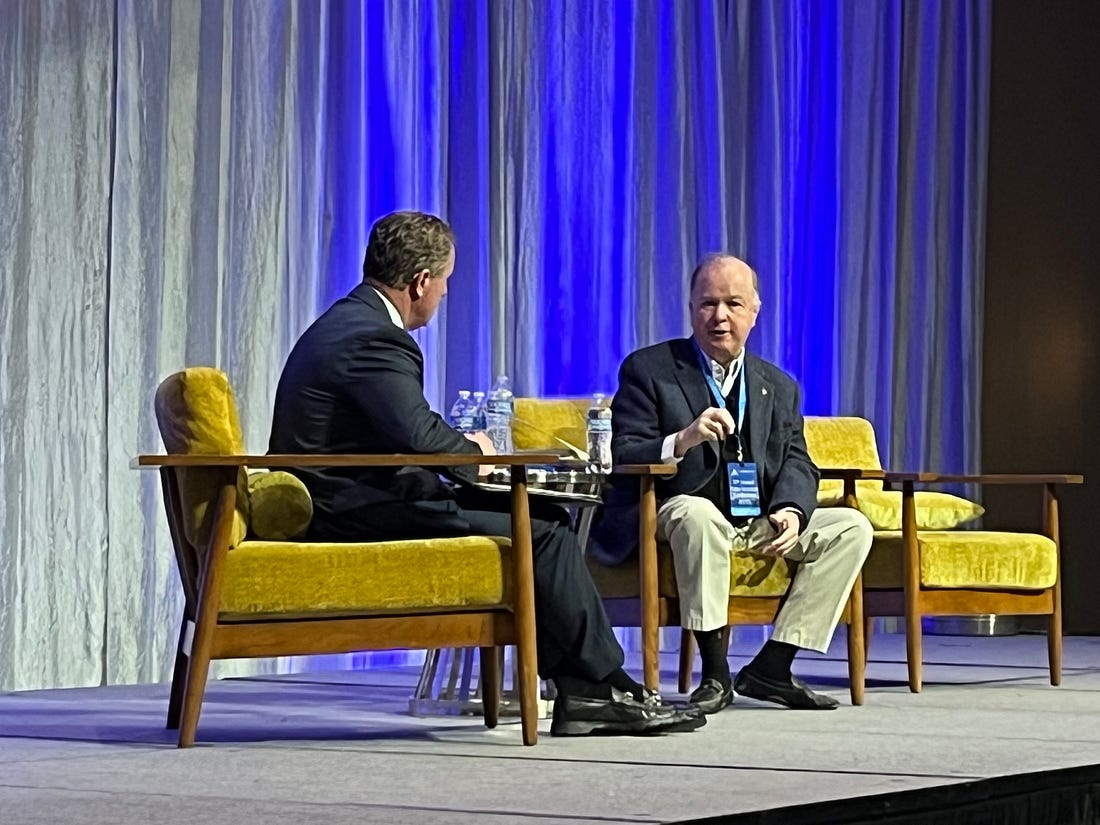
I saw Tom Gayner speak at Gabelli’s Value Investing Conference on Friday in Omaha.
 |
He’s very good at making things simple, and getting down to the most important things.
There were 3 things that really stuck out to me during his presentation:
How Markel thinks about allocating capital in their business
How Tom thinks about competition within capitalism
How Tom filters public companies for investing
Let’s dive into each of them!
How Markel thinks about allocating capital in their business
Here’s how Markel prioritizes capital allocation in their business:
Proven capital applicators: Markel want to give money to managers, companies, or divisions that have done well in the past
Interesting opportunities / expansions: They want to invest in interesting opportunities and areas they can expand in within their own business
Public stock / bonds: Only when there are good opportunities
Repurchase shares: if there’s nowhere else to put the capital and if the stock price is right
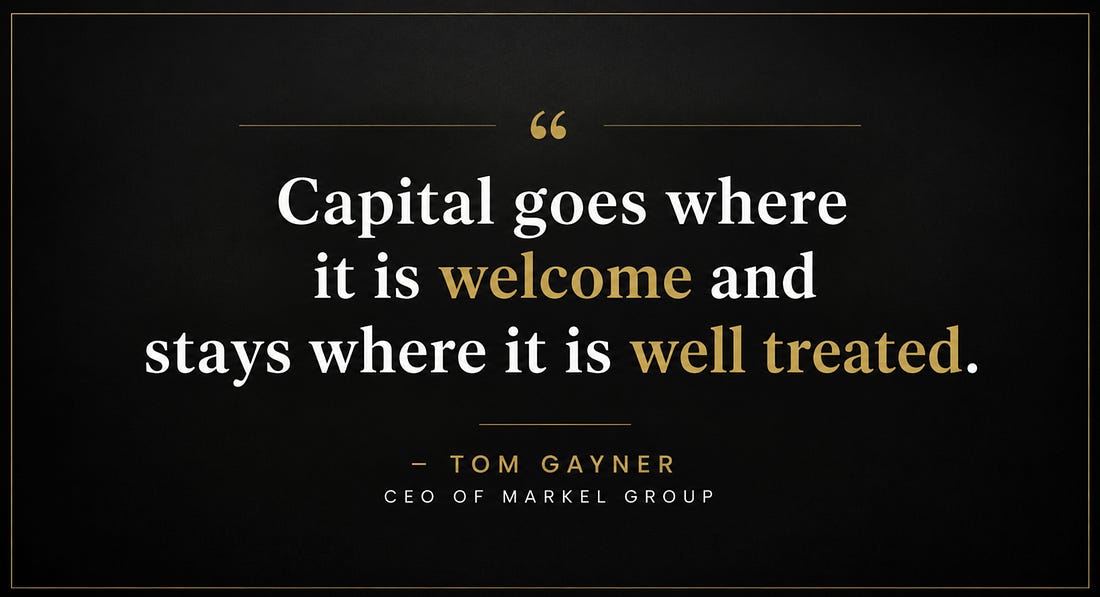
Gayner says there’s no religion or formula, the goal is to put capital where it’s treated best.
 |
How Tom thinks about competition within capitalism
He says it’s similar to Darwin’s idea of evolution and survival.
Businesses are under constant threat and competition, they can either adapt, migrate, or die.
Let’s understand these through some examples: