Roughly 90,000 people are directly affected.

See how companies and governments are responding to climate change and social challenges. Subscribe to Reuters.com for $1/week.


Sustainable Switch

Sustainable Switch

Climate Focus

By Sharon Kimathi, Energy and ESG Editor, Reuters Digital

Hello,

Today’s newsletter focuses again on the catastrophic Himalayan floods, caused by a glacier collapse, and the fears of yet more devastation from an overflowing lake.

At the last count, the deluge had killed 547 people in Nepal and five in China’s Tibet - figures that are expected to rise with almost 1,000 more missing in both countries.

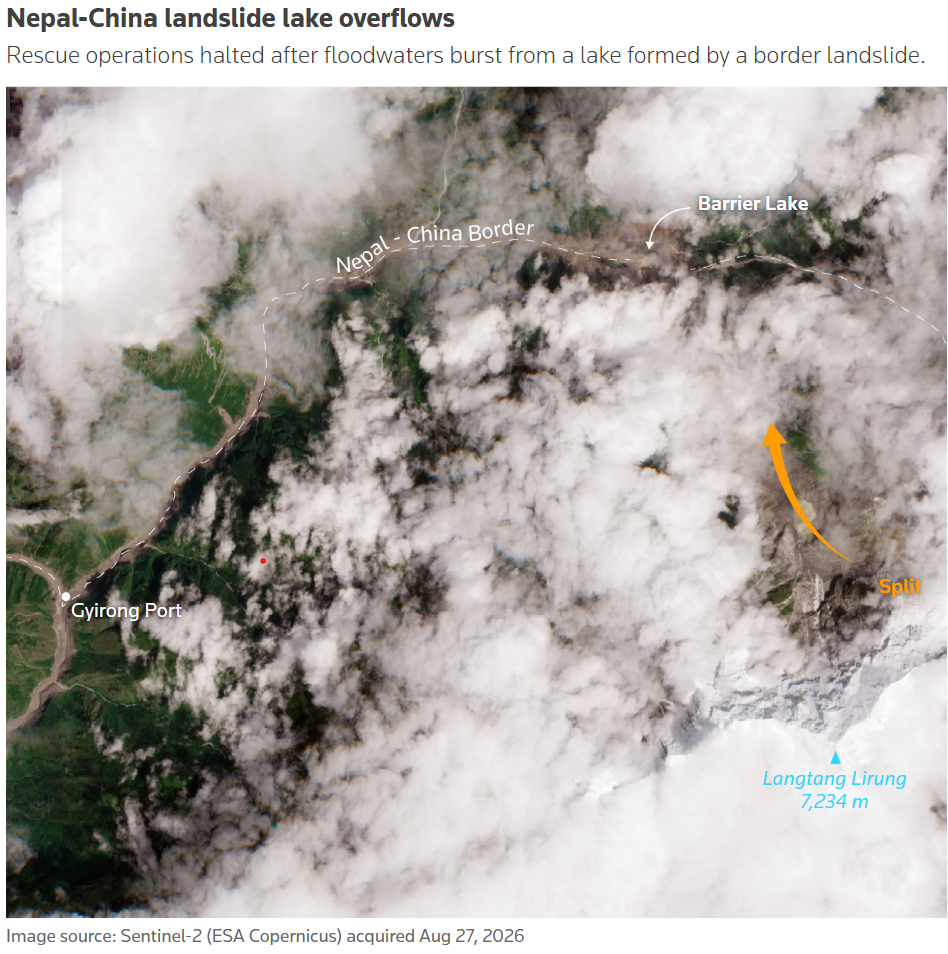
A huge torrent of rock, ice, mud and debris cascaded through Himalayan mountain river systems on Wednesday, and led to the formation of a lake where water continued to collect.

Rescuers briefly paused work as the water rose and overflowed into rivers, triggering panic. Emergency teams later resumed searching for bodies and survivors on Friday after the risks were found to be manageable.

Nepal was using satellite imagery to monitor two lakes upstream of the flood zone, including one that appeared to be growing, an official with Nepal's Disaster Management Authority said.

More than 90,000 people are estimated to be directly affected and in urgent need of humanitarian ‌assistance, the Red Cross said, as aid officials voiced fears of further flooding.

Kamal Kishore, Head of the United Nations Office for ‌Disaster ⁠Risk Reduction, warned of further "cascading hazards that might unfold".

"In a sense, the disaster is not yet completely over. It is still unfolding in some ways," he said.

World Health Organization spokesperson ⁠Tarik Jasarevic said at the same briefing that six health facilities had been damaged in the landslide and that eight healthcare ⁠workers were missing.

"Following a disaster of this scale, displacement, overcrowding and disruption to water, sanitation and health ⁠services can increase the risk of infectious diseases, including diarrhoea and respiratory illnesses," he said.

Wednesday's flood ripped through villages and valleys, destroying power stations, roads and bridges along a route that links Kathmandu with Lhasa in Tibet and is popular with trekkers and pilgrims. Of those missing, at least 540 are foreigners, many of them Hindu pilgrims from India headed to the holy Mount Kailash and Lake Mansarovar in Tibet.

In Beijing, China's Politburo met on Friday and called for stronger monitoring of glacier lakes, landslide risks and barrier lakes, emergency aid to affected areas in Nepal, and closer international disaster cooperation.


Climate Buzz

1. Typhoon Saudel makes landfalls on China's eastern coast, disrupts travel

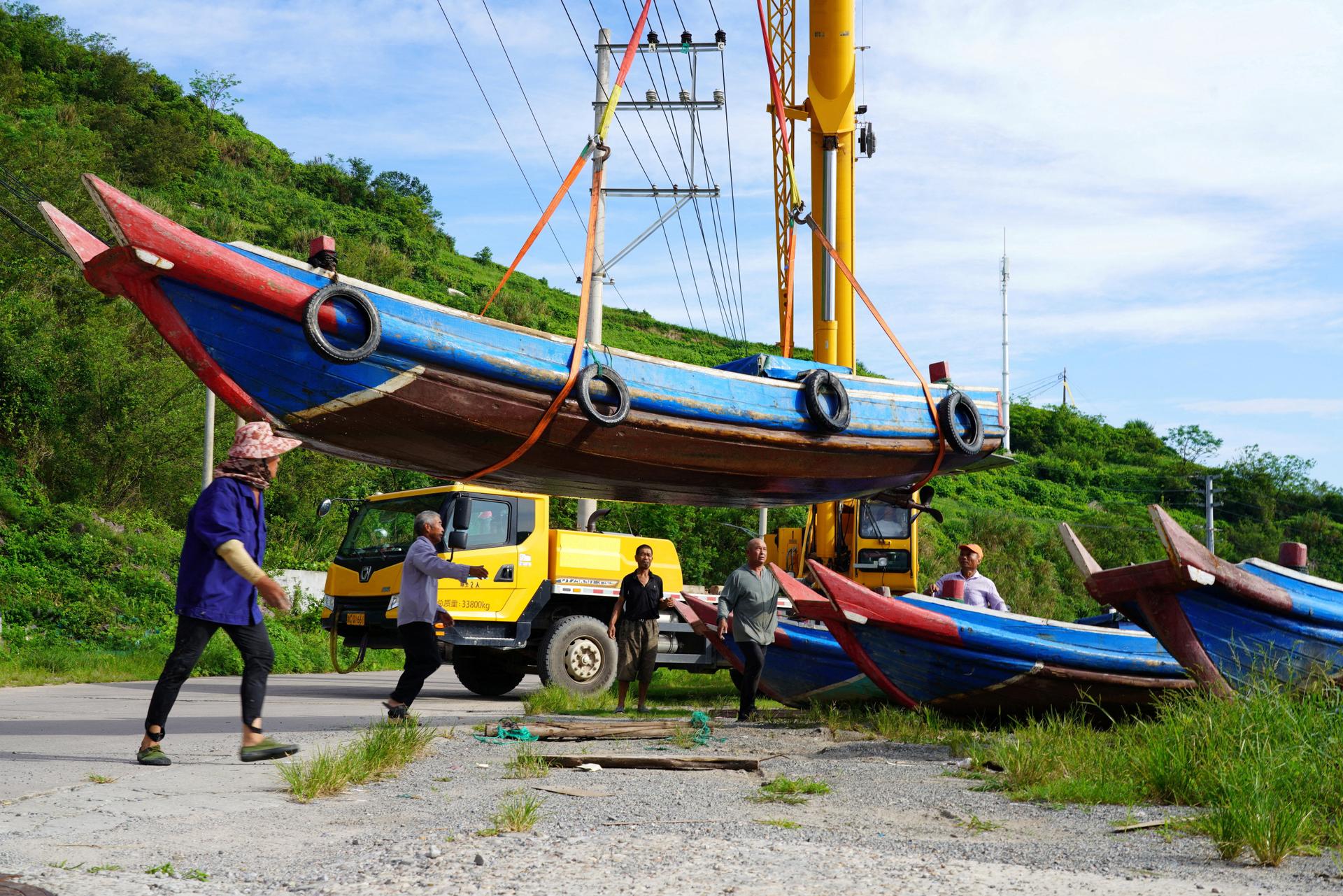
Typhoon Saudel made two landfalls on China's eastern coast on ‌Friday morning, as authorities evacuated people and halted trains and ferries. Saudel is the third typhoon to strike the eastern province of Zhejiang this year, and is set to bring torrential downpours, according to Xinhua news agency. As the typhoon moves inland, it could drench provincial-level regions ‌including ⁠Hubei, Guangxi and Yunnan.


A crane hoists a wooden aquaculture boat out of the water at a village in Yueqing as Typhoon Saudel approaches Zhejiang province, China. cnsphoto via REUTERS 

2. Extensive power cuts hamper life in Sudan

Army-controlled areas of Sudan have been plagued by blackouts that have worsened recently due to a combination of targeting of the power grid by the rival Rapid Support Forces (RSF) and meagre government funding to carry out repairs. The ⁠blackouts have hit hundreds of thousands of people who returned to Khartoum after the army retook it last year, and have undermined attempts to rebuild the devastated economy.

3. Iran war spurs Europe, Asia to boost renewables 

Governments across Europe and Asia are scrambling to accelerate their renewable energy build-out in a bid to cut dependence on fossil fuel imports six months into the U.S.-Israeli war with Iran, providing a fresh impetus to the global energy transition. But has the conflict actually delivered a boon to ‌the clean energy transition? Click here for a Reuters analysis on some of the ways to measure the impact.

4. White House pushes for more refinery waivers to ease pump prices

U.S. President Donald Trump’s administration has asked federal environmental regulators to allow the nation’s small oil refineries to blend less biofuels into their gasoline and diesel than initially projected as part of the White House’s efforts to ease pump prices, ‌according to two administration officials. The outcome would please the oil industry but trigger a backlash in the Midwest where farmers fought ferociously for strong biofuel mandates.

5. India drafts nuclear reform to boost domestic technology

India’s new draft framework to reform its nuclear approval requirements on foreign reactors aims to steer companies toward domestic technology over imports. The nation is counting on nearly $210 billion in investments that the industry expects to require to raise its nuclear power capacity almost tenfold to 100 gigawatts (GW) over the next two decades, while reducing dependence on coal.

As a friendly reminder, there will be a limited number of newsletters while I'm away for my honeymoon, but my colleague Ross Kerber will be covering Sustainable Switch on September 4 and 11. I’ll be back giving you the latest environmental, social and governance stories on my return on September 15.


What to Watch

 
Play 
 

Residents in Gary, Indiana - a predominantly Black community with the highest percentages of African Americans in the U.S., according to the U.S. Census Bureau - remained without power nearly two weeks after the devastating storms on August 11. Click here to learn more from Reuters video journalist, Eric Cox. 


Climate Commentary

  • Traders are not betting on a return to a stable and predictable energy market that existed before Russia's invasion of Ukraine snarled global gas markets in 2022, according to Reuters global energy transition columnist Gavin Maguire. Click here for seven energy charts that explain it all.
  • You’ve heard of greenwashing. Now there’s greenhushing – the purposeful silencing of climate change initiatives. Helen Clarkson, CEO of the international non-profit Climate Group, explores why certain news outlets are guilty of greenhushing by failing to mention the role climate change plays when reporting about the heatwaves and wildfires.
 

Climate Lens