Trump’s "little detour"

Get behind the headlines of Washington politics and its global impact. Subscribe to Reuters.com for $1/week.


Politics U.S.

Politics U.S.


By Trevor Hunnicutt, White House Correspondent

Six months ago, President Donald Trump made a decision that has come to define his presidency. His order to join Israel in strikes against Iran launched a military campaign that continues to shape foreign policy, unsettle global markets and saddle Americans with higher gas prices. With no end in sight, the U.S. is now stuck between escalating pressure on Iran or trying to find a face-saving exit.


Latest U.S. politics headlines

  • After six months, the Iran war has reached its endgame - a costly stalemate 
  • Graphics: How the US economy can look pretty good but feel pretty bad 
  • Corporate political donations shatter record at $646 million so far for US midterms 
  • States, voting rights groups renew challenges to Trump plans to restrict mail-in voting 
  • Exclusive: Hack of water sector supplier draws FBI scrutiny as Iran-linked cyber concerns grow 
  • Exclusive: Pentagon's NATO review preparing troop options for Hegseth by November 6 
 

A way out?

“I hate to do this.” 

That’s what Trump says he told his staff when he made the decision to bomb Iran. 

“We’re gonna have to take a little detour down to the Islamic Republic of Iran, and we're gonna have to put out the nuclear weapons,” Trump told an audience in South Carolina last week. 

The conflict has become more than a detour. Trump said in March the conflict could last four to five weeks. As that period was ending, he told my colleague Steve Holland it would be over “pretty quickly.” Weeks have turned into months. 

Trump and Treasury Secretary Scott Bessent spent this past week vowing to keep the pressure on Tehran. The U.S. is imposing a “Zero Tolerance policy” on Iranian mines in the Strait of Hormuz and unleashing "economic D-Day" on Iran with new sanctions.  

But the rhetoric is more aggressive than the policy. Even as negotiations with Tehran remain stalled, Washington has been stepping back from direct confrontation. Trump has repeatedly threatened large new military assaults on Iran only to back down from those threats. Diplomats are returning to their posts in the region. Bessent's "economic D-Day" was short on punitive action.

The clearest sign of the administration's restraint is what it has not done: target Iran’s biggest buyer of oil, China. If it did, oil prices might rise higher still. Chinese refiners buy Iranian oil, and the country has used its vast market power to keep energy prices in check.  

Moving from bombing campaigns to economic pressure may ease the military risks for Trump, who says the conflict is necessary to stop Iran from acquiring a nuclear bomb, but it is not clear how it will help his Republican Party defend narrow majorities in Congress in November's midterm elections. 

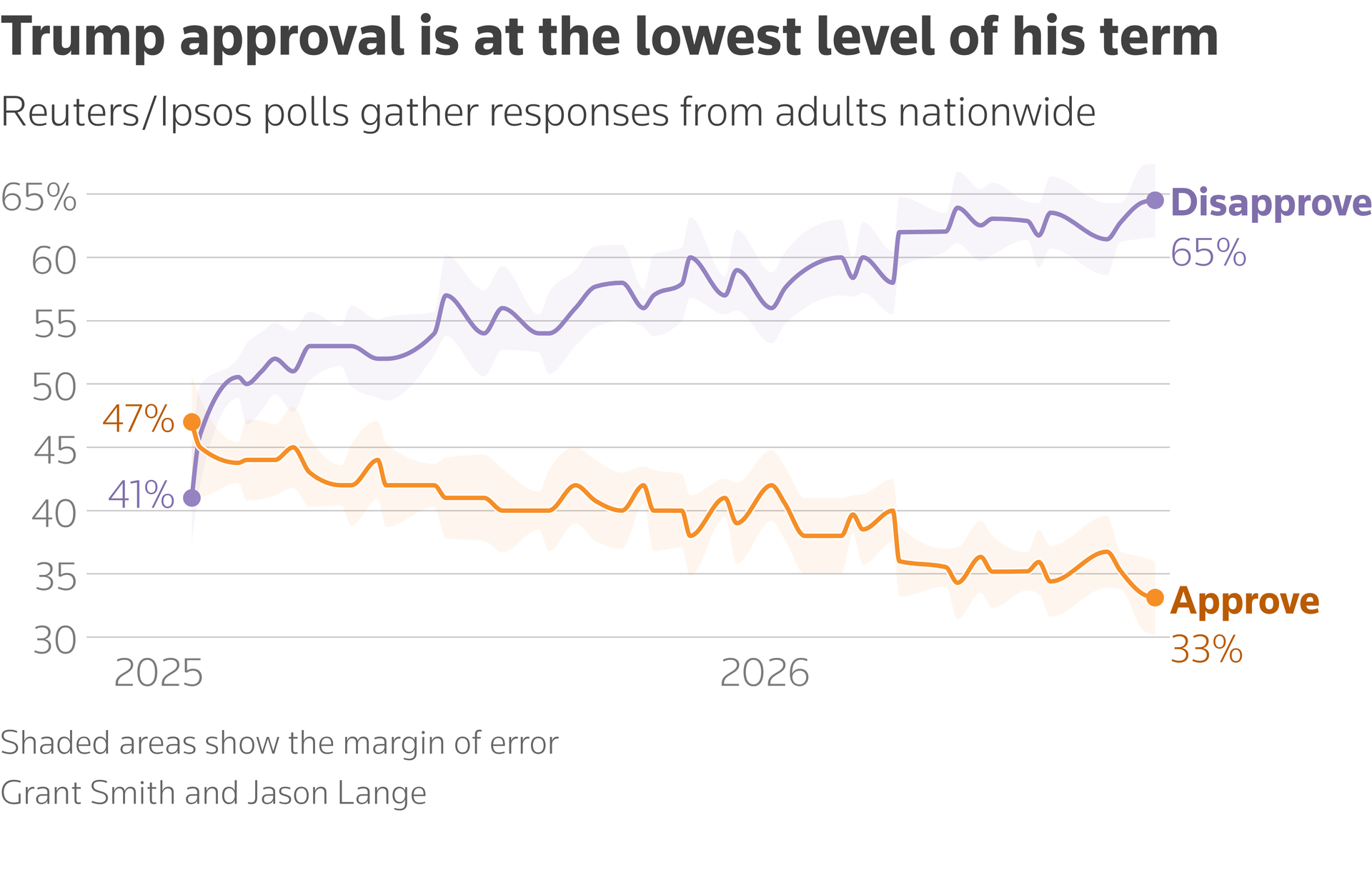
Voters continue to oppose the war and fault Trump’s management of the economy. Gasoline prices remain elevated, nearly $1 a gallon higher than a year ago. Trump’s approval rating has fallen from 40% to 33% since the war started, Reuters/Ipsos polling shows, marking the lowest of either of his terms in office. 

Trump may be looking for an exit ramp from his detour in Iran. Six months after the conflict began, it is not clear that he controls the route out.


Poll of the week


Follow Reuters/Ipsos polling on the president's approval ratings here.


The view from Ottawa

Trade talks between the U.S. and Canada collapsed last week amid mutual recriminations and tit-for-tat announcements of new punitive tariffs by the neighbors. The dispute threatens a setback for both countries’ economies but also the political fortunes of their leaders. The risks are lopsided: Canada depends more on access to the larger U.S. market than vice versa. But a tariff war could slow commerce across the border at a time when economic woes have already hit Trump’s poll numbers ahead of the midterms. States with critical 2026 congressional races from Michigan to Maine and Ohio rely heavily on trade with Canada. The ruckus could raise costs and tamp down growth in states deciding whom to elect in November.


Photo of the week


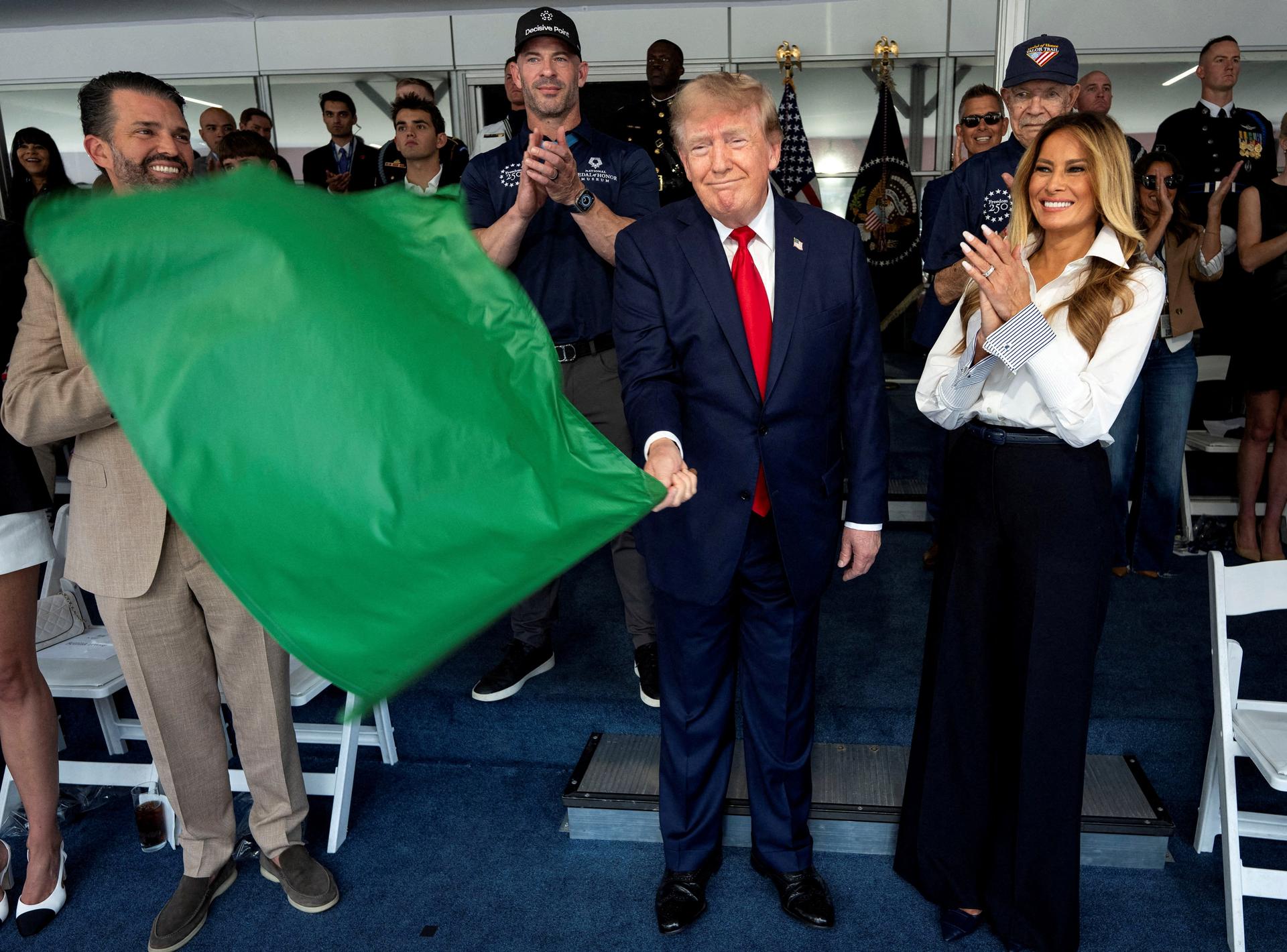
U.S. President Donald Trump waves the green flag to start the race with first lady Melania Trump at his side, during the Freedom 250 Grand Prix Race on the streets of Washington, D.C., U.S., August 23, 2026. Doug Mills/Pool via REUTERS