

 |
The new radicals
Five-and-a-half years removed from the day, it’s hard to find many politicians who want to relitigate the chaos of January 6, 2021. Donald Trump pardoned the rioters, which is a private embarrassment to many Republicans. And Democrats, as they campaign this year, aren’t eager to spotlight the attempted coup, if for no other reason than that it didn’t work as an effective vote-spinner last cycle.
But not every Democrat feels such reluctance. In fact, one House member has a new book out exploring how militant groups banded together to storm the U.S. Capitol, why politicians excused and even celebrated their behavior, and what it all means for future violent activism and radical groups in the United States.
No Prophets: The Fight to Save Democracy from Christian Nationalism by Rep. Jared Huffman (D-Calif.) is an atypical work from a sitting politician. Huffman isn’t trying to (not so) subtly position himself for higher office, as is so often the case with officeholders-turned-authors. He doesn’t delve deeply into the platform planks that animate him, or regale us with the Horatio Alger–type stories of his youth. Instead, he examines a collection of groups that sought and are seeking to undermine our democracy, and the politicized belief systems seeking to use Christianity to justify violent and anti-American behavior. In the process, Huffman doesn’t spare his colleagues in Congress, accusing them of creating a permission structure that allowed January 6th to happen.
On questions of faith, Huffman’s position in Congress is unique. A humanist, he is one of the first members to publicly admit he doesn’t believe in God. That doesn’t make him an enemy of faith. As a practicing Catholic, I found the book to be fair and detailed about the groups he calls out, such as Rad Trads and the Theo Bros, whose political theology is far beyond mainstream American Christianity. But Huffman also dives into the ways in which these sects—despite existing on the religious fringes—have managed to find an audience among the highest levels in government.
Take Defense Secretary Pete Hegseth, a member of a congregation affiliated with the Communion of Reformed Evangelical Churches (CREC), as one example of the high-ranking government officials Huffman argues are tied to radical Christian groups.
Here’s Huffman on Hegseth’s church:
What sets CREC apart from other Christian denominations is its fusion of Reformed Calvinist theology with militant cultural politics. Unlike Christian traditions that emphasize universal grace, inclusivity and reconciliation, CREC frames Christianity as a political tribe and authority, and nationalist identity are central articles of faith.
Huffman recently sat down with me for an interview. During it, he said that while most people saw a political insurrection on January 6th, he saw the violent end product of a Christian nationalist movement he’d watched “grow in militancy and power my whole time in Congress.” A lot of people didn’t see it, he explained, because they didn’t understand it.
“They looked past the religious elements of the insurrection and the country kind of went back to sleep,” Huffman added. “And many of my own colleagues who the mob was targeting that day went back to sleep.”
Looking forward, Huffman suggested prominent Christians like Texas Senate candidate James Talarico and Sen. Raphael Warnock (D-Ga.) are uniquely equipped to join him in standing up against authoritarian Christian groups. But he cautioned that it would remain an uphill battle since lawmakers are hesitant to look as though they’re criticizing people of Christian faiths.
“It’s a huge challenge I face in getting my colleagues in Congress to be interested in protecting church-state separation against this movement,” Huffman said. “It is why I welcome all of these Christian critics of Christian nationalism, because they can, maybe, break some of that down and open up the conversation—maybe normalize questioning this movement. But we’ve got a long way to go, because for most people it’s still just a little too hot to touch.”
You can watch the whole interview below:

Data Republican
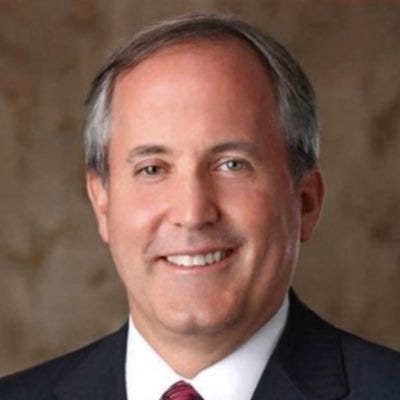
Amid razor-thin polling and poor donor enthusiasm, Texas Senate candidate Ken Paxton is latching onto the hottest trend this campaign cycle: dumping on AI data center development.
Paxton’s new, skeptical position on data centers includes calling for a ban on Chinese technology in the sector, holding data center companies criminally liable for harm to children, promising to cosponsor existing AI-focused legislation in the Senate, and banning new data centers in rural areas of Texas.
Paxton also released a summary of his proposal to regulate data center development on X—a summary that, ironically, he made with the help of AI, according to the disclosure tag on the post.
|