Plus: Why do connectors have genders? |

US Edition - Today's top story: Lactose intolerance is actually the human norm – but racism, the US government and business interests have made it into a condition

August 25, 2026

US Edition

The Conversation
 

Top headlines

Lead story

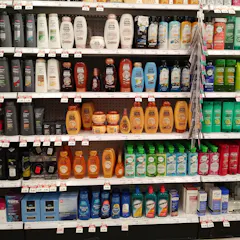
Milk, in all its delectable forms, is a staple in the diets of millions of people worldwide. Ice cream, yogurt, cheese and boba milk tea are so ubiquitous, it seems reasonable to assume that those who are unable to stomach such treats without major issues number few and far between.

But turns out, the vast majority of the globe are lactose intolerant. Put another way: The people who aren’t lactose intolerant are actually the “unnatural” ones.

To understand how lactose intolerance was “invented,” as historian Hilary Smith of the University of Denver describes it, one need only look at the state of the U.S. dairy industry in the 1960s and the excess of milk the American government successfully sold to its citizens and its international allies. Scientists explained away bothersome symptoms as an inborn defect of those experiencing them – which just so happens to encompass two-thirds of the human population who predominantly aren’t of northern European descent.

This way of thinking isn’t limited to just milk. And its consequences reverberate far beyond the dairy aisle.

“Turning a lactose-digestion difference into a deficiency has done more to reinforce narratives of racial hierarchy than to improve public health,” writes Smith.

Sign up for The Afternoon Story to get a hand-picked article in your inbox every day.

 

Vivian Lam

Associate Health and Biomedicine Editor

 
The majority of the world is unable to process the lactose in milk without uncomfortable symptoms. Olga Miltsova/iStock via Getty Images Plus

Lactose intolerance is actually the human norm – but racism, the US government and business interests have made it into a condition

Hilary Smith, University of Denver

The vast majority of people around the world are lactose intolerant. But American propaganda and scientific biases have made milk and dairy products a staple in global diets.

Politics + Society

The United States’ human rights practices are taking a nosedive

K. Chad Clay, University of Georgia

New data from a global rights-tracking project shows the country had large declines in 2025 on 8 of the 9 civil and political rights it measures.

The long afterlife of QAnon conspiracy theories haunting American politics

Matthew N. Hannah, University of Wisconsin-Madison

Ideas from QAnon’s conspiracy theory have appeared on government social media sites during Trump’s second term and continue to divide America amid social and economic crises.

Economy + Business

Legal wrangling over $12.5B Lakers sale shows how family trusts don’t guarantee a business stays in the family

Reid Kress Weisbord, Rutgers University - Newark; Naomi Cahn, University of Virginia

Investors want to buy the basketball team for a record sum.

Science + Technology

‘Male’ and ‘female’ plugs and connectors – gendered language for the ends of garden hoses, electrical cords and pipe fittings sparks debate

Jo Mackiewicz, Iowa State University; Jordan Smith, University of Northern Colorado

Terms that are direct analogs to sexual intercourse are widely used to describe connector ends, but the language is evolving away from those problematic words.

Shifting the cleanup cost of packaging waste to companies could encourage greener packaging – but only if states are aligned

Erin Victor, University of Maine

Extended producer responsibility policies are gaining steam in the US, but what they entail can differ widely from state to state.

International

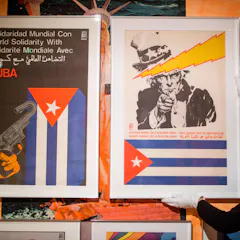
Trump’s Cuba report borrowed heavily from my book on an anti-imperialist movement – but twisted the arguments

Anne Garland Mahler, University of Virginia

The State Department views a 1960s-era internationalist movement based in Havana as a Cuban communist plot to destroy America. The truth was far more nuanced.

Environment + Energy

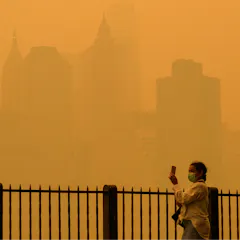
From flames to haze, wildfire smoke transforms as it travels, and it can harm your health in different ways

Michael A. Robinson, University of Colorado Boulder

To understand what’s in the smoke you might be breathing, you have to look at where it’s been.

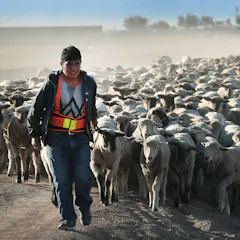
Relentless heat and drought take a toll on herders’ physical and mental health, in Kenya and the US

Anne Pisor, Penn State; Bonface Osindi, Washington State University

Whether in Kenya or California, herders face dangerous temperatures and difficult conditions that put a strain on their health.

Health + Medicine

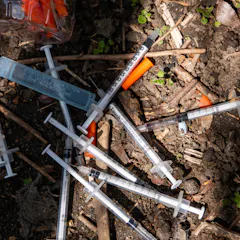
Syringe litter did not increase after a needle exchange ban was overturned in Pueblo, Colorado, but health services suffered