| | The US threatens new 50% tariffs on Canadian cars, China’s Xi Jinping is set to attend the BRICS sum͏ ͏ ͏ ͏ ͏ ͏ |
| |  ZAPORIZHZHIA ZAPORIZHZHIA |  NEW DELHI NEW DELHI | SINGAPORE |
 | Flagship |  |
| |
|
The World Today | 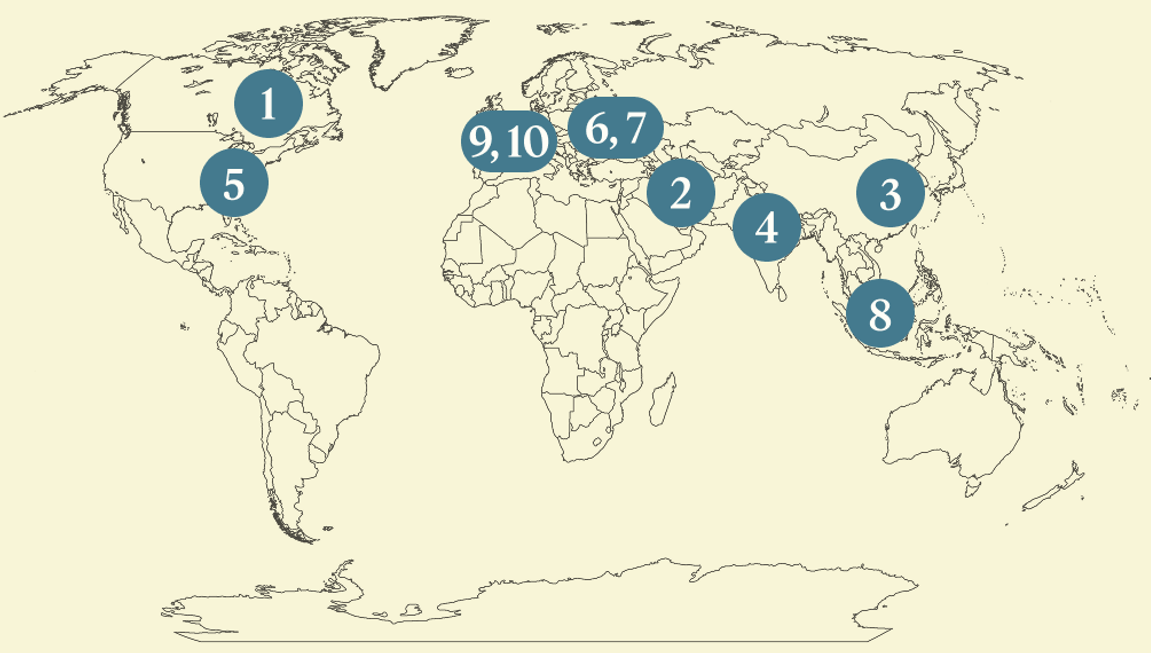 - US-Canada trade war heats up
- D-Day sanctions against Iran
- New US tariffs against China
- Xi may attend BRICS in India
- Treasury’s shadow over Fed
- UK vows support for Ukraine
- Russia’s deadly AI drones
- Battle over finance talent
- Heatwaves’ economic fallout
- Far right targets architecture
 A Pulitzer Prize-winning historian sounds the alarm on AI. |
|
Trump threatens new Canada tariffs |
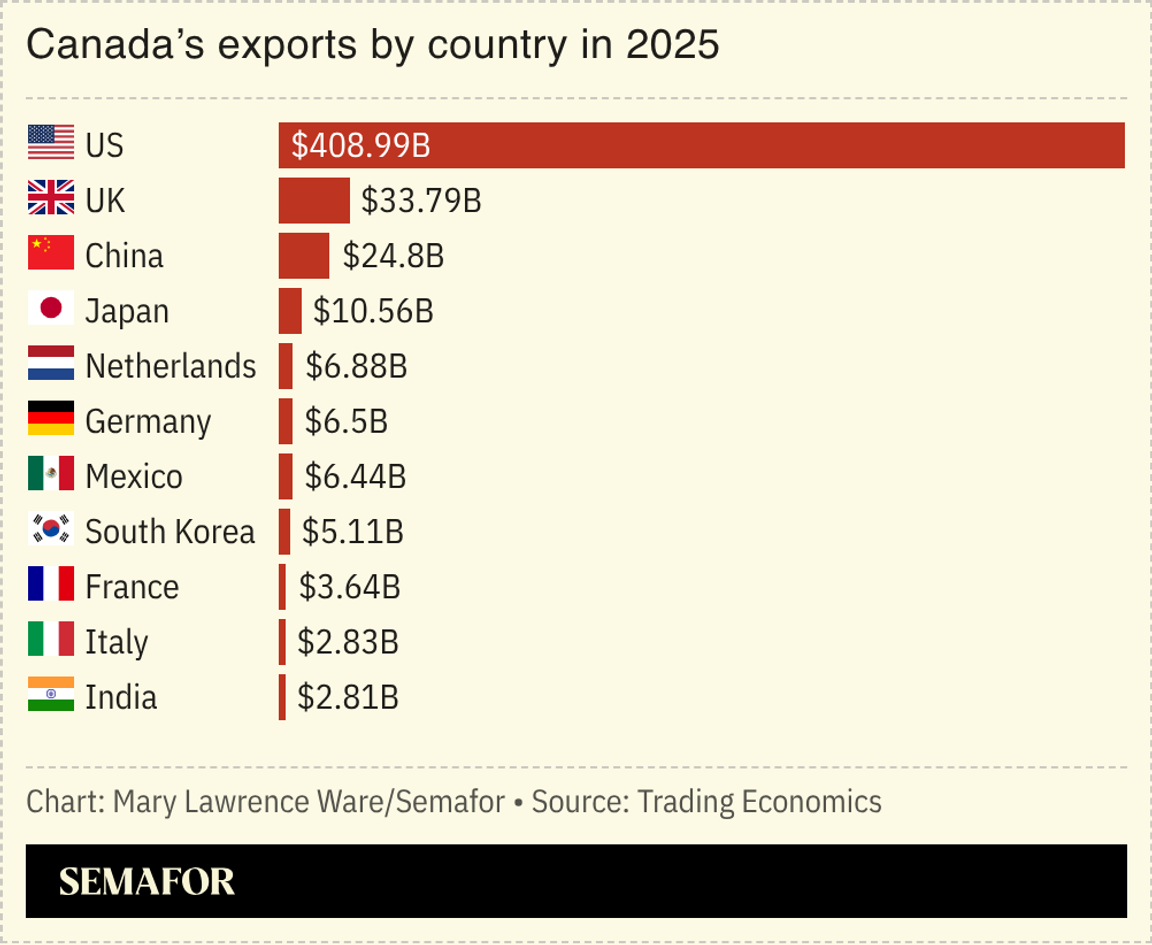 US President Donald Trump threatened new 50% tariffs on Canadian cars and trucks on Monday, escalating the two countries’ all-out trade war. Canadian Prime Minister Mark Carney has threatened to retaliate with counter-tariffs, saying the latest negotiations made clear that Trump wants to destroy Canada’s steel, aluminum, and auto industries. Canadians overwhelmingly supported Ottawa’s decision to abandon talks; nearly two-thirds believe the trade crisis will make Canada stronger by becoming less dependent on Washington. Acknowledging the challenges in targeting a “much bigger economy” like the US, Carney said, “Everything is on the table.” A Canadian essayist noted that while Carney’s “decision to tough it out is iconically Canadian,” his open defiance of US aggression “will resonate far beyond Canada’s border.” |
|
US unveils ‘economic D-Day’ sanctions |
 Evelyn Hockstein/Reuters Evelyn Hockstein/ReutersThe US on Monday threatened a wide range of secondary sanctions against countries doing business with Iran but stopped short of imposing them, as part of Washington’s campaign to sever Tehran’s economic lifelines. The Trump administration billed the effort as “economic D-Day,” but US Treasury Secretary Scott Bessent characterized it as a period of “quiet diplomacy,” where Washington will request world leaders to “cease their interaction with the regime” within privately defined timelines. The ambiguity over the measures raised doubts about the success of Bessent’s “Operation Economic Outcast,” analysts said: He notably didn’t address sanctions against Chinese banks suspected of facilitating Iran’s oil transactions, likely hoping to keep the peace ahead of Chinese leader Xi Jinping’s visit to Washington next month. |
|
US tariffs target Chinese ‘overcapacity’ |
 Go Nakamura/Reuters Go Nakamura/ReutersThe US is set to impose an additional 7.5% tariff on Chinese goods for industrial “overcapacity” before September’s meeting between the country’s leaders, Bloomberg reported, as Washington attempts to step up protectionist measures without drawing a reprisal from Beijing. The hike would keep US duties on China to around 20%, which Beijing has signaled is consistent with the countries’ trade deal. Washington has in recent weeks accused more than 40 countries of abetting Chinese tariff busting through “illegal transshipment” — an allegation that amounts to a “redefinition of trade,” an expert told The Economist — as both sides hunt for pact-compliant trade leverage ahead of next month’s summit. |
|
Xi likely to attend BRICS in India |
 China Daily via Reuters China Daily via ReutersChinese leader Xi Jinping is likely to attend September’s BRICS summit in New Delhi, Reuters reported, marking his first visit to India in seven years amid thawing ties between the Asian giants. About 400 officials are expected to accompany Xi to the gathering, where the two countries will attempt a “delicate diplomatic balancing act:” stabilizing relations strained by a longstanding border dispute without appearing to capitulate before their constituents, the China Global South Project wrote. Reports of a recent border skirmish have complicated diplomatic efforts; India’s top security official arrived in Beijing Monday for talks. The regional competitors have converged on one issue, however: US trade policies have pushed both to ensure external pressure doesn’t undermine BRICS. |
|
Bond worries loom over Warsh address |
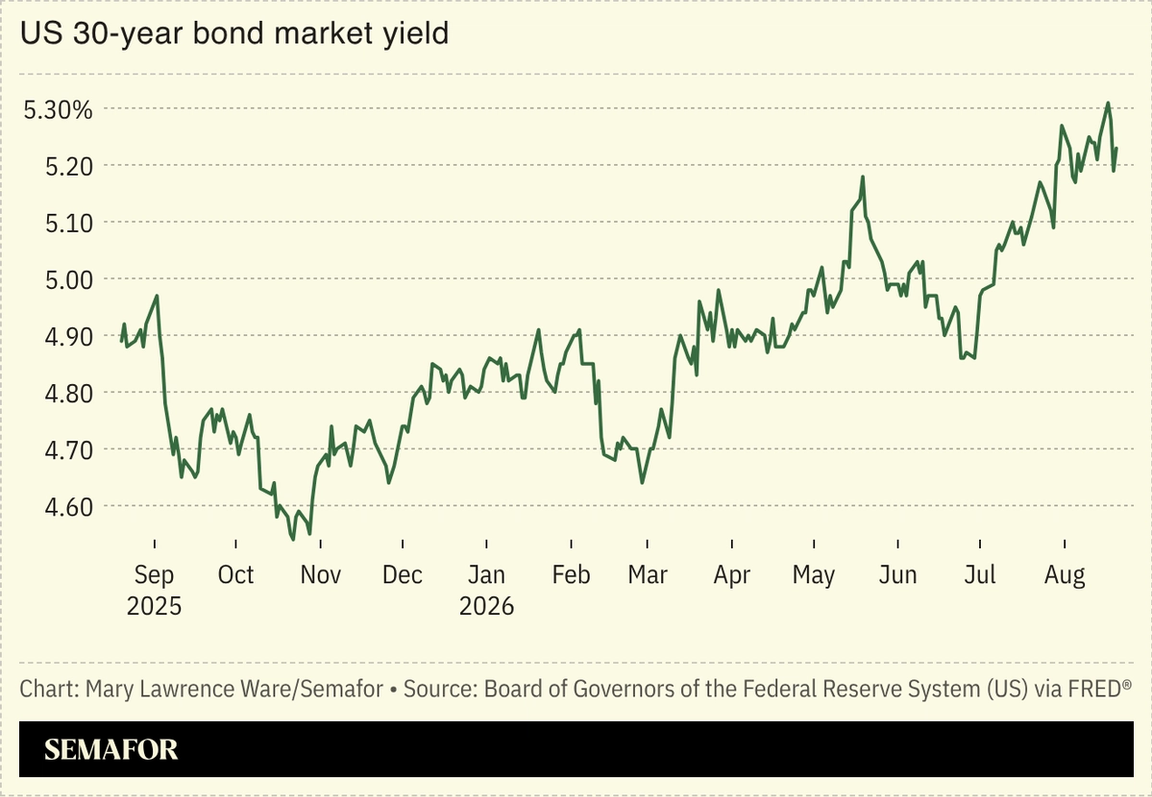 US bond turmoil will loom over Federal Reserve chair Kevin Warsh’s debut speech at the annual Jackson Hole conference on Friday, analysts said, as the central bank’s and the Treasury Department’s mandates grow increasingly intertwined. Investors want reassurance after Warsh’s decision to end forward guidance triggered a credibility shock, as Treasury contends with its own credibility issues: Subjected to withering criticism last week for doubling its purchases of long-term bonds, Treasury could draw upon its $1 trillion General Account for buybacks, CNBC reported. “We are in a regime where activist Treasury policy is as material — for good and for bad — as central bank policy,” a former New York Fed official wrote. “The interaction of the two will be key to the outlook.” |
|
France, UK pledge support for Ukraine |
 Gleb Garanich/Reuters Gleb Garanich/ReutersPresident Volodymyr Zelenskyy said Ukraine wants peace but “is not ready to simply surrender” in an address Monday marking the country’s 35 years of independence. The UK and France pledged stronger military support for Kyiv, including faster deliveries of air defense weapons amid Russia’s escalating ballistic missile attacks. While Kyiv still holds the battlefield momentum, the country has been roiled by a drip-drip series of political controversies: Zelenskyy fired popular defense minister Mykhailo Fedorov in July, sparking mass protests, and on Sunday rejected Fedorov’s call for wartime elections, saying they would “destroy” Ukraine. Meanwhile, officials are growing anxious that Kyiv’s powerful anti-corruption bodies have “become a law unto themselves, deciding when and how to destabilize the government,” The Economist reported. |
|
Autonomous Russian drone kills three |
 Reuters/Stringer Reuters/StringerA drone powered by an autonomous AI system killed three Ukrainians last month in what experts believe are the first Russian-inflicted deaths without a human in the loop, The New York Times reported. The drone in question was powered by a Nvidia minicomputer not sold in Russia but available through resale markets, highlighting the difficulties in denying tech to US adversaries. Though AI has often been used in the final stages of human-planned strikes, the reported incident crosses a dangerous threshold, analysts said, leaving machines to interpret the laws of war and to determine what constitutes a legitimate target. “This is a risk for the whole world,” a Ukrainian commander said. “In a few years, we will be living in a Terminator movie.” |
|
HK, Singapore vie for finance talent |
 Edgar Su/Reuters Edgar Su/ReutersHong Kong and Singapore are locked in a fierce competition over top finance talent, each unveiling tax cuts and visa liberalizations to cement their status as Asia’s premier hub. Both are home to asset and wealth management funds overseeing roughly $5.5 trillion each, and the broader sector is critical to each’s overall economy. Hong Kong earlier announced legislation that notably expands a tax exemption on carried interest, the share of profits allotted to fund managers that could equate to a bonanza for some. And this month, Singapore put forward what analysts say were even more aggressive incentives, alongside an easing of visa restrictions on fund managers. “Two of Asia’s financial centers are going all-in,” one executive told Bloomberg. |
|
Heatwaves weigh on Europe growth |
 Stephanie Lecocq/Reuters Stephanie Lecocq/ReutersThe increased intensity of summer heatwaves in Europe threatens to reshape the continent’s economy and its public finances, politicians and economists said. Tourism destinations will likely see reduced visitor numbers in the peak summer season, and the bloc should help those places shift to “new sectors, skills, and quality jobs” while dedicating more resources to wildfire prevention and firefighting, European parliamentarians told Politico. The continent — the world’s fastest-warming — faces “stacking” climate risks of heatwaves, droughts, and wildfires that slow economic growth and drive inflation, all while straining public finances as governments offer financial support. Among the countries most at risk, according to Morningstar analysts, is Portugal, which faces physical damage from wildfires as well as heatwave-related productivity losses. |
|
|


