| | In today’s edition: Saudi Arabia shores up its defenses and Gulf investors chase AI compute in Asia.͏ ͏ ͏ ͏ ͏ ͏ |
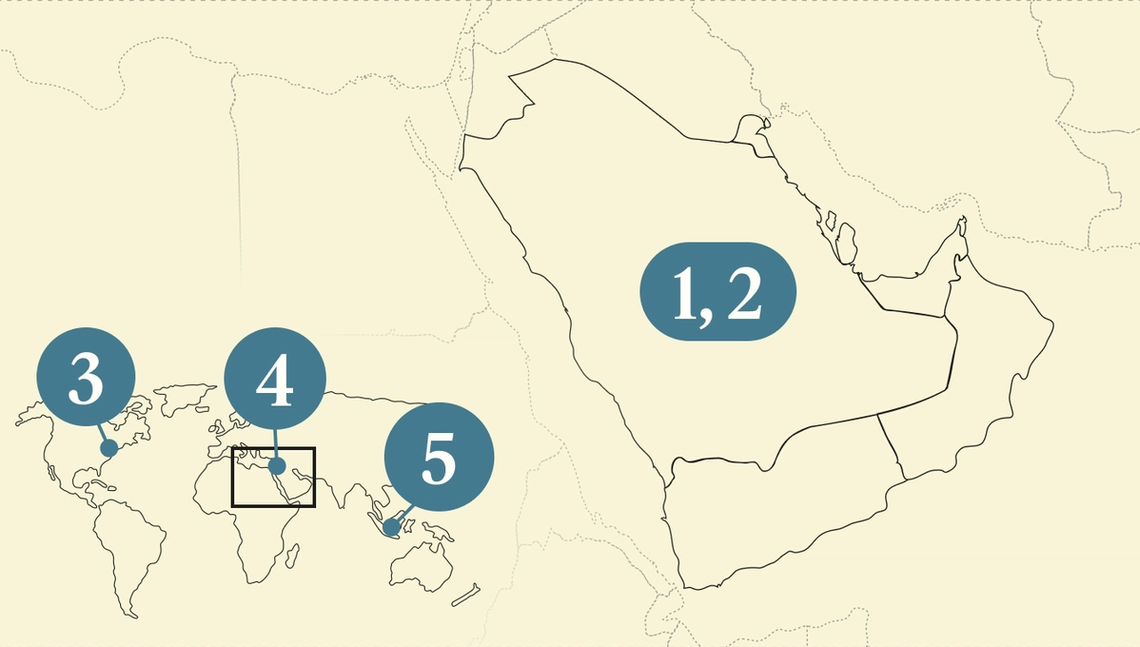
| |  Mecca Mecca |  Washington, DC Washington, DC |  Jakarta Jakarta |
 | Gulf |  |
| |
|
 - A new defensive pact…
- …and Red Sea coalition
- The US age of envoys
- Gulf renewables surge
- Ooredoo bets on Indonesia
 Week Ahead: Earnings from UAE bellwethers DP World and ADNOC Gas. |
|
Saudi gets defensive as peace talks drag |
 Murat Cetinmuhurdar/Turkish Presidential Press Office/Handout via Reuters Murat Cetinmuhurdar/Turkish Presidential Press Office/Handout via ReutersAs security deteriorates around the Gulf and prospects for a near-term peace deal recede, regional states are strengthening their defenses. Saudi Arabia, Türkiye, and Pakistan signed a joint military agreement in Mecca today, creating an alliance that includes the second-largest NATO army, the world’s biggest oil exporter, and the only nuclear-armed Muslim state. The pact stipulates that an “armed attack against any one of the three states shall be regarded as an attack against them all.” Iran, meanwhile, is seeking to formalize its control of the Strait of Hormuz. An emerging deal with Oman, according to Iranian press, would reportedly bar US and Israeli ships from entering the Gulf. Other proposals include the ability to block and fine vessels of all “hostile” nations, giving Tehran far greater control of the waterway than before the war. Oil prices spiked and markets were broadly down on Friday as expectations for a full reopening of the strait looked increasingly uncertain. |
|
Saudi’s maritime coalition takes shape |
 US Naval Forces Central Command/Handout via Reuters US Naval Forces Central Command/Handout via ReutersSaudi Arabia is building the structure for a maritime coalition that will conduct defensive operations to secure passage through the Red Sea and Bab el-Mandeb Strait. Rear Admiral Abdullah bin Salem Alshehri will lead the effort, which includes Egypt, Pakistan, and Türkiye. Ten other countries have signed on, with more expected when the force meets in Jeddah on Aug. 12-13 to finalize its charter. Yemen’s Houthis declared a blockade of Saudi shipping last month, attacked Saudi oil tankers this week, and are threatening to impose tolls, adding urgency to securing the waterway. The kingdom diverted much of its oil exports to the Red Sea during the war. Disruptions at Bab el-Mandeb force Saudi crude onto longer, costlier routes and add to strains on global trade. |
|
Ambassadorships vacant amid war |
 Urs Flueeler/Reuters Urs Flueeler/ReutersAs US President Donald Trump relies on special envoys to conduct diplomacy in the Middle East, ambassadorial posts in the region remain vacant, reports Semafor’s Lauren Morganbesser. The conflict with Iran has ensnared a dozen Middle Eastern countries that have normalized relations with the US, half of which lack a Senate-confirmed US ambassador. Former ambassadors who have served in administrations from both sides of the political divide told Semafor they fear the vacancies have made it more difficult for the US to communicate with allies during a rapidly evolving war. “If you take the countries most affected by the war,” said Barbara Leaf, who served as US ambassador to the UAE, “none of them have ever been confronted with a situation where there were so few people … who could tell them what’s going on, or through whom they might convey their concerns.” |
|
Gulf renewables defy wartime pressure |
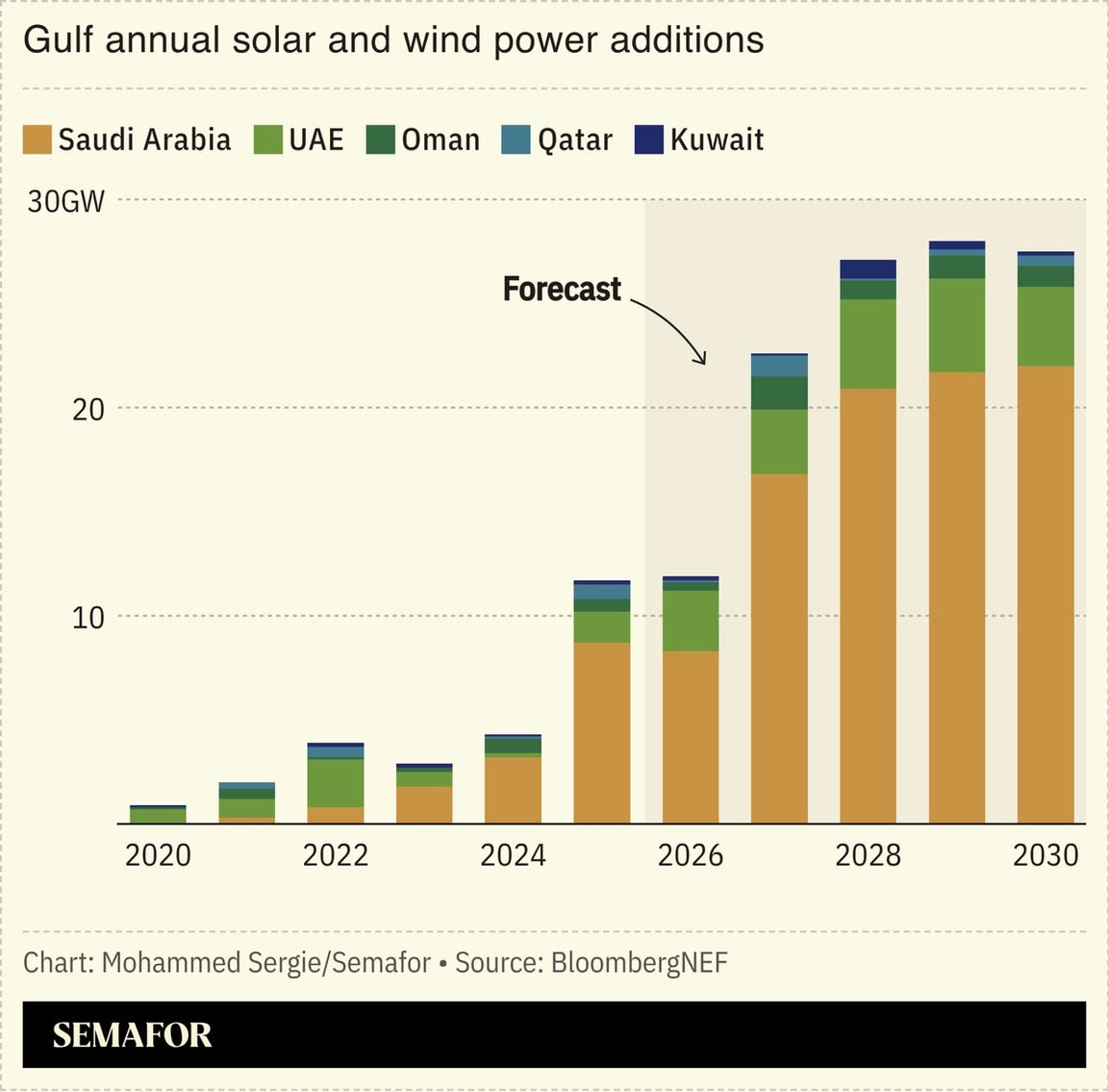 The Iran war has made financing Gulf solar and wind projects more difficult, but the economics still stack up firmly in their favor. The region is expected to add 12 gigawatts of renewable energy capacity this year and twice as much next year, according to a BloombergNEF report. While some delays can be expected, the recent delivery of turbines to Saudi Arabia and the commissioning of a 1.1 GW wind farm in the kingdom indicate the region has been able to access the equipment and material required to complete projects. Disruptions to oil and gas exports have highlighted just how reliant Gulf economies still are on fossil fuel revenues, and the importance of renewable energy to reduce this dependency. Despite the current strain on national budgets, governments and firms in the region are pursuing projects that can free up more oil and gas for export, while providing lower-cost electricity and supporting new data centers. |
|
 Gulf investors are looking to Asia for opportunities in the AI race as conflict in the Middle East and Europe and supply-chain uncertainty raise the appeal of markets seen as relatively stable. Qatari telecom Ooredoo is the lead investor in Zankore, a new AI compute platform in Indonesia, committing $800 million to support its launch. The company plans to deliver 200 megawatts of capacity next year, with Nvidia and Nokia as suppliers. Ooredoo, which has had a foothold in Indonesia for nearly two decades, sees data center demand more than tripling in Southeast Asia by 2030. Meanwhile, Abu Dhabi’s Mubadala is weighing becoming the lead investor in a possible $6.3 billion, 500-megawatt data center in Japan’s Akita prefecture, Bloomberg reported. While much is made of the Gulf’s domestic AI build-outs, the ambitious global deals show the region is also focused on securing a stake in the infrastructure underpinning the technology. — Kelsey Warner |
|
| |