Aviation weathers economic turbulence, The Barai in Hua Hin and stories you might haver missed.
|
Wednesday 5/8/26
|

|
|
London
Paris
Zürich
Milan
Bangkok
Tokyo
Toronto
|
|
|
|

Good morning from Midori House. For more news and views, tune in to Monocle Radio. Here’s what’s coming up in today’s Monocle Minute:
THE OPINION: Sweden puts up its psychological defences
AVIATION: The smart ways airlines manage economic turbulence
DAILY TREAT: Visit and revisit The Barai in Hua Hin, Thailand
THE LIST: Three stories that you might have missed
|
|
Sweden’s first psychological defence strategy readies citizens for the worst
By Andrew Mueller
|

|
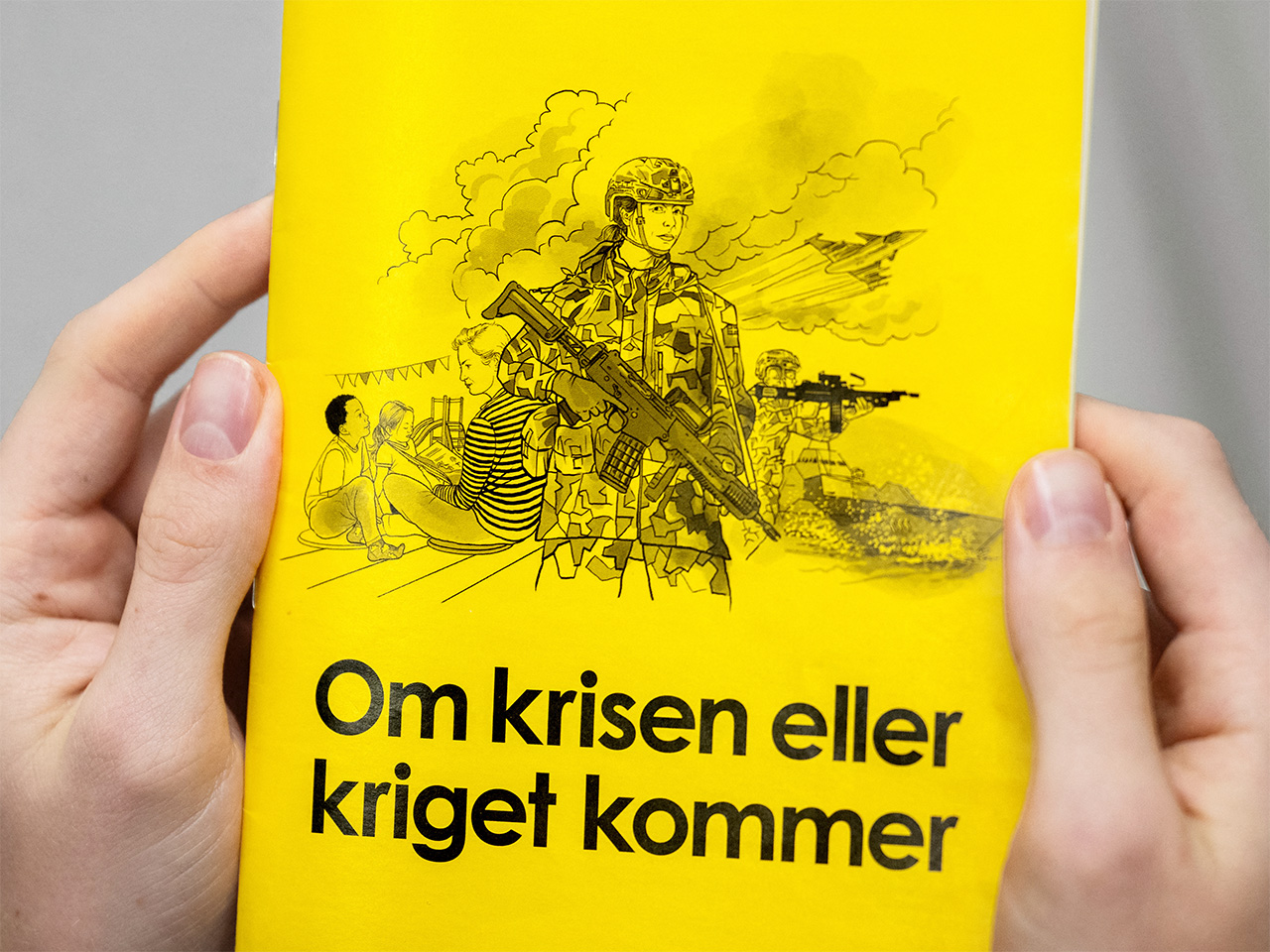
In October 2024 every Swedish household – more than five million – was sent a bracing pamphlet entitled “In Case Of Crisis Or War”. Prepared by the Swedish Civil Contingencies Agency, it offered counsel on household preparedness – which foods to stash, how much water to store – and how to respond if the balloon, of one sort or another, went up.
It wasn’t the first time that Sweden’s government published such a thing – the tradition dates back to 1943, as the country sat out the war then consuming the rest of Europe. But the latest edition acknowledges lessons learned from the coronavirus pandemic and the fact that Sweden is no longer a neutral country but instead a member of Nato committed by treaty to the defence of 31 other countries. The most sobering injunction reads “If Sweden is attacked, we will never surrender. Any suggestion to the contrary is false.”
|
|
|
Open in case of emergency: Sweden’s preparedness booklet
|
|
Sweden has taken another step towards codifying this spirit with the announcement of its first national strategy for psychological defence. Launching the strategy, Sweden’s minister of civil defence, Carl-Oskar Bohlin, spoke of a need to strengthen Sweden’s “resilience in the cognitive domain”. The country has grasped that there are – especially now – many more ways to threaten, unnerve or undermine a country than pointing missiles at its capital or arraying troops along its borders. The first of the four pillars of the new strategy for psychological defence is “work against undue influence of information”.
Sweden has – like pretty much every other western country, whether those countries understand it or believe it or not – been a regular target of Russian disinformation campaigns. This goes back years: from 2015 to 2016, state-owned Russian news outlet Sputnik operated a Swedish language service, in which, according to Sweden’s Institute of International Affairs, it published roughly 4,000 articles, many of them negative stories about the EU and/or Nato. Not coincidentally, in 2022, Sweden’s Ministry of Defence established a Psychological Defence Agency, tasked with resisting foreign-influence operations.
The Russian threat to Sweden has since grown somewhat more sophisticated and aggressive. In the past couple of years Russian hackers have targeted Swedish digital services and energy infrastructure but disinformation campaigns are ongoing. They’re cheap, easy, deniable – and, so long as people remain eager to consume whatever nonsense reinforces their prejudices, effective. Earlier this year, Russian media floated the false and, you would hope, obviously absurd story that King Carl XVI Gustaf, having taken the trouble to visit Ukraine, refused to shake the hand of Volodymyr Zelensky in order to express some obscure grudge over the 1709 Battle of Poltava, in which the army of Carl XVI Gustaf’s predecessor Charles XII got clobbered by the legions of Peter the Great. The director-general of the Psychological Defence Agency, Magnus Hjort, responded with admirable clarity: “Absolutely nobody cares about this in Sweden.”
The national strategy for psychological defence is part of a minor blizzard of related initiatives from Sweden in recent weeks. Stockholm has also announced the creation of a new foreign-intelligence service to be known as the UND, its first national strategy for ensuring security of supply, and its intention to increase access to civilian shooting ranges. The Nordic nation’s European neighbours and allies might chafe at any suggestion that they take lessons in this sort of stuff from a country that hasn’t fought a war since a minor scuffle with Norway in 1814 but they – we – should. Sweden is taking seriously one of the most basic principles of resilience, military and otherwise: better to have it and not need it, than need it and not have it.
Andrew Mueller is a regular Monocle contributor and host of ‘The Foreign Desk’ on Monocle Radio. For more opinion, analysis and insight, subscribe today.
Further reading:
-
Summerhouse rules: Scandinavian nuances and where the smart money is spent
-
The commute: Travel into the city with Ingka Group’s creative director Marcus Engman
-
See the best of the Swedish capital with Monocle’s guide to Stockholm
|
|
aviation: global
Long-haul strategy: How the aviation industry prepares for economic turbulence
Curious about how the Iran conflict is affecting air travel (asks Gabriel Leigh)? Take a look at Flightradar24. The flight-tracking website shows where airborne planes are at any given time – and there is next to nothing above Iran. Flight traffic is also diminished over Iraq, where existing aircraft comprise almost entirely Iraqi carriers or those flying between the Middle East, Armenia and Azerbaijan. On the other hand, Saudi airspace is as busy as ever and a narrow corridor across the Caucasus between Iran and Russia is now used by many Europe-to-Asia flights.
|
|
|
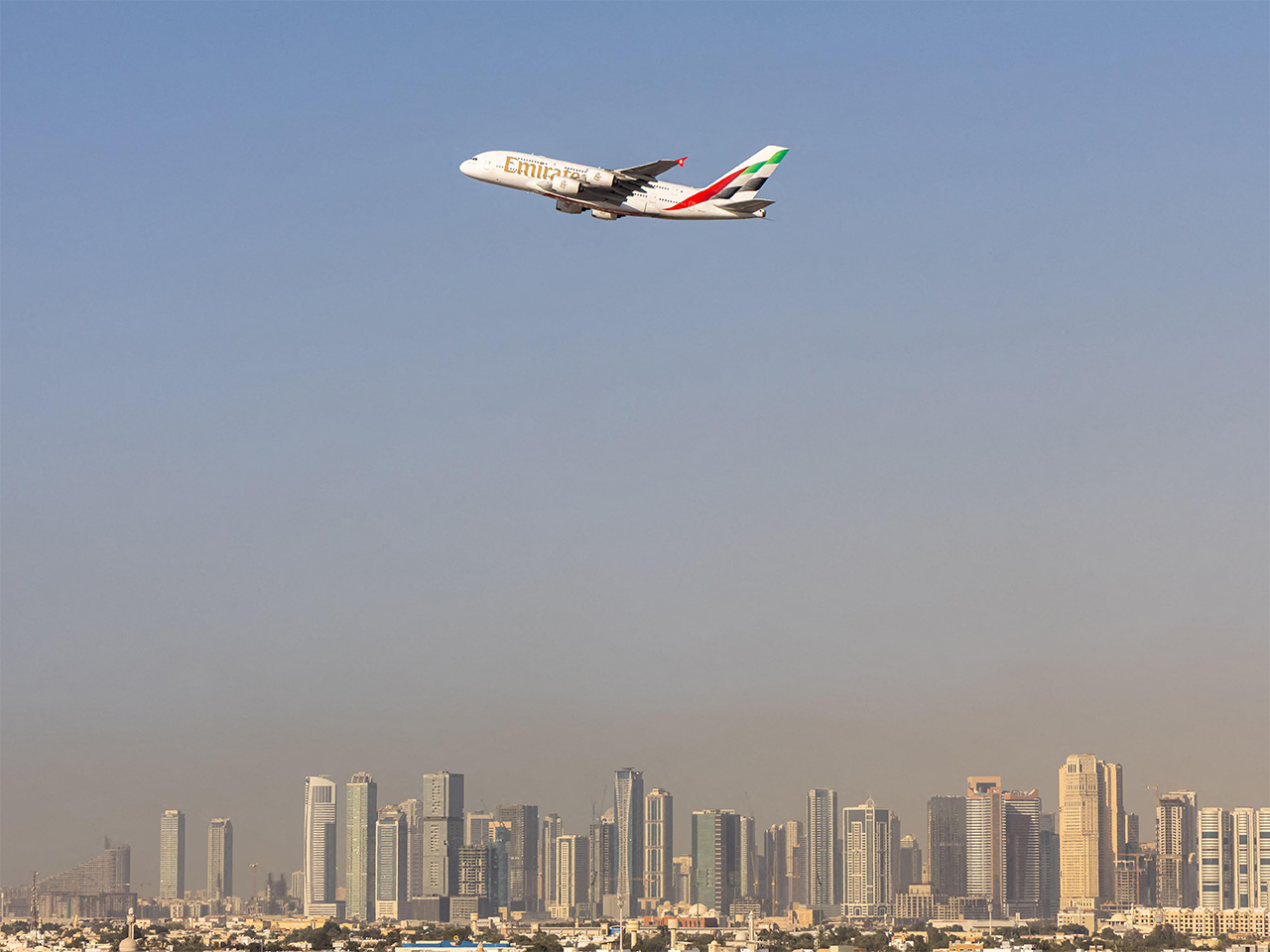
Danger zone: Geopolitical conflict is putting airline logistics to the test
|
|
The conflict in Iran is putting immense pressure on route planning, operating costs and reliability – negotiating turbulent geopolitical tensions and daily airstrikes have once again become the norm for the aviation sector. But the industry has shown that it is one built on adaptability, whether in response to airspace closures, fuel sourcing or other crises.
Even so, recent developments are putting that adaptability to the test. In July, the European Union Aviation Safety Agency (EASA) reinstated its warning to avoid Gulf airspace, though a number of flights are still travelling to and from the region. Some carriers have extended cancellations, while others, such as Finnair, have announced that they are suspending flights to Dubai – a busy and profitable route – until October of this year at the earliest. Gulf carriers, on the other hand, have little choice but to use this difficult airspace if they want to fly at all and most are doing everything that they can to maintain a regular schedule.
Despite detours and deficits, airlines are finding clever ways through the turbulence. Here’s how.
|
|
• • • • • DAILY TREAT • • • • •
Visit and revisit The Barai in Hua Hin, Thailand
Thai coastal resort town Hua Hin, a historic royal retreat about three hours by car from
Bangkok, has plenty of luxury hotels along the sand but few have a spa quite like The Barai. Its 18 treatment rooms are centred around a striking ochre-and-burgundy arrival area designed by Thai architect and hospitality specialist Lek Bunnag.
The Barai opened 20 years ago and has eight suites for guests who want to fully immerse themselves in Thai wellness, while benefiting from the full hospitality service at the neighbouring Hyatt Regency. “It’s a hotel within a hotel,” says general manager Marco Avitabile, who looks after both properties. “But not everyone knows that The Barai has these rooms designed by Lek Bunnag.” Hua Hin is a popular winter spot for Europeans and a year-round getaway for affluent Thais – a holiday habit often formed in childhood. As one of Thailand’s greatest hotels, perhaps it’s worth making a regular visit?
hyatt.com
|
|
the LIST: FROM monocle.com
Stories you might have missed
Not been on
monocle.com recently? Here are three updates worth your while.
|
|
| | |