Thanks for reading The Briefing, our nightly column where we break down the day’s news. If you like what you see, I encourage you to subscribe to our reporting here.
Greetings!
Question: How is the 24-year-old SpaceX like a young startup? It’s burning twice as much cash as it brings in as revenue! That’s one takeaway from SpaceX’s first earnings report as a public company, in which the company revealed it burned $16 billion in the second quarter, on $7.8 billion in revenue. That’s thanks to a whopping $18.4 billion in capital expenditures, mostly due to SpaceX’s AI data center expansion.
And like a young startup, SpaceX has big ambitions. On the company’s earnings call with analysts, CEO Elon Musk claimed it was now expecting to hit $1 trillion in revenue by 2030, a year earlier than it had projected before its IPO, and there was a chance it could hit that threshold by 2029. That’s a big claim, considering that first-half revenue was only $12.5 billion. True, finance chief Bret Johnsen said SpaceX’s annualized revenue rate would hit $100 billion by the end of this year. But ARR is one month’s revenue multiplied by 12. It’s not a real metric (and Musk emphasized that the $1 trillion projection was revenue, not ARR).
Musk also claimed that SpaceX’s Starlink could deliver most of the internet connectivity in the world in “less than 10 years,” while his No. 2, Gwynne Shotwell, claimed that SpaceX’s Starlink mobile service—to launch at the end of 2027—would “acquire quite a few” of the customers of the major cellphone providers in the U.S. Whoa! So not only does SpaceX have enormous ambitions to dominate broadband internet, it aims to compete directly with major cellular providers. And that’s all in addition to its huge AI ambitions and its desire to launch data centers in space and travel to far-off planets. Investors seem underwhelmed (or perhaps overwhelmed?) by all these big claims: SpaceX stock fell 6.5% in after-hours trading.
The investor reaction makes sense. Investors have come to hate big tech companies’ massive outlays on capex for AI, even though those companies are funding that capex from massive profits on other businesses. And SpaceX is spending more on capex, relative to what its businesses generate in cash, than any big tech firm. SpaceX’s only real profit center is its Starlink internet business, but that makes nowhere near enough to fund all the company’s ambitions (Starlink made just $1.65 billion in second-quarter operating income, for instance).
SpaceX will undoubtedly get a lift from the various deals it has done to rent out its computing capacity and from its pending acquisition of AI firm Cursor. But becoming a major competitor in mobile and building more AI capacity won’t come cheap. The returns are questionable, both in AI and telecom. Remember that the big telecom providers have to spend a fortune on spectrum and equipment, and they’re all fighting over a market with little growth. Musk has sky-high ambitions. Watching him try to fulfill them promises to be a lot of fun.
Bandwidth Constraints
AI has created massive demand for electricity and chips, driving up the prices of both, which has in turn lifted the costs of smartphones and computers. Elon Musk on Tuesday pointed out that the demand for bandwidth to transmit data will also soar as a result of AI.
“With the advent of AI and humanoid robotics and vehicle robotics and just a massive number of robots, the appetite of bandwidth will be much greater than it has been in the past,” he told analysts.
In other words, all those robots and self-driving cars and AI-enabled devices will be communicating constantly, straining the capacity of broadband providers, which are now mostly cable companies and cell firms. Musk says Starlink will save the day, providing the bandwidth to meet all those demands.
In Other News
• Italian conglomerate Bending Spoons agreed to buy once high-flying productivity startup Airtable for $1.285 billion, a steep haircut to its last valuation of $11 billion in 2021 (more here).
• Spotify reported 14% higher revenue, driven by 9% growth in the number of paying subscribers, while the music streaming service’s ad business continued to lag.
• The Trump administration is planning to ban U.S. imports of data center components from China, Reuters reported.
• Major personal computer makers including HP, Asus and Acer have started using small numbers of chips from Chinese memory maker ChangXin Memory Technologies, Nikkei Asia reported.
• Polymarket is in early talks to raise about $1 billion at a more than $20 billion valuation, Bloomberg reported.
• OpenAI gave a full-throated response to Apple’s lawsuit filed last month alleging theft of trade secrets. In a blog post on Tuesday, OpenAI called the lawsuit “careless, aggressive and oddly personal.”
• AMD reported 50% higher revenue of $11.536 billion for the second quarter, driven by stronger demand from data centers for its chips. But the company projected slightly slower growth of 41% for the third quarter. AMD shares fell 8.6% in after-hours trading.
Today on The Information’s TITV
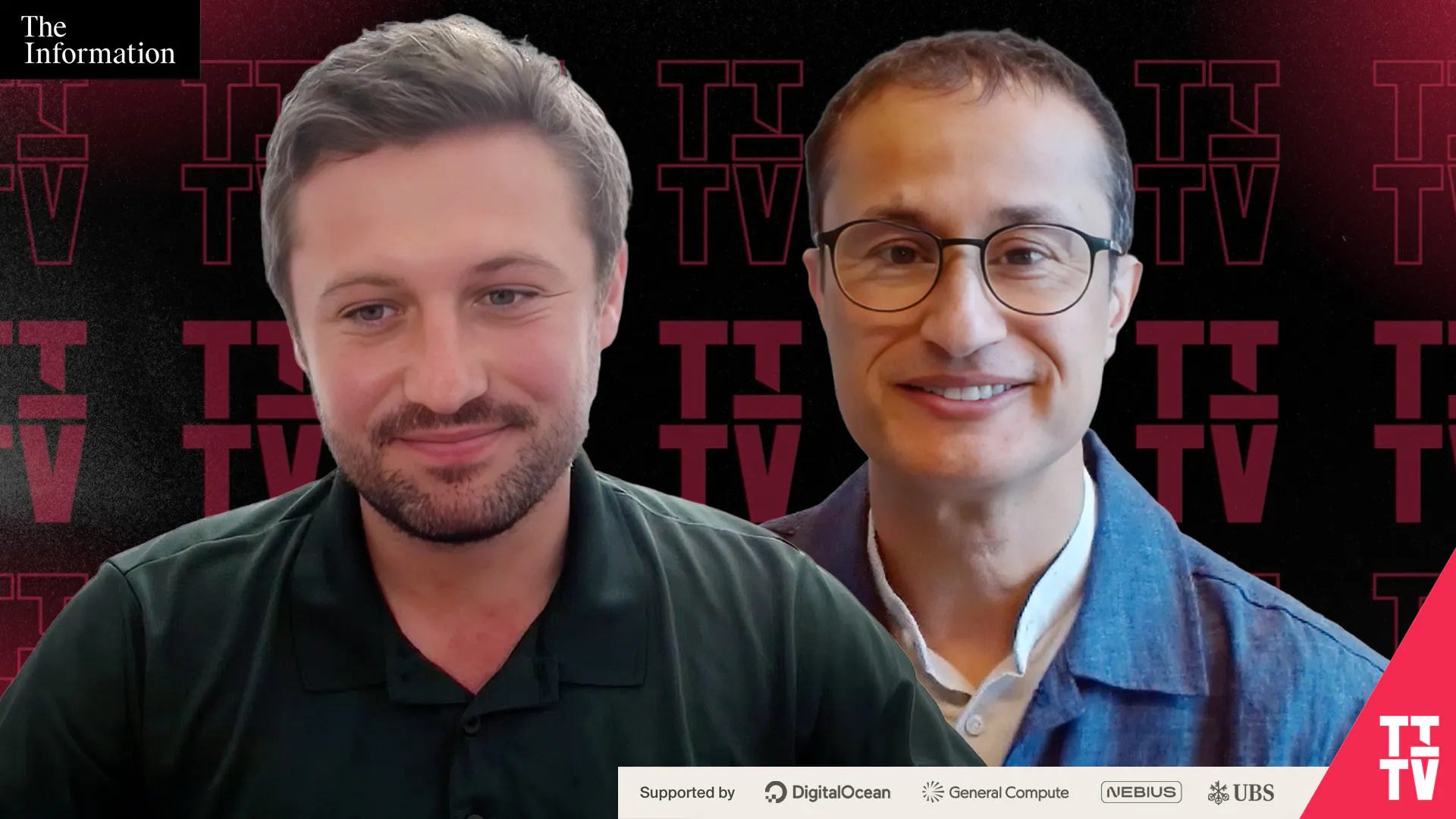
Check out today’s episode of TITV in which we discuss the details of Bending Spoons’ acquisition of Airtable and the future of enterprise software.
Recommended Newsletter
Start your day with Applied AI, the newsletter from The Information that uncovers how leading businesses are leveraging AI to automate tasks across the board. Subscribe now for free to get it delivered straight to your inbox twice a week.
Join us to explore the real-world shifts, new architectures, and enterprise strategies defining the next era of AI. Secure your spot today to hear directly from top minds at Google DeepMind, OpenAI, Atlassian, and more.
Tickets on sale now: The Information returns to Napa Valley October 27–28 to convene senior women across tech, media, and finance. Join us for two days of intimate, candid conversations with the leaders navigating today’s global shifts.