| | Oil falls on hopes of an Iran deal, the US is running out of missiles, and cownose rays return to a ͏ ͏ ͏ ͏ ͏ ͏ |
| |  NEW YORK CITY NEW YORK CITY | LVIV | SHENZHEN |
 | Flagship |  |
| |
|
The World Today |  - Oil prices plunge
- US missiles depleted
- SpaceX’s solid earnings
- White House quiet on AI
- Chinese AI’s enterprise push
- Microsoft fixes bugs
- Yuan debate heats up
- Ukraine turns to bots
- Food safety anxieties
- Urban rivers recover
 A Nobel Prize winner’s journey from left to right. |
|
Oil relief unlikely to temper gas prices |
 Seth Herald/Reuters Seth Herald/ReutersStocks jumped and Brent crude prices plunged Tuesday after the US signaled a deal to reopen the Strait of Hormuz could be imminent, but the drop is unlikely to translate to immediate relief at the pump. US President Donald Trump castigated oil majors for not doing more to bring down gas prices, after ExxonMobil, Chevron, and others reported blowout earnings. But unlike oil futures, which fluctuate “based largely on traders’ vibes,” retail fuel prices are mostly baked in, Semafor’s Tim McDonnell argued: US refineries are stretched to their limit, and operators elsewhere have been unable to satisfy demand, as Ukraine continues to strike Russian energy facilities. If Hormuz disruptions persist, JPMorgan analysts predicted, US gasoline prices will rise back above $4.20 a gallon. |
|
Alarm over dwindling US stockpiles |
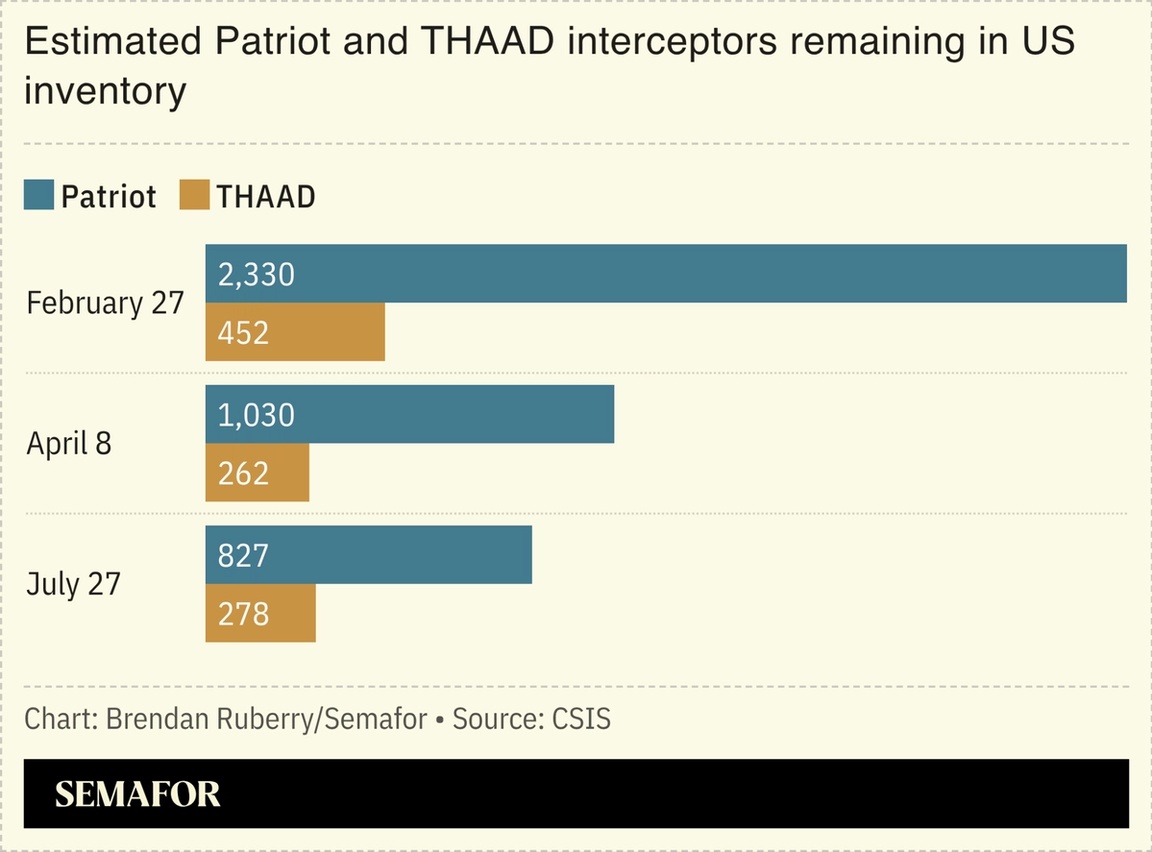 The US has used up “virtually all” of its highly accurate long-range missiles during the Iran war, Reuters reported, raising doubts about Washington’s preparedness. The US has also expended nearly two-thirds of its Patriot interceptors, CSIS found. The Pentagon’s rush to plug shortfalls has sparked a bonanza among incumbent military contractors and new defense startups, which are repurposing components from fracking, autos, and pharma to shorten production timetables. Most lead times remain years-long, suggesting that despite US President Donald Trump’s threats, the Pentagon would be reluctant to resume full-scale war without those key weapons, thereby eroding its ability to deter adversaries elsewhere. “In the long run,” governments relying on US armaments “are going to need a Plan B,” The Atlantic wrote. |
|
 Steve Nesius/Reuters Steve Nesius/ReutersSpaceX’s revenue jumped 92% from a year ago, blowing past Wall Street expectations in the rocket maker’s first post-IPO earnings report, after weeks of bumpy trading. Starlink’s growth was driven by consumer, government, and enterprise businesses, SpaceX’s president told analysts, highlighting recent tie-ups with major airlines. Still, shares wobbled after an initial jump on Tuesday. One possible reason: Investors are preparing for the company’s IPO lock-up to lift Thursday, which will allow early investors and employees to sell as much as 912 million shares. “Beware the SpaceX short squeeze,” Semafor’s Liz Hoffman wrote Tuesday, warning bears against overestimating how many of the locked-up shares will actually hit the market, forcing a scramble to cover their positions. |
|
White House mum on AI framework |
 Evelyn Hockstein/Reuters Evelyn Hockstein/ReutersRepresentatives of Meta, Anthropic, Google, and OpenAI visited the White House on Tuesday to discuss a framework for reviewing frontier AI models before their release, though the details are likely to remain under wraps. The White House has dithered on regulating AI, including China’s open-weight models, which have generated division among tech leaders; some have argued the tech offers critical capabilities. OpenAI and Anthropic, whose systems are closed, have favored limiting Chinese models. Beijing and Washington have traded regulatory barbs ahead of Chinese leader Xi Jinping’s September visit, with Reuters reporting Tuesday that the US is considering banning Chinese data center components, mirroring similar curbs on drones and robots. |
|
Chinese AI deepens enterprise push |
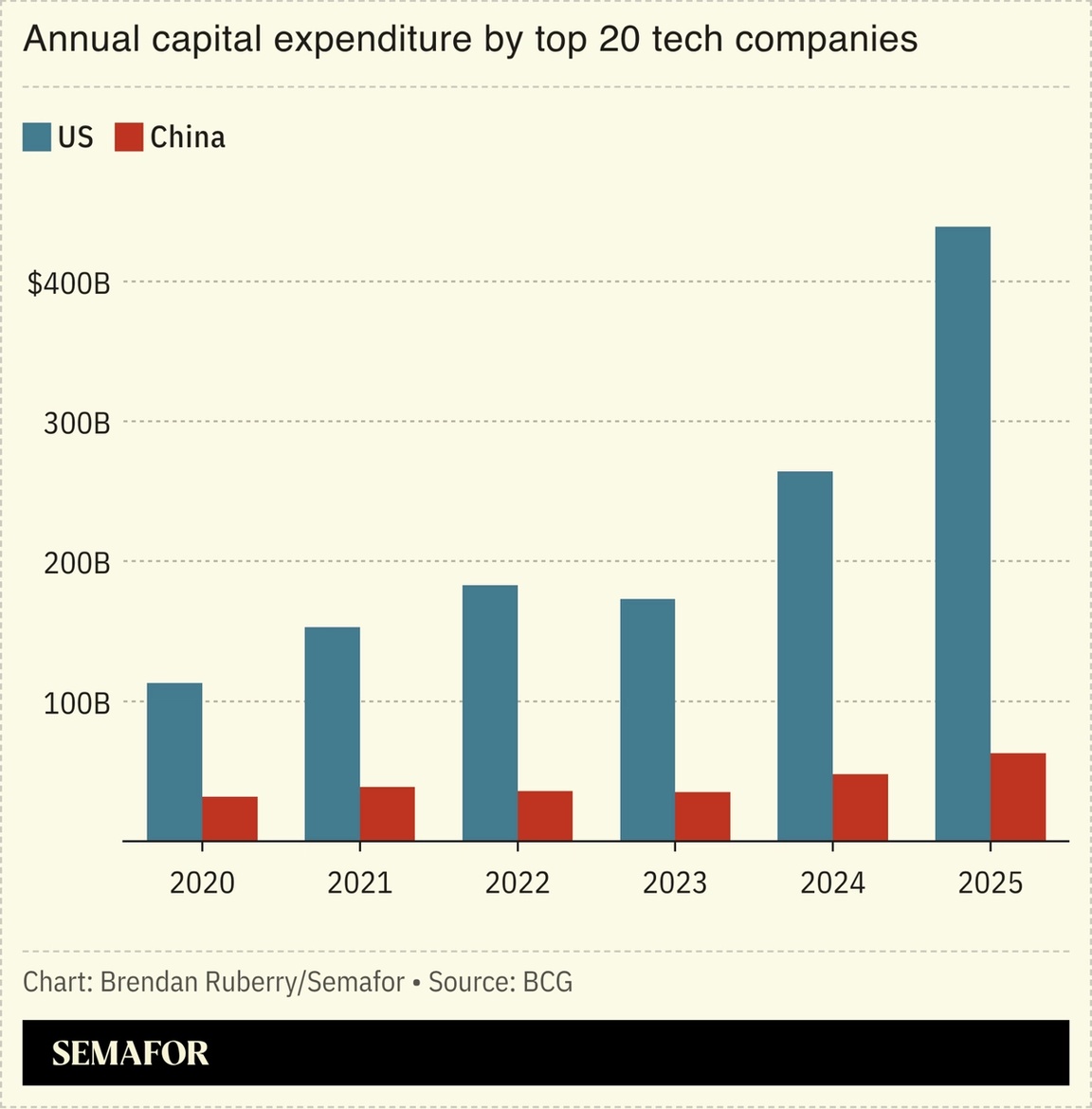 China’s tech giants are deepening their enterprise push in a bid to drive profits. After years of racing to capture market share, Alibaba and Tencent are bundling their AI models and workplace products, and ByteDance announced it would merge the product teams of its enterprise offering and its popular AI chatbot. But a damaging price war could ensue, replicating the race-to-the-bottom dynamic that eroded margins in the country’s EV and e-commerce sectors: Alibaba unveiled a powerful new open-weight model cheaper than its US competitors, and DeepSeek released a hyper-discounted offering. Chinese tech stocks have fallen. US AI firms Anthropic and OpenAI are wrestling over enterprise customers, a contest analysts see Anthropic leading, as both firms target $1 trillion valuations ahead of expected IPOs. |
|
AI leads to record bug fixes |
 Dado Ruvic/Illustration via Reuters Dado Ruvic/Illustration via Reuters AI models are finding vulnerabilities in Microsoft software faster than the company can patch them. This past spring, Anthropic’s Project Glasswing gave organizations, including Microsoft, access to its sophisticated Mythos model to detect bugs. Microsoft’s June patch release contained 208 fixes, then an all-time high; it shattered that record in July, releasing more than 600. Microsoft triages its patches, fixing severe vulnerabilities first, but Mythos can chain together several low-severity bugs “to carry out devastating attacks,” ProPublica reported. It is “like drinking from a fire hose,” one expert said, and Microsoft’s security team doesn’t appear able to keep up. |
|
China currency debate heats up |
 Stringer/Reuters Stringer/ReutersA debate over China’s surging trade surplus and how it wields its currency has burst into the open. Former US Treasury official Brad Setser, whose “China Shock 2.0” thesis has encouraged some EU policymakers to push for currency appreciation, says the renminbi is 30-35% undervalued. But a trio of economists insisted appreciation could exacerbate imbalances by reducing demand for foreign goods. Setser countered that the world can’t afford to wait: China could soon export 20 million cars annually — double its current pace — or one in three vehicles sold outside the country. A soft renminbi feels like a “loss of face,” but Beijing can’t strengthen it without reforming its growth model and boosting demand, a Wall Street Journal columnist argued. |
|
 The Gulf now reaches far beyond the region, shaping energy markets, supply chains, and the global economy. Semafor Gulf is here to help you make sense of it. Five days a week, editor Mohammed Sergie and our team across Abu Dhabi, Dubai, and Riyadh will connect you with what’s happening on the ground, and how it affects business, energy, and diplomacy — bringing clarity to the most consequential story in the world. |
|
Ukraine fields robot army |
 Valentyn Ogirenko/Reuters Valentyn Ogirenko/ReutersUkraine is using air- and sea-based drones to carry armed robots into battle. Airborne drones have already transformed war, in part by changing the economics — for example, by forcing defenders to fire $5 million missiles to destroy $30,000 Shaheds. But Kyiv’s army is constrained less by money than by manpower, and robots can, to a degree, replace bodies, although they cannot hold territory. While war is causing Ukraine’s shortage, other countries also face a dearth of potential soldiers, whether because the population is too old or too reluctant: In Britain’s case, just 6% of those polled in a recent survey were willing to volunteer. |
|
US food safety scares spread |
 Daniel Becerril/Reuters Daniel Becerril/ReutersAnother food safety scare is rattling Americans’ trust of the US food system, with Chipotle pulling jalapeños from multiple stores in Minnesota after learning of a potential link to a salmonella outbreak. Chipotle has already replaced the suspect jalapeños with peppers from different growers, Bloomberg reported, but the episode joins a spate of foodborne illnesses that are raising concerns around the US food supply and public health cuts that experts say have weakened outbreak detection. A separate cyclospora outbreak tied to shredded lettuce has killed two and sickened thousands across 40 states this summer, and appears to be undercutting the Trump administration’s message to eat more whole foods, Axios reported. |
|
Rays return to New York City creek |
|
|


