Winter is coming, again?

Follow energy market shifts and the forces driving the transition to clean power. Subscribe to Reuters.com for $1/week.


Power Up

Power Up

A Reuters Open Interest newsletter

By Ron Bousso, ROI Energy Columnist


Data refreshes every time you open this email. For more energy news, click here. Please send any feedback to powerup@thomsonreuters.com.

Hello Power Up readers,

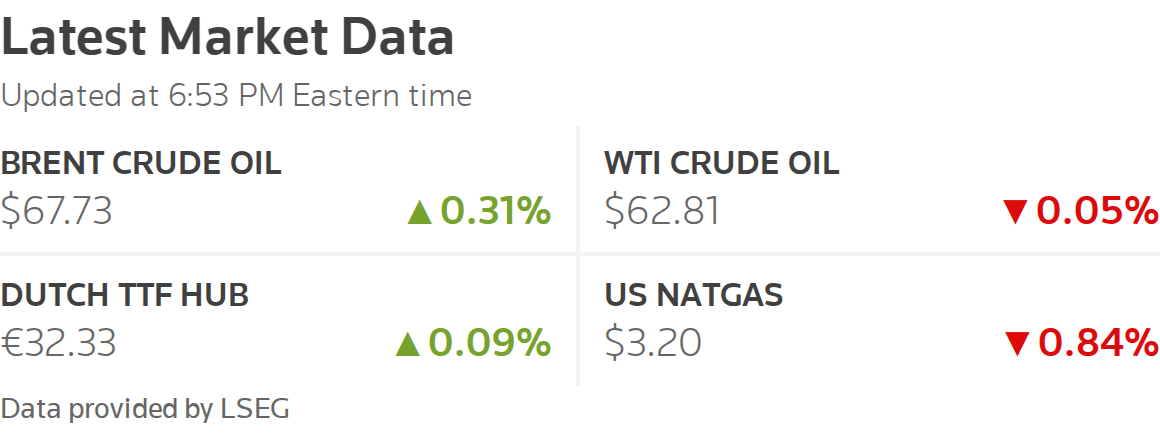
Brent crude oil prices opened the week sharply lower, dropping below $90 a barrel after the U.S. and Iran paused strikes over the weekend following two weeks of attacks. Coming only four days after climbing above $100, the price drop follows early signs of renewed diplomatic efforts by mediators to resolve the question that has come to define the conflict – control over the Strait of Hormuz.

Washington and Tehran appear to be still miles apart, however, with the former insisting the waterway should be open and free, while the latter seeks to maintain control over transits with a tolling system. Trust between the two sides appears to be slipping lower with every round of fighting, so bridging the gap between the U.S. and Iranian positions is going to be a Herculean task.

For now, ship transits through the strait remain extremely low, with only two tankers exiting the Gulf on Sunday, according to LSEG satellite-based data.

Making things even more complicated, tensions in the Red Sea remain elevated after Yemen’s Iran-backed Houthis attacked Saudi oil installations along the Red Sea coast on Saturday, including the Aramco refinery in Jizan. In retaliation, Saudi-backed Yemeni forces struck Houthi targets.

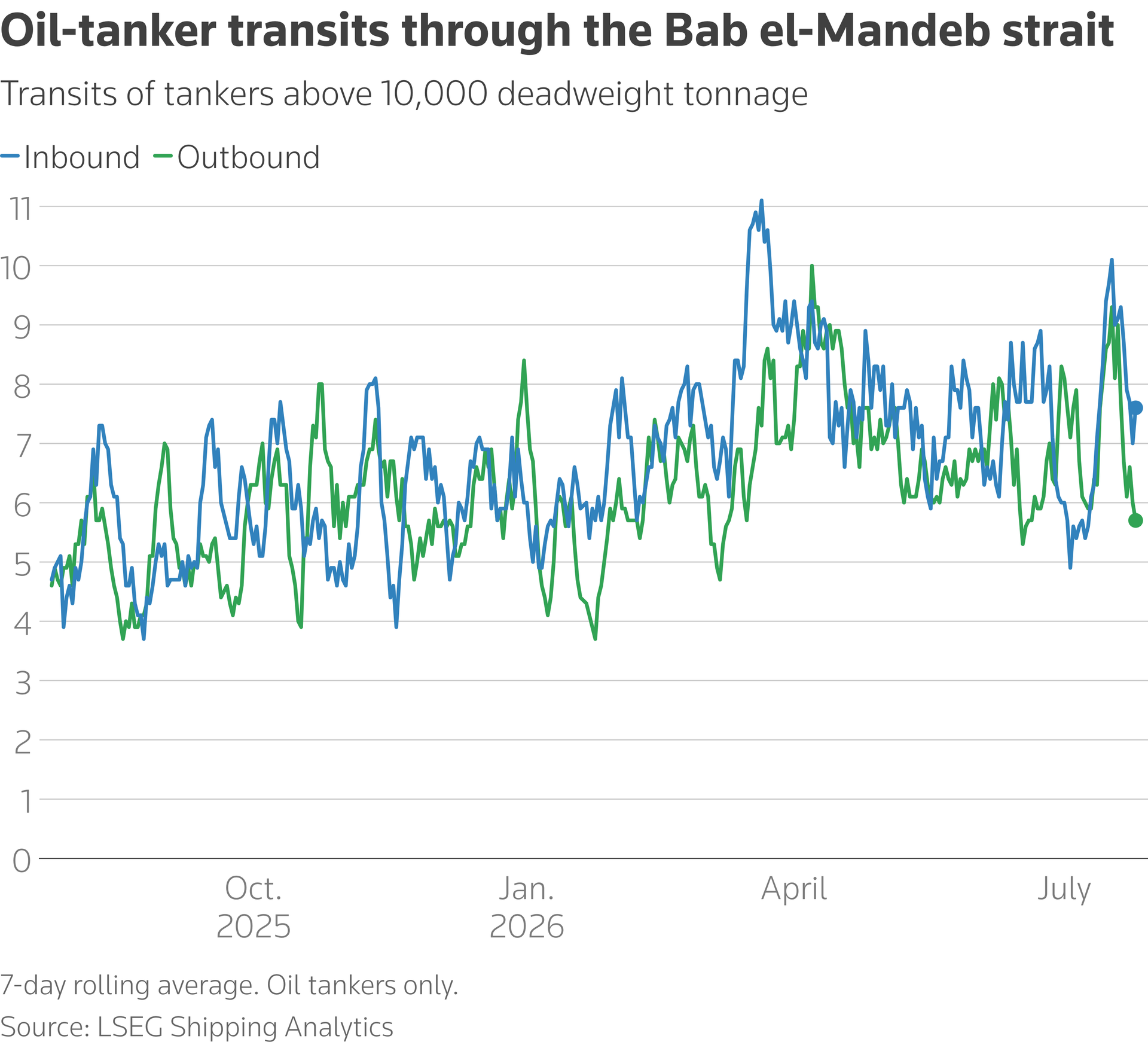
Ship traffic through Bab el-Mandeb, the strait at the southern tip of the Red Sea, has fallen sharply since the Houthis declared a blockade on Saudi exports last week, threatening Riyadh’s main oil export route that bypasses Hormuz.

Today’s crude prices suggest markets are highly sceptical about the prospects for diplomatic efforts and a sustained recovery of oil flows - and for good reason. Already, Saudi Arabia, Jordan and Iraq on Monday reported drone attacks which appeared to originate from Iraq, where Iran-backed militias regularly operate. 

The market's moderated reaction stands in stark contrast to the overly optimistic sell-off that followed the June 17 U.S.-Iran deal, when prices dropped to around $70. 

Indeed, traders appear to be pricing in not peace but the costs of adapting to a world where Middle East supplies are permanently disrupted, as ROI Asia Commodities Columnist Clyde Russell wrote today.

The impact of the Iran war and the escalating Ukrainian strikes on Russia’s oil refineries is having far-reaching effects on global energy markets. For Europe, the double whammy of limited liquefied natural gas and diesel supplies is becoming a grave problem ahead of winter. More on this below.

Here are a few more headlines:

  • The ongoing crises in the Middle East and Russia-Ukraine have become more closely linked following a Ukrainian attack on an Iranian commercial vessel in the Caspian Sea. The strike highlights how Iran and Ukraine are sharing technologies, particularly for drones.
  • It’s not all grim news, though. While the Iran war may be escalating again, you wouldn't know it from the aluminium price, ROI Metals Columnist Andy Home writes.

As always, don’t hesitate to contact me at ron.bousso@thomsonreuters.com or follow me on LinkedIn with any questions or thoughts.


Top energy headlines

  • Trump may need to allow Chinese minerals as US industry struggles to meet 2027 deadline
  • Oil prices near one-week low after US, Iran pause fighting over weekend
  • TotalEnergies to appeal French court decision ordering it to adapt its business to climate change
  • Italy readies measures to keep fuel prices below €2 amid fiscal concerns
  • Expand Energy to beef up gas marketing business with $1.25 billion Twin Eagle deal


Winter is coming, again?

Europe is heading into winter with alarmingly fragile energy supplies as the conflicts in the Middle East and Russia tighten global markets for liquefied natural gas and heating oil, pushing inventories to dangerously low levels.

Natural gas and heating oil are Europe's primary sources of residential heating, with gas accounting for around 30% of household heating demand and oil accounting for roughly 10%, according to official data. After successive years of energy shocks, Europe looks set to enter another winter with both fuel markets under severe strain.

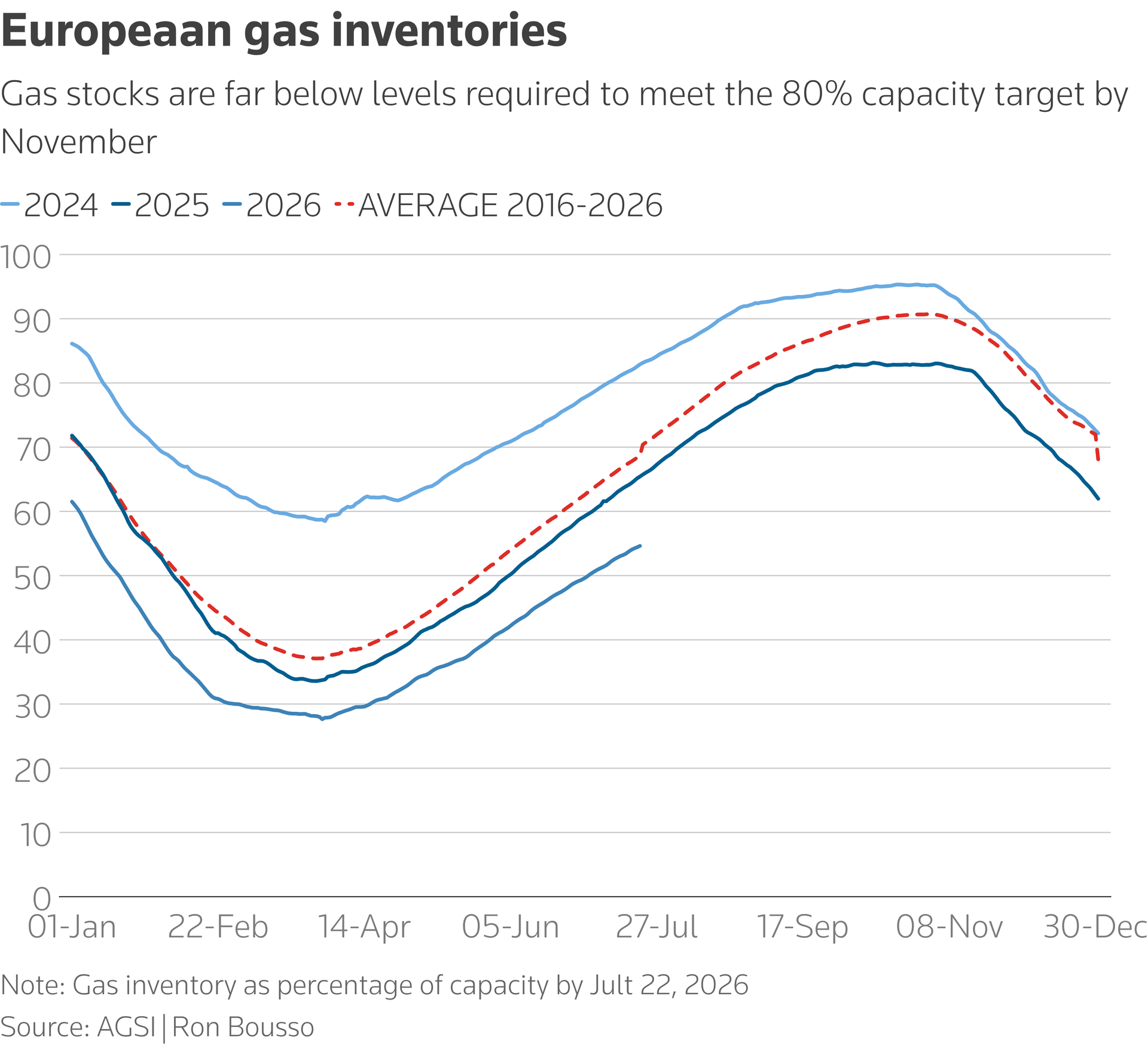
Europe is falling behind the pace needed to replenish its LNG inventories before winter. Underground gas storage facilities are currently around 55% full, their lowest level for this time of year since 2021, according to LSEG data.

Europe faces similar challenges in diesel, a market that has quietly become one of the most acute areas of energy stress this year.

Read the full column
 

Sponsors are not involved in the creation of newsletters or other Reuters news content. Advertise in this newsletter or on Reuters' website

LiveIntent Logo