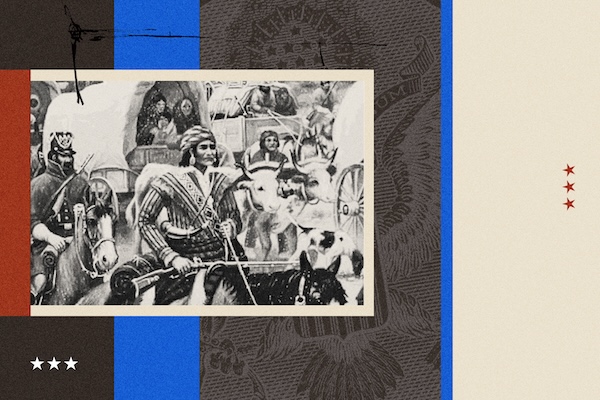
Throughout the summer, we’re sharing essays from the Foreign Affairs archives that examine American statecraft and power and the history that shapes both. Next up is “Equality and American Democracy,” a 2016 essay by the scholar Danielle Allen that explores the evolving relationship between freedom and egalitarianism.
“Up through the middle of the nineteenth century, Americans saw equality and liberty as mutually reinforcing ideals,” Allen wrote. Many founders pursued forms of wealth redistribution, and the early republic achieved a “historically unprecedented level of economic equality within the white population”—an accomplishment made possible, however, by the dispossession of Native Americans and exploitation of slave and indentured labor. As time went on, many Americans strayed from the idea that economic equality was necessary for political freedom. By the twentieth century, the two were often cast as “necessarily in conflict with each other,” especially as free-market capitalism became the “defining feature” differentiating the United States from its communist Cold War rival.
The founders had been right to believe that the political equality on which democracy is based could not “persist over time” without “some degree of economic equality,” Allen argued. For modern-day Americans, the challenge is to figure out a way to achieve both.
|