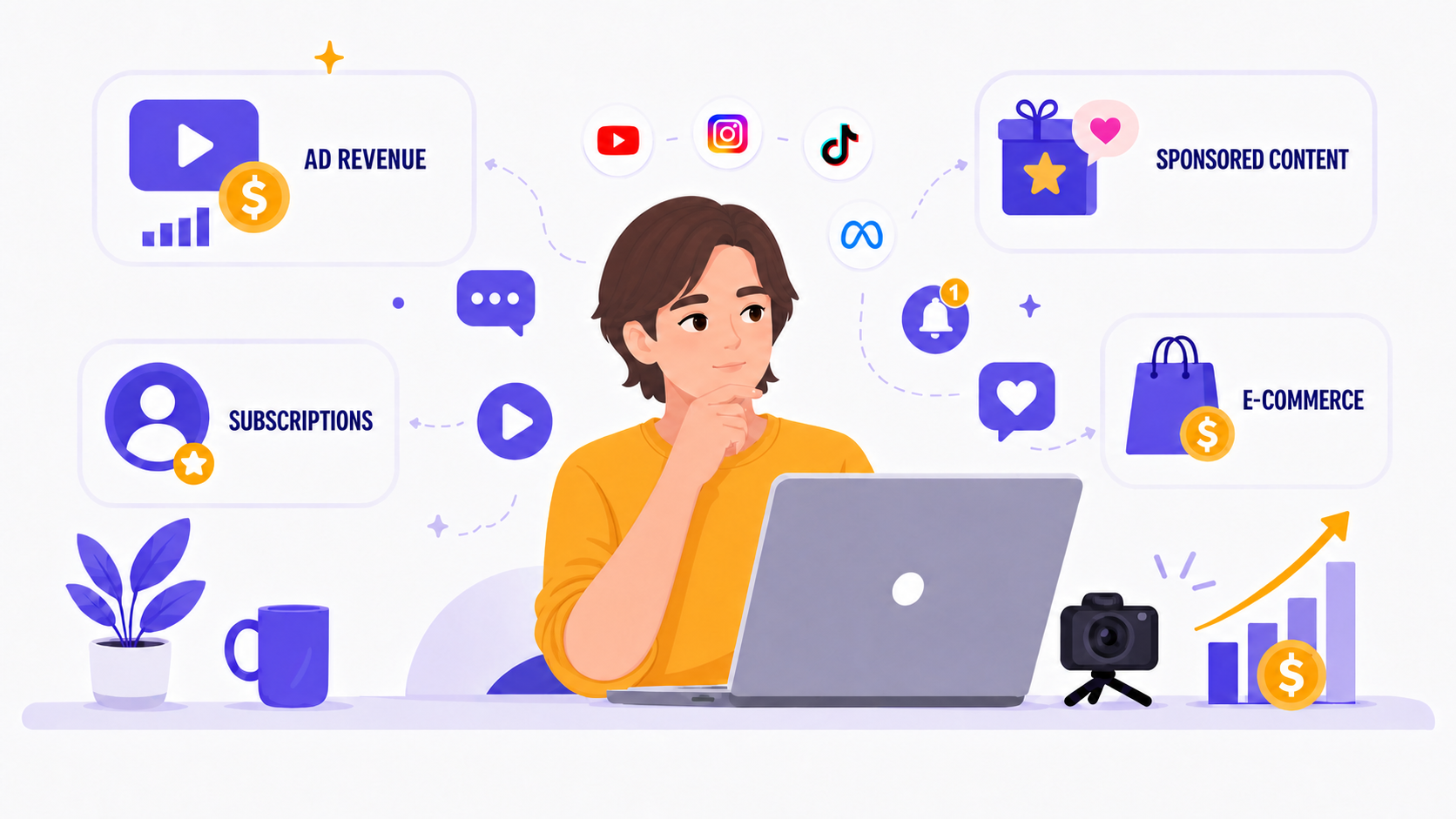
Social media platforms don’t just host content—they are built on a simple principle: when creators win, the platforms win.
At the core of their business model is revenue sharing. YouTube, for example, splits ad revenue with creators at roughly 55% to the creator and 45% to the platform. Meta (Facebook and Instagram) follows a similar structure, while TikTok typically operates closer to a 50/50 split. This is why every platform constantly pushes for more content—more content means more attention, and more attention drives revenue.
In fact, around 60% of all social media revenue comes from advertising. Think about that. Billions of dollars generated across platforms like YouTube (owned by Google), Meta, TikTok, Snapchat, and Pinterest—all largely driven by ads placed before, during, or after content.
For creators, the entry point is simple: attention. On YouTube, reaching around 4,000 watch hours can qualify you for monetization. TikTok and Meta have their own eligibility requirements, but the principle remains the same—build an audience, and you can tap into ad revenue sharing.
But ads are just one piece of the puzzle.
Another major revenue stream is sponsored content. Brands collaborate with creators to produce posts that promote their products. These posts are often boosted with paid advertising, extending their reach even further. It’s a growing model that blends organic content with paid distribution.
Then there are subscriptions. Platforms are increasingly offering premium experiences—YouTube Premium, Spotify Premium, LinkedIn Premium—all designed to remove ads and provide additional features. At the same time, creators can now build their own subscription communities.
Instagram, for example, allows creators to offer exclusive content to paying subscribers directly within the app.
One standout example is Meta Verified. Launched in 2023, it quickly gained traction, with an estimated 12 million users paying around $15 per month. That translates to roughly $180 million in monthly revenue—just from verification subscriptions alone.
Finally, e-commerce is rapidly becoming a major driver. Features like Facebook Shops, Instagram Shops, and TikTok Shop allow users to purchase products directly within the platform.
These systems are often integrated with platforms like Shopify, and social media companies take a percentage of each transaction. Even YouTube has introduced shoppable features, enabling creators to tag products directly in their videos.
Put simply, social media platforms monetize through five key channels: ad revenue, sponsored content, subscriptions, e-commerce, and platform partnerships. But all of them depend on one thing—engagement.
The more attention you generate, the more opportunities you unlock.
And when you understand how these platforms make money, you can align your strategy with their incentives—giving yourself a much higher chance of success.