|
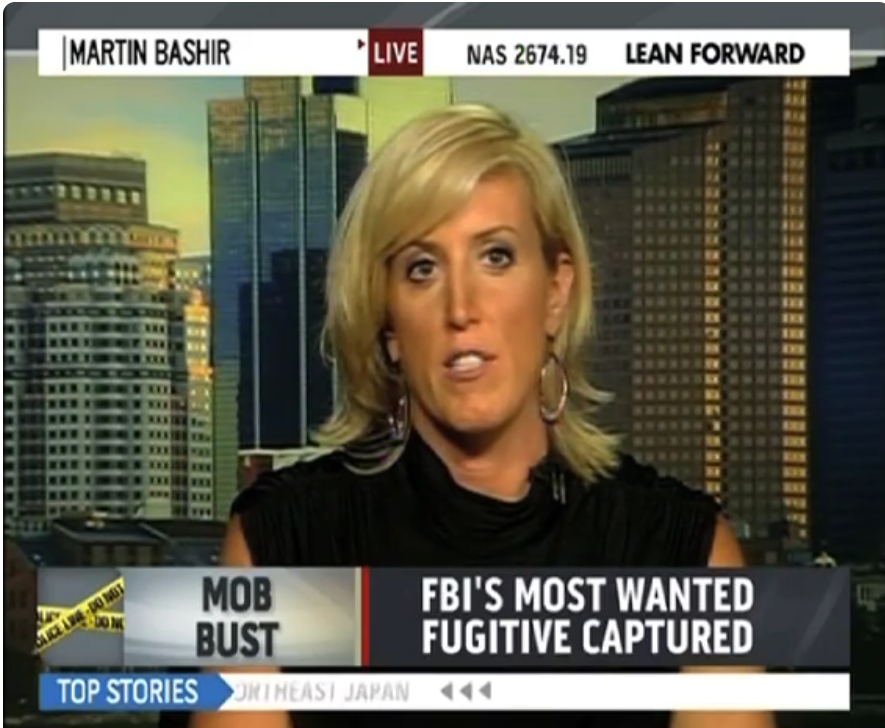
By Stephanie Rasmuson Long before Michele McPhee became a bestselling true-crime author, Emmy-nominated television producer, podcast host, and screenwriter, she built her reputation by chasing stories through Boston’s streets, neighborhoods, police stations, and courthouses. As a police reporter, bureau chief, and columnist at the Boston Herald, McPhee became one of the city’s most recognizable voices on crime and public safety. She covered organized crime, public corruption, terrorism, and some of Massachusetts’ most closely watched criminal investigations, developing sources inside law enforcement and pursuing questions long after public attention had moved elsewhere. Her career eventually expanded into national television, radio, books, documentaries, podcasts, and Hollywood screenwriting. Yet much of the work that defined Michele McPhee began in Boston, and the city continues to occupy the center of her reporting. McPhee belongs to a generation of investigative journalists who built credibility outside the newsroom. Rather than relying primarily on official statements or electronic communication, she spent years meeting people in neighborhoods, developing relationships with police officers, locating witnesses, and appearing at crime scenes. “You cannot report from your desk,” McPhee said. “Like, I am never in the office. I’m in my car. I’m in my neighborhood. I’m out in the streets.” For decades, that approach has guided her coverage of crime and justice while demonstrating the role investigative journalism can play in demanding accountability from powerful people and institutions. Her path into the profession, however, was anything but conventional. McPhee described herself as “kind of one of those late bloomers,” as well as “a problematic troublemaker in high school.” She attended Bunker Hill Community College for a year before transferring to the University of Massachusetts Boston, where she studied English and joined the student newspaper, The Mass Media. The experience introduced her to the power of reporting. “That sort of sparked my joy about uncovering the truth and holding people accountable,” she said. “It was exhilarating, I think, to see that you could spark change.” McPhee soon set her sights on The Boston Globe’s competitive co-op program. According to McPhee, UMass Boston students were not generally encouraged to apply at the time, while students from more expensive private universities had greater access to the program. “So I set out to change that and became the first UMass intern in the Globe’s co-op program,” she said. McPhee said she immediately noticed the class distinctions within the newsroom. Coming from a working-class East Boston background, she sometimes felt out of place among colleagues whose family names were closely associated with Boston’s most prominent institutions. “Here I was, this hardscrabble girl from East Boston getting into this place,” she recalled. “You could kind of feel the class tension, to be honest.” Her early experience at the Globe also introduced her to an era of newspaper journalism in which established reporters routinely mentored young journalists. McPhee credited veteran journalists with teaching her the fundamentals of reporting, writing, sourcing, and newspaper style. Her first major opportunity arrived during what became known as the Steak Tips Massacre. In November 1995, gunmen opened fire inside the 99 Restaurant in Charlestown, killing four men and critically wounding another. The shooting became one of Boston’s most notorious organized crime cases of the decade. McPhee was still an intern assigned to routine newsroom work when she learned of the shooting. Because she knew the area and many of the people connected to the case, she went to the scene and began reporting. Journalists, including Kevin Cullen and Walter Robinson, helped her develop the material, which resulted in her first major byline. The reporting later led to a Boston Magazine feature about the massacre and caught the attention of Pete Hamill, the celebrated journalist and editor who was then leading the New York Daily News. McPhee left college and moved to New York after Hamill offered her a job. She arrived with little money and few possessions, but eventually rose to become Police Bureau Chief at One Police Plaza. Public biographies describe her as the first woman to hold that position for the newspaper. The Charlestown story also taught McPhee about the potential dangers of investigative reporting. While working on the magazine article and living in Boston’s North End, she said she was threatened at gunpoint by men on Hanover Street. “That was my first time experiencing danger over this,” McPhee said. Although no one fired the weapon, the incident demonstrated how seriously the subjects of crime reporting sometimes responded to scrutiny. Rather than driving her away from investigative journalism, it strengthened her belief in building reliable relationships and protecting the people who trusted her with information. “Journalism really is a business of relationships,” she said. McPhee said the relationships she established during the 1990s remain professionally and personally significant today. “It also shows how important it is to protect sources,” she said. “To the absolute death.” That principle would become one of the foundations of her career. After moving to New York, McPhee covered police and crime for the Daily News. On September 11, 2001, she was working as a police reporter in New York when terrorists attacked the World Trade Center. She knew many of the police officers and firefighters who responded, including some who died. McPhee spent approximately two years reporting on the attacks and their aftermath, working to document the lives and legacies of first responders. After years of reporting on terrorism, McPhee returned to Boston and joined the Boston Herald, where she worked as a police reporter, bureau chief, and columnist. She later hosted Boston talk-radio programs, including shows on WTKK, WRKO, and WMEX, and worked in television for WCVB and ABC News. Although her career later expanded nationally, McPhee believes Boston taught her lessons about journalism that cannot be replicated elsewhere. "There is absolutely no place on earth like Boston," she said. She credits the city's neighborhood culture with giving reporters unique access to communities and helping them earn trust over time. McPhee learned that being present, listening to residents, and demonstrating loyalty to a neighborhood could give a journalist access to stories that would otherwise remain hidden. "I am deeply entrenched in the neighborhood of East Boston and the North End," she said. "I would fight for its people…people start to trust you, and you can very easily become the voice for the voiceless." McPhee also believes her Boston roots helped her build relationships with law enforcement officers. “If you’re from here, the cops are more likely to talk to you,” she said. “And once you start building those sources, then other cops will vouch for you.” Even today, while splitting her time between Los Angeles and East Boston, McPhee says those Boston relationships continue opening doors professionally. McPhee’s career has also been shaped by her investigations into the Boston Marathon bombing. She was in Boston on April 15, 2013, when two bombs exploded near the marathon’s finish line on Boylston Street, killing three people and injuring hundreds. The bombing led her into years of research and eventually two versions of a book examining the attack and the Tsarnaev brothers. Maximum Harm: The Tsarnaev Brothers, the FBI, and the Road to the Marathon Bombing was published in 2017. An updated edition, Mayhem: Unanswered Questions About the Tsarnaev Brothers, the U.S. Government and the Boston Marathon Bombing, followed in 2020. WBUR described Mayhem as her seventh true-crime book. McPhee said that she believes major criminal investigations should remain open to journalistic scrutiny whenever important questions have not been publicly resolved. The victims, their families, and the city’s experience of the bombing motivate her to continue asking those questions. “If there are unanswered questions, we need them to be answered,” she said, “so it doesn’t happen again.” The financial realities of investigative reporting have not diminished that commitment. McPhee said she received a modest advance for her first marathon book and did not earn royalties despite the time and research involved. “This isn’t for the money,” she said. “This certainly isn’t for the money. You’re doing this because it’s important.” She recalled then-Mayor Thomas Menino leaving medical treatment to attend a memorial service at the Cathedral of the Holy Cross and former Red Sox player David Ortiz rallying the city at Fenway Park. “I will never forget David Ortiz saying, ‘This is our (expletive) city,’” McPhee said. For her, the statement captured the defiant loyalty that has continued to guide her Boston reporting. More recently, McPhee returned to Massachusetts crime reporting through her investigation of Sandra Birchmore’s death. Birchmore, a 23-year-old pregnant woman from Stoughton, was found dead in her Canton apartment in February 2021. Authorities initially ruled her death a suicide, but federal prosecutors later charged former Stoughton police detective Matthew Farwell with killing her and staging the scene. Farwell has pleaded not guilty, and the allegations against him remain to be adjudicated in court. McPhee’s long-form Boston Magazine article, “The Betrayal of Sandra Birchmore,” examined Birchmore’s involvement in a police youth program and the allegations that officers entrusted with mentoring her instead exploited and abused her. The case was personal for McPhee because she believed Birchmore had been failed by people and institutions that were supposed to protect her. “The idea that they didn’t take him seriously as a suspect is immediately suspicious,” McPhee said of Farwell and the original investigation. Her coverage of the Birchmore case reflects the standard that has remained constant throughout her career: journalists should scrutinize every institution, including law enforcement, without treating an entire profession as corrupt. “I do believe that people need to be held accountable,” McPhee said. “And without investigative journalism, who is going to be held accountable?” Today, McPhee hosts Kingdom of Fraud, a seven-episode investigative podcast. The series follows the unlikely criminal partnership between Jacob Kingston, a member of a fundamentalist Mormon family, and Levon Termendzhyan, an Armenian businessman known as “The Lion.” “I always have a million projects in the air,” she said. “I’m still doing a little bit of everything.” McPhee believes meaningful investigative reporting requires more than professional curiosity. It requires a genuine concern for the people affected by a story and the consequences of what the reporter discovers. She also fiercely guards her political independence. McPhee said she has been registered as an independent since she became eligible to vote, and has never joined a political party. “I really do believe that that kind of independence is essential to being a good reporter,” she said. Her reporting is driven less by party loyalty than by a belief that the same standard should apply to every public official and institution. “For me, politics do not play a role in this,” she said. “It’s about accountability.” Looking back over more than three decades, McPhee hopes her legacy will not be measured merely by headlines, books, radio ratings, or television credits. She wants to be remembered as a reporter whose work was thoroughly researched and whose loyalty remained with the people affected by the stories she covered. “I want to be seen as someone who fought for the people of Boston because I love my city,” she said. Whether she is reporting from a Boston neighborhood, investigating terrorism, or juggling countless projects, McPhee continues to return to the lessons she learned as a young reporter: leave the newsroom, build relationships, protect sources, care about the people involved, and keep asking questions.
|