
|



Welcome back to Part 2 of our series on the structural shift happening in the stock market.
In Part 1, we looked at why Terry Smith, one of the world’s best quality investors, was forced to change his strategy
We also broke down how index funds are now driving prices by buying and selling without looking at business fundamentals.
Today, we’ll look at the volatility this is causing, and why the structure of the U.S. retirement system could make the problem much worse.
Let’s dive in.

 |
Passive and Increased Volatility
This passive or automated buying and selling could lead to a lot of volatility.
Smith makes the point that we’ve seen exactly that.
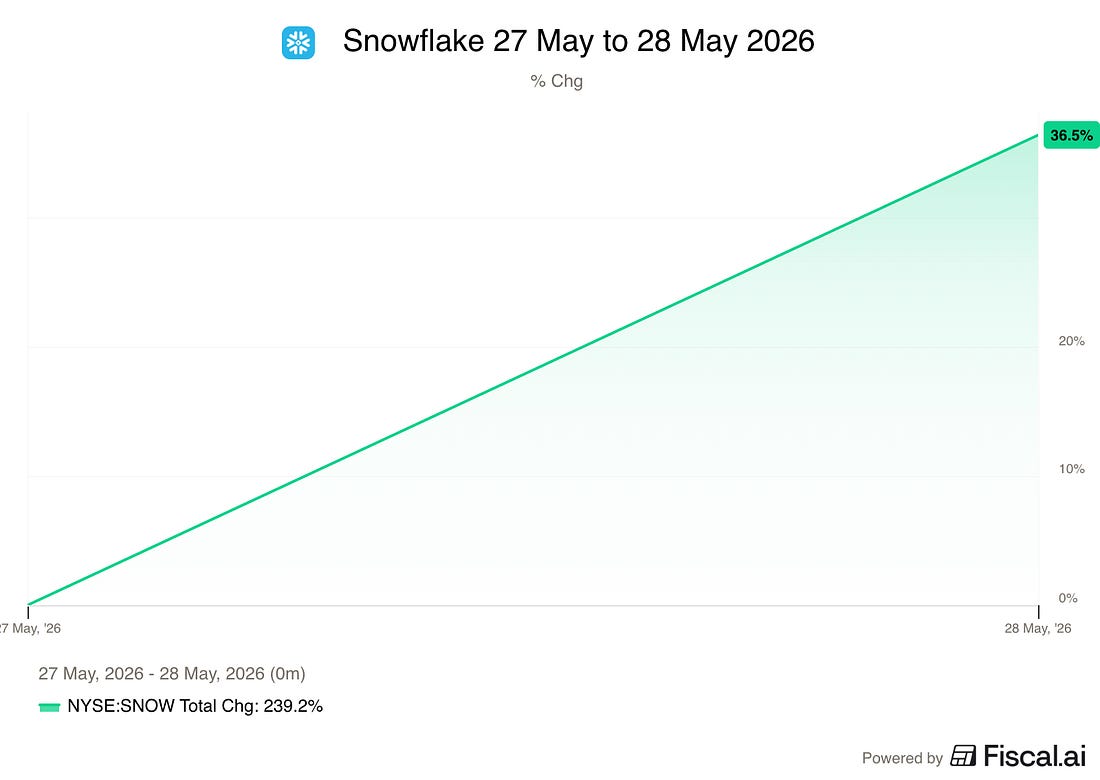
Every day we seem to be presented with examples of what the rise of passive investment is doing to the market in terms of volatility. On Wednesday 27th May Snowflake (SNOW US), a database company closed trading as a $60bn company and opened on Thursday as an $82bn one.
 |
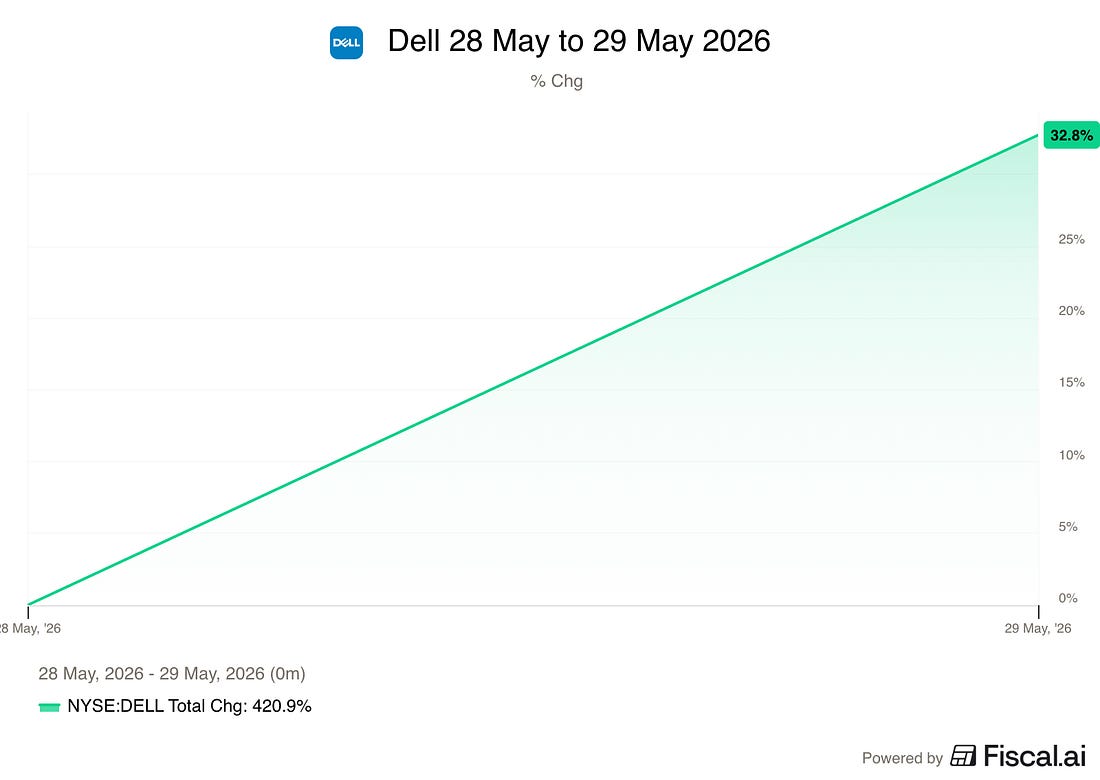
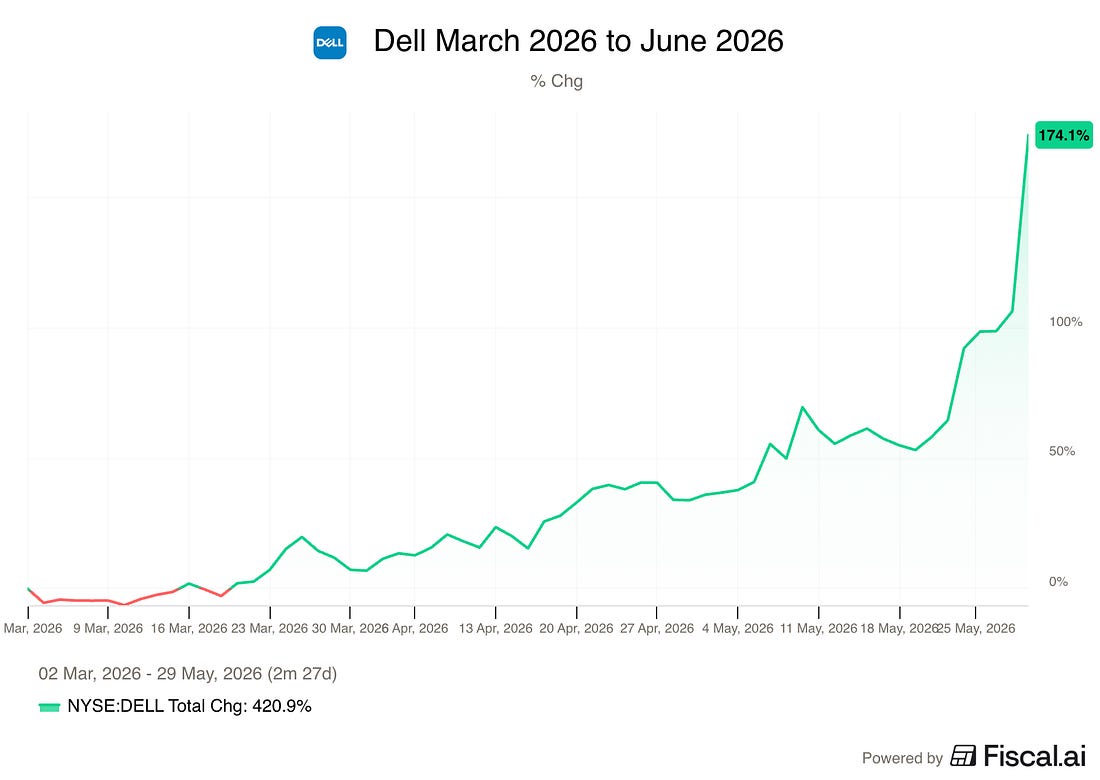
On that Thursday, the baton of volatility was passed to Dell Technologies (DELL US), the computer hardware company. Its stock closed as a $205bn company and opened on Friday as a $273bn one. That opening increase of 33% is after the shares had already doubled since the beginning of March.
 |
Here’s Dell’s three month run to a 174% gain in price.
 |
There’s also the rise of concentrated ETFs to consider.
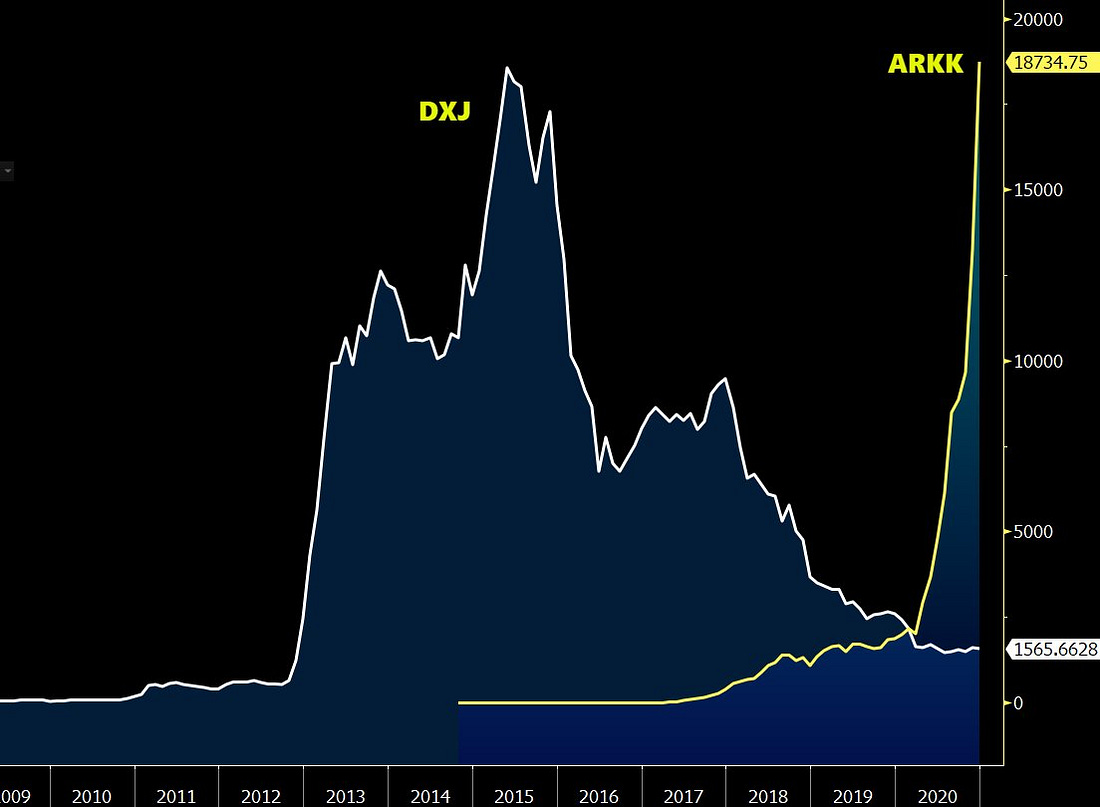
Let’s look at Cathy Wood’s ARK Innovation ETF ($ARKK) that became incredibly popular in 2020.
Here’s the flow of money into her fund.
 |
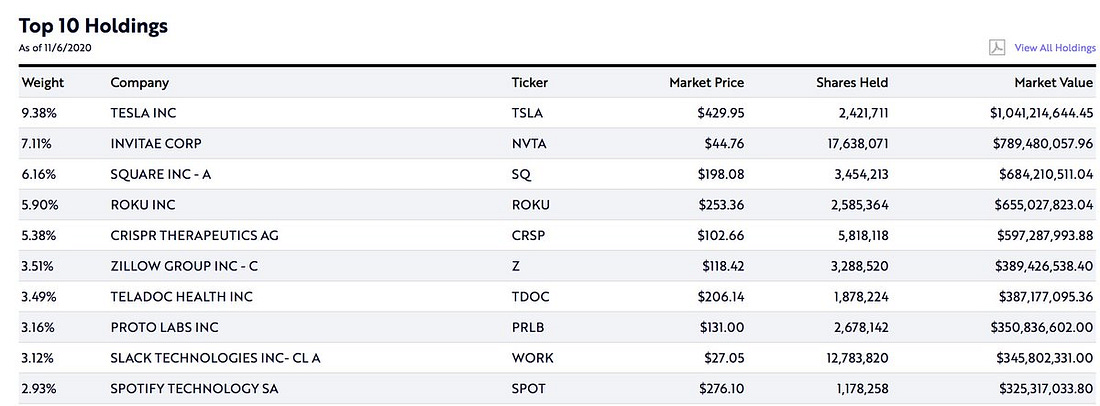
Here’s the top 10 holdings of her fund in November of 2020.
 |