How exactly do you retell a story that’s been told a thousand times before? In adapting Homer’s Odyssey, Christopher Nolan was fully cognizant of what he calls “the Ur-text problem”: when a tale is so ubiquitous and influential that modern audiences find the original tired or derivative. The epic poem dates back to the seventh or eighth century B.C. and has informed and has influenced world culture for nearly three millennia. When it came to studio blockbusters, however, Nolan felt a curious absence: “The genre of Greek mythology doesn’t really exist in movies,” he says.
That’s not to say people haven’t tried. “Hollywood made all these incredible movies about the classical period of antiquity, but it was left to geniuses like Ray Harryhausen to visualize the more mythical aspects,” Nolan says, referring to the stop-motion pioneer behind the enchanting yet undeniably goofy Jason and the Argonauts (1963) and Clash of the Titans (1981). “For a long time, it wasn’t technically viable to make this kind of film and give as much weight and validity to a fantastical story as you did to a non-fantastical story,” Nolan says. He cites Peter Jackson’s Lord of the Rings movies as examples of the fantasy genre finding a footing in the world of ambitious blockbusters. “The technology had to evolve,” as Nolan puts it. “What I saw with The Odyssey is a gap that hadn’t been filled.”
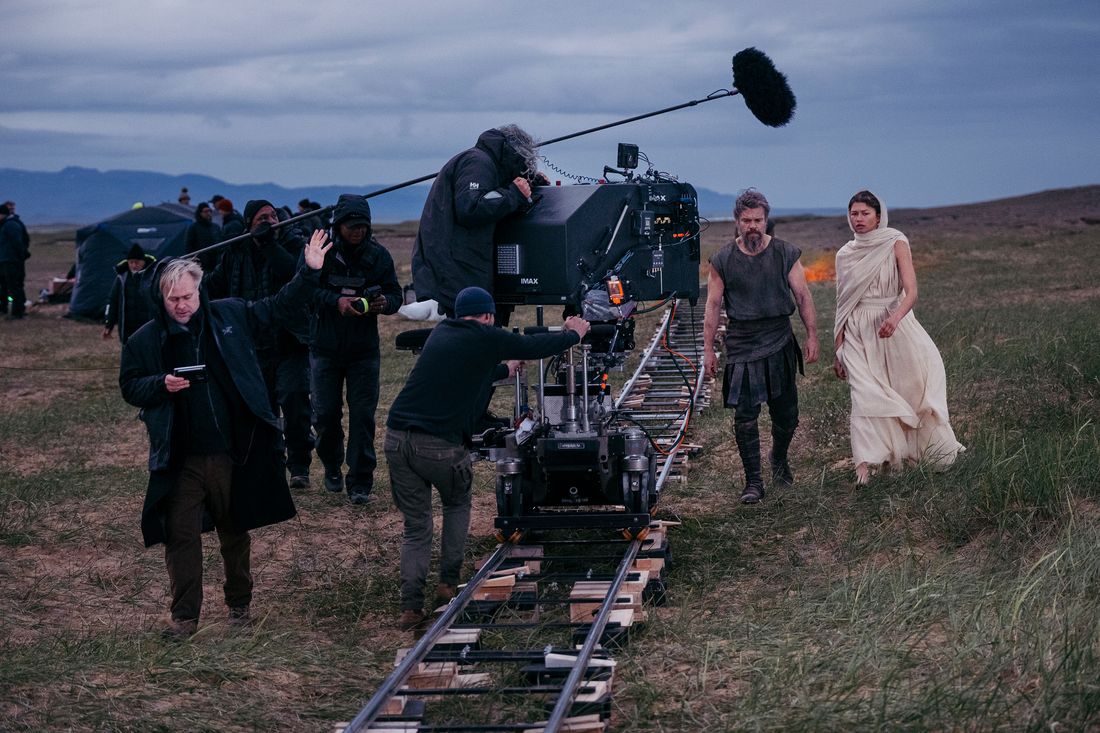
The gap he’s talking about involves more than just the visual effects required to bring mythical creatures like Cyclopes and Scylla to life. Rather, Nolan wanted to plunge viewers into the elements of Homer’s world and create a genuinely physical experience. His film opens with the words “It is a time of apparent magic,” but this is not a magical world; it’s a tactile, immersive one that happens to have magic in it. It’s also surprisingly intimate. The Odyssey is not only Nolan’s most sweeping film but also his quietest and maybe even his saddest, continuing the mood of psychological and civilizational despair that marked his previous effort, the shattering, Oscar-winning Oppenheimer. To say more would be to give away too much, but like almost all of Nolan’s films, The Odyssey works toward a devastating climax that recontextualizes just about everything we’ve seen leading up to it.