This issue: The Friend author takes the Book Gossip Questionnaire, we share a new book recommendation, and our favorite links of the month.
|
|
|
|
| Senior newsletter editor, New York |
|
|
|
THE BOOK GOSSIP QUESTIONNAIRE |
Sigrid Nunez Would Rather Not Meet Her Favorite Authors “Who’s to say I could keep up my own end of the conversation?” |
|
|
|
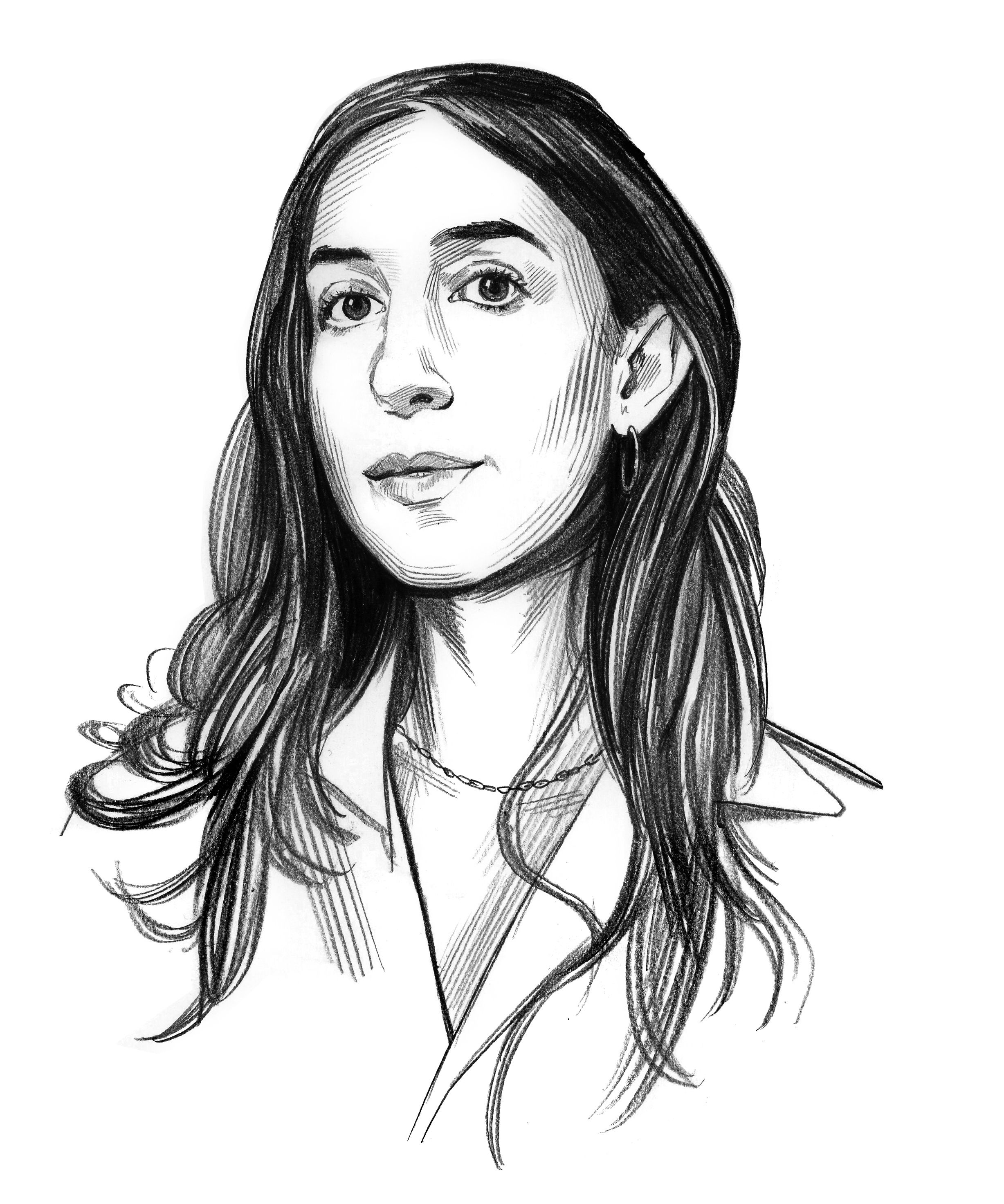
Today, the National Book Award–winning novelist and memoirist Sigrid Nunez releases her debut short-story collection, It Will Come Back to You. Showcasing 13 stories from the past three decades, it is a testament to Nunez’s signature directness, a voice as alive to the grief of the everyday as to its humor. In this edition of the Book Gossip Questionnaire, the New York–based writer talks about impostor-syndrome dreams, reading herself in translation, and her early attempts to write like Virginia Woolf.
|
|
|
|
|
- The book you’ve reread the most often?
Probably the novel Lucy by Jamaica Kincaid. For many years I taught a literature course that included autobiographical fiction. Though I often changed the reading list, Lucy was always on it, and I always reread it and always with pleasure. The students liked it too. To me it’s a perfect book, by which I mean that it accomplishes exactly what the writer set out to do. I’ve maybe read it 15 times. -
Finish the sentence: I can’t write without _____.
Money and a room of one’s own. - Recount a recurring dream.
I have that type of recurring dream where the dreamer is expected to do something that they’re unprepared to do or literally unable to do — a recital, and I’m in the wings and I’m expected to go onstage and I’m completely bewildered and scared and I keep trying to explain to everyone that there’s been some mistake, that I don’t play the flute or whatever it is I’m supposed to do. But no one will listen. That’s usually when I wake up sweating. -
The last album you listened to all the way through.
Miles Davis’s Kind of Blue. I listen to it all the time, and I always listen to it all the way through. - How many hours a day do you write and where?
Some days only two hours, other days maybe four or five. If I’m close to finishing something, I might work all day and into the night many hours. I live in a studio apartment. There’s a desk against one wall and that’s basically where I write. There’s the laptop and there might be some books and a lamp, but there’s nothing particularly interesting on it that you wouldn’t find on anybody’s desk. - Describe what you’re working on now.
I'm well into my tenth novel right now. It’s going to be quite short. The main characters are two women who first meet in drama school as aspiring actors, though neither does in fact end up having an acting career. The book is partly about the complexity of their decadeslong friendship and it’s also about the consequences of missed chances and the unlived life. - Describe a physical place of great importance to you.
The West Village studio apartment where I’ve lived for most of the last 40 years — and where in fact I’ve written all my books. It’s basically a room. It’s small. The walls are covered with books. There’s my bed and a couch and a coffee table that’s also covered with books, and there’s a small kitchenette. There are some nice flowers. There’s nothing really exciting to describe. It faces a courtyard, so it’s quiet. That is a nice thing. -
The book you wish you’d written.
Often when I read a really good book — and of course that happens very often — I wish I’d written it. There’s no particular book that I know or ever read that I would say, “That’s the book I wish I’d written.”
A recent example is The Faces by Tove Ditlevsen. I had read her memoir, The Copenhagen Trilogy, which I thought was fantastic. The Faces is based on the same harrowing autobiographical material as the trilogy, which is a writer’s psychotic breakdown, and it’s a terrific book. The language is extraordinary. While reading this prose, I was like, I wish I’d come up with that. Throughout the book there’s all this wonderful imagery — really on every page. - A director, living or dead, you’d most like to see adapt one of your books.
I've had two books adapted for film. The Friend was adapted by David Siegel and Scott McGee and What Are You Going Through was adapted by Pedro Almodovar. I was lucky. Most writers end up unhappy with their film adaptations, whereas I was very happy with mine, even though there were many differences between the books and the films. - Describe your reading habits in three words.
Never enough time. - When was the last time you reread your first book?
I avoid rereading my own work, so I wouldn’t do it willingly. But sometimes I do so because I have to check a translation. Four years ago, my German publisher commissioned a new translation of my first book, A Feather on the Breath of God. I certainly haven’t read it since then in any language. It’s not like I give my opinion of how this should sound in French or whatever. But there are just things that are cultural misunderstandings or a metaphor that doesn’t translate. So I can find those mistakes and then they can correct it. But because I write in English, a German or French or Italian translation doesn’t give me insight into my own language.
- The writer you’d most like to have a conversation with, living or dead?
I’d always rather read a writer than have a conversation with them. I’ve learned that meeting writers whose work I’ve greatly admired often turns out to be disillusioning. And who’s to say I could keep up my own end of a conversation with some brilliant writer? - What was the last meal you cooked, and who was it for?
I don’t cook and certainly not for other people. But the last thing I made for myself was a plate of fresh watermelon with walnuts and feta. You don’t need dressing. You mix that together and it is delicious and refreshing and healthful. - Your most successful tool/method/substance/ritual for getting unblocked?
Norman Mailer once said, “There’s a touch of writer’s block in a writer’s work every day,” which I find to be absolutely true. I always try to remember that feeling blocked is an inevitable part of the writing process and never a reason to stop. And I’ve decided to take Ian McEwan’s suggestion to think of it not as writer’s block but as creative hesitation. Isn’t that great? - Your vice, if you identify as having one?
Just one, seriously? I’m sure if you hang out with me for a while, you’re going to catch me displaying pride, greed, envy, wrath, stubbornness, unhealthy appetites and cravings, inappropriate attachments. At some point I think I would exhibit all the vices. Not in the sense of when people talk about cigarettes or drinking too much. But vices in general — I think everybody has them to some extent. -
The last thing that really made you laugh.
Donald Trump trying to find someone to blame for his reflecting-pool renovation fiasco and declaring that there were vandals — the little explosion of nonsense about how he was going to get to the bottom of who had done this when it’s all completely untrue. That's the laughable part, also because it’s so expected. You know something’s going to go wrong because of incompetence and he’s going to get on Truth Social and tell this stream of lies and just make up whatever and arrest people. It’s horrible, but it is very laughable.
- Your favorite piece of book gossip, whether historical or current.
I think one of the best pieces of gossip ever is Hemingway’s memoir, A Movable Feast, about literary life in Paris during the 1920s. The whole book is gossip, and much of it, by his own admission, is actually fiction. But to take this one example, he tells about how his friend F. Scott Fitzgerald once pulled him into a public bathroom and pulled down his pants to show Hemingway his penis. Supposedly Fitzgerald was worried because his wife, Zelda, had told him he was too small to satisfy a woman. I don’t believe that story. I’m pretty sure that even if Scott Fitzgerald really were anxious about his size and his ability to satisfy his wife, the last person he’d share that with would have been Ernest Hemingway.
There are different kinds of gossip. One kind that people object to for the most part is what we call malicious gossip, where you tell something about somebody that person would not want to have repeated. I think it’s a perfect example of that particular kind of gossip. - A writer you want to sound like:
Honestly, no matter how much I might admire another writer, I wouldn’t want to sound like anyone but myself.
I did have this experience early on, when I was just beginning to write: I very foolishly wanted to sound like my literary heroine, Virginia Woolf. I thought that’s what great literature was supposed to sound like. As a result, for a period of time, everything I wrote was bad Virginia Woolf. It was absurd.
I don’t really regret that episode in my career because there was a lot to be learned from immersing myself in and attempting to imitate the work of a literary genius. But it wasn’t until I had gotten that out of my system that I could move on. I didn’t stop consciously. I just started writing something which did end up becoming the beginning of my first novel. As soon as I started writing it, I recognized my own voice. I knew that there had been a big change. I knew that I was writing like myself.
- A writer you actually sound like:
If there’s a writer I actually sound like, let her do all the work and let me relax.
Seriously, though, anything I write sounds to me like my own voice now. I can’t hear any other writer’s voice but my own in something I’ve written. I can’t really think of a writer that I actually do sound like. Somebody else might be able to. -
The question you wish more people asked you?
I like to think that people would feel that they can ask me whatever they want. I’m not aware of going about life or doing interviews and thinking, Why didn’t they ask me that? When I do interviews, fairly often the interviewer says, “Okay, is there anything that you want to bring up that didn’t come up in this discussion?” And I always say “no.”
|
|
|
|
Subscribe now to get unlimited access to everything New York, including subscriber-only newsletters, exclusive perks, the New York app, and more. |
|
|
|
The New Releases You Should Buy, Skip, or Put on Hold at the Library |
|
|
|
One Leg On Earth by ’Pemi Aguda
Aguda’s debut short story collection, 2025’s Ghostroots, was a subtly stunning work reminiscent of Lesley Nneka Arimah’s What It Means When a Man Falls From the Sky in the way it straddled the supernatural and the realistic. Her follow-up, a debut novel, attempts a similar combination but doesn’t quite evoke the same power. In the new book, pregnant women in Lagos keep drowning themselves. The suicides are a source of disturbing fascination to Yoyose, a recent college graduate doing her mandatory postgraduate youth service at an architecture firm in Lagos. The firm is designing a new city built from refurbished shoreline, which sparks protests. As the suicides mount, the novel turns to overbearing metaphor about the violent displacement of poorer communities in the pursuit of gated communities for the rich. The message is moving; the execution — and lack of character development for Yoyose — leaves something to be desired. BORROW. —Tomi Obaro
|
|
|
|
If you're enjoying Book Gossip, forward it to a friend. If this was forwarded to you, sign up here to get this newsletter every two weeks.
Send us tips, gossip, or feedback at bookgossip@nymag.com. |
|
|
|
https://link.nymag.com/oc/5fe27229b47e5435951ce6bfrq8re.bbh/9d134ea7
|
| |
|
|