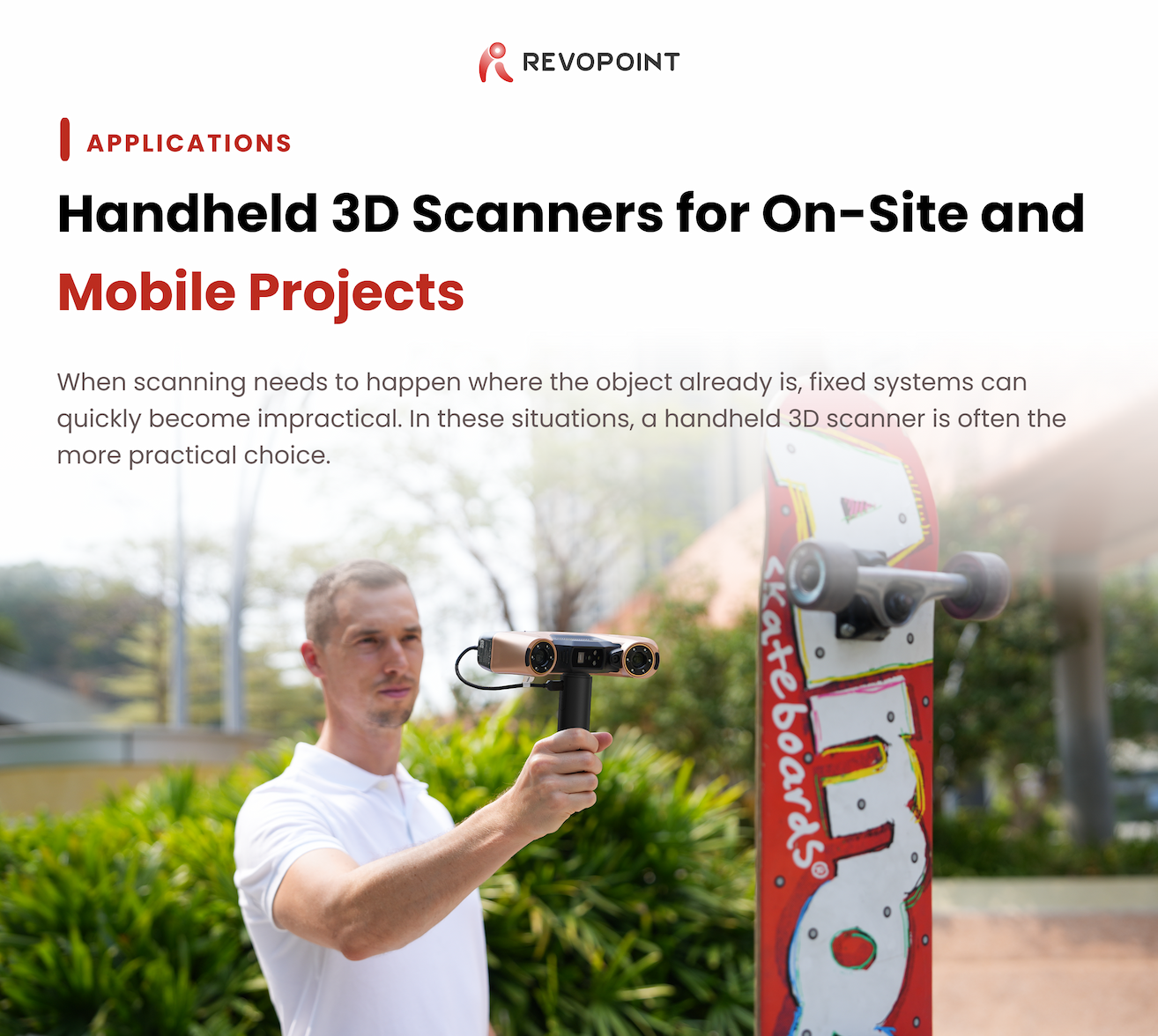
When scanning needs to happen where the object already is, fixed systems can quickly become impractical. Parts may be too large to move, too delicate to risk relocating, or already bolted into place where disassembly just isn't worth the trouble. In these situations, a handheld 3D scanner is often the more practical choice. For anyone wondering what handheld 3D scanners can actually do in real-world mobile projects, the real question is simpler: what problems can this thing solve for me? Whether you're customizing a car, 3D printing replacement parts, digitizing collectibles, or doing field work, the value is the same — you capture usable 3D data right where the object sits, without moving a thing. |
|
Why Handheld ScannersWork Better on the Go
|
|
A handheld 3D scanner moves around the object instead of requiring the object to sit inside a fixed capture area. That makes a huge difference in tight spaces, outdoor locations, workshops, and anywhere you don't have a controlled studio setup. No disassembly, no carrying heavy parts, no covering everything with sticky markers. Just pick it up and scan. For users who move between different locations, that means less prep time, less disruption, and faster access to usable 3D data. |
|
GARAGE-FRIENDLYVehicle Modification & Maintenance
|
|
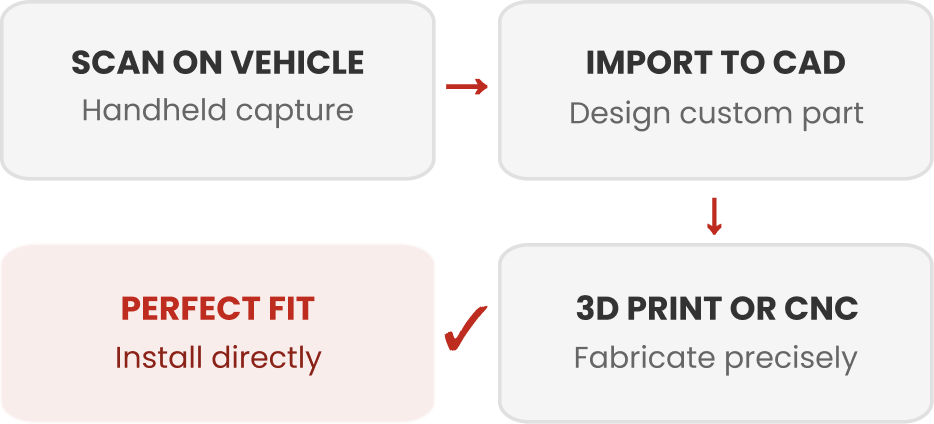
This is one of the most practical use cases for handheld scanners. Whether you're fabricating custom parts for your car, restoring a classic, or working on motorsport DIY projects, many components stay installed — engine bay brackets, fender liners, exhaust routing. Try measuring those with calipers, and you'll quickly give up. Try removing them, and you'll be there all day. |
|
A handheld scanner captures the shape directly on the vehicle. Take the data into CAD, design your custom part, then 3D print or CNC machine it. No guesswork, no test-fitting multiple versions. The scan tells you exactly what you're working with. |
|
Figures, Models, and Digital Collecting
|
|
If you collect figures, statues, or sculpt your own prototypes, a handheld scanner lets you turn physical objects into digital files — for backup, modification, remolding, or direct 3D printing. No need to ship your prized figure to someone else. No need to cover it with tracking dots. Just hold the scanner, walk around it, and most of the detail is captured. For hobbyists looking to build their own private digital museum, this is something you can actually do yourself. |
|
3D PRINTING WORKFLOWRapid Prototyping for 3D Printing Enthusiasts
|
|
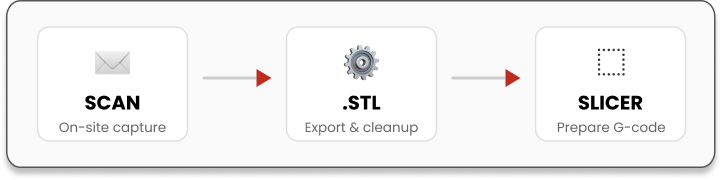
Anyone deep into 3D printing knows the drill: the most time-consuming part isn't the print itself — it's the modeling. Especially when you're dealing with curved surfaces, organic shapes, or parts that need to fit onto existing objects. A handheld scanner cuts out the guesswork. Instead of measuring with calipers and rebuilding in CAD from scratch, you scan the object and export an STL. A quick cleanup, straight into the slicer, and you're printing. The path from scan to print is a lot shorter than you'd think. |
|
Figures, Models, and Digital Collecting
|
|
Even if you're not an industrial engineer, you might run into situations where you need to capture on-site geometry — say, mapping a leaking pipe at home to design a custom bracket, recording an outdoor fixture for future reference, or digitizing an irregular wall structure during a renovation. No need to ship your prized figure to someone else. No need to cover it with tracking dots. Just hold the scanner, walk around it, and most of the detail is captured. For hobbyists looking to build their own private digital museum, this is something you can actually do yourself. |
|
A measurement tool you can carry in your bag, not a lab instrument that needs a controlled environment. |
|
ART, DESIGN & CONTENTContent Creation
|
|
If you work with CG, game mods, VR content, or short-form VFX, you've probably wanted to bring a real-world object into virtual space. Traditional workflow: take reference photos, measure, model from scratch — time-consuming, and you might still miss the subtle details. |
|
A handheld scanner captures props, sculptures, or even body parts directly into your computer as 3D assets. It saves hours of reconstruction work and preserves the actual surface texture. |
|
What Actually Matters When Choosing a Handheld Scanner
|
|
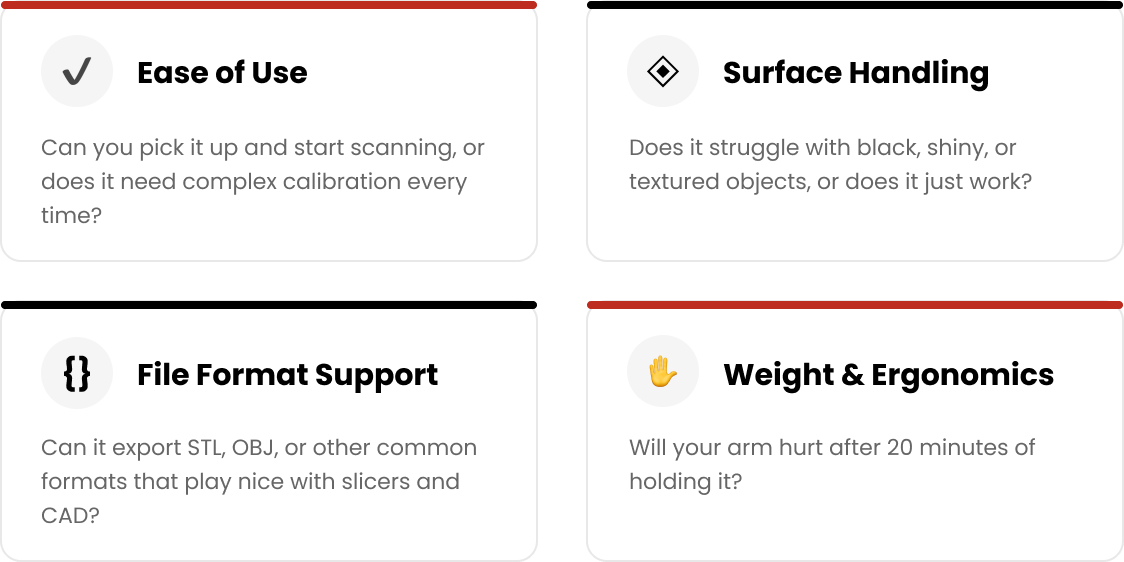
For individual users, spec-sheet numbers don't always reflect real-world experience. What really counts: |
|
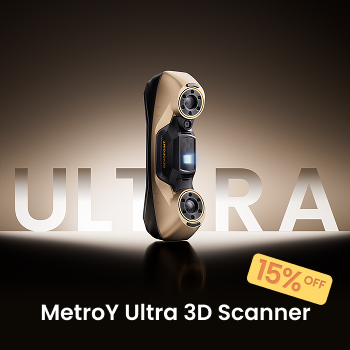
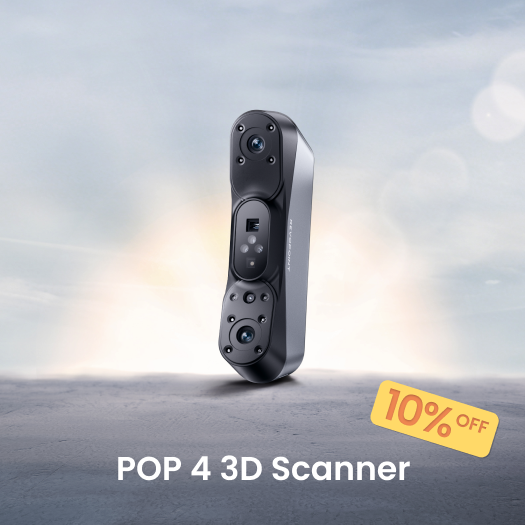
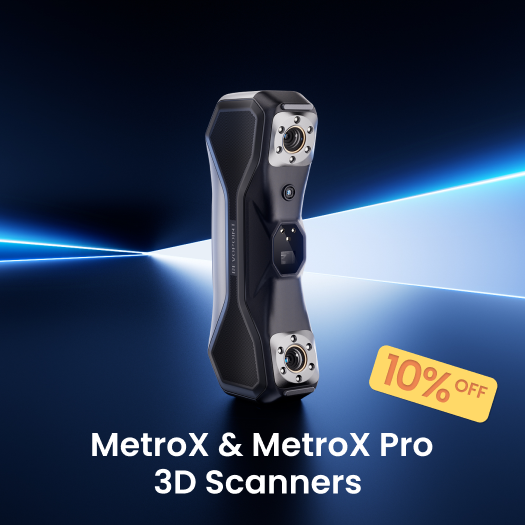
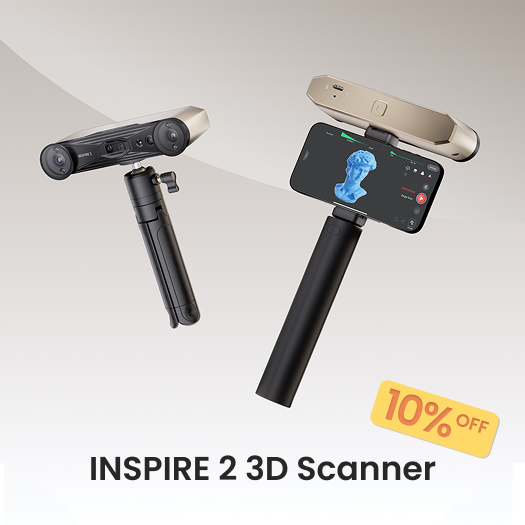
Revopoint’s lineup covers a range of needs. Which one fits depends on what you scan, where you scan, and what you do with the data afterward. |
|
|
|
|