+ Fed case fuels debate over emergency orders.

Follow the biggest developments in courts, law firms and legal practice with Reuters. Subscribe for $1/week.


The Daily Docket

The Daily Docket

A newsletter by Reuters and Westlaw

By Caitlin Tremblay

Good morning. Let’s kick off with the U.S. Supreme Court’s latest divide: the “shadow docket.” Plus, we have a look at how Justice Amy Coney Barrett solidified herself as one of the few members of the court’s conservative majority willing to occasionally cross ideological lines; President Trump said the ICC has no jurisdiction over Americans; and legal sector jobs continued to climb last month. I hope you had a nice holiday weekend. Let’s dive back into the news.

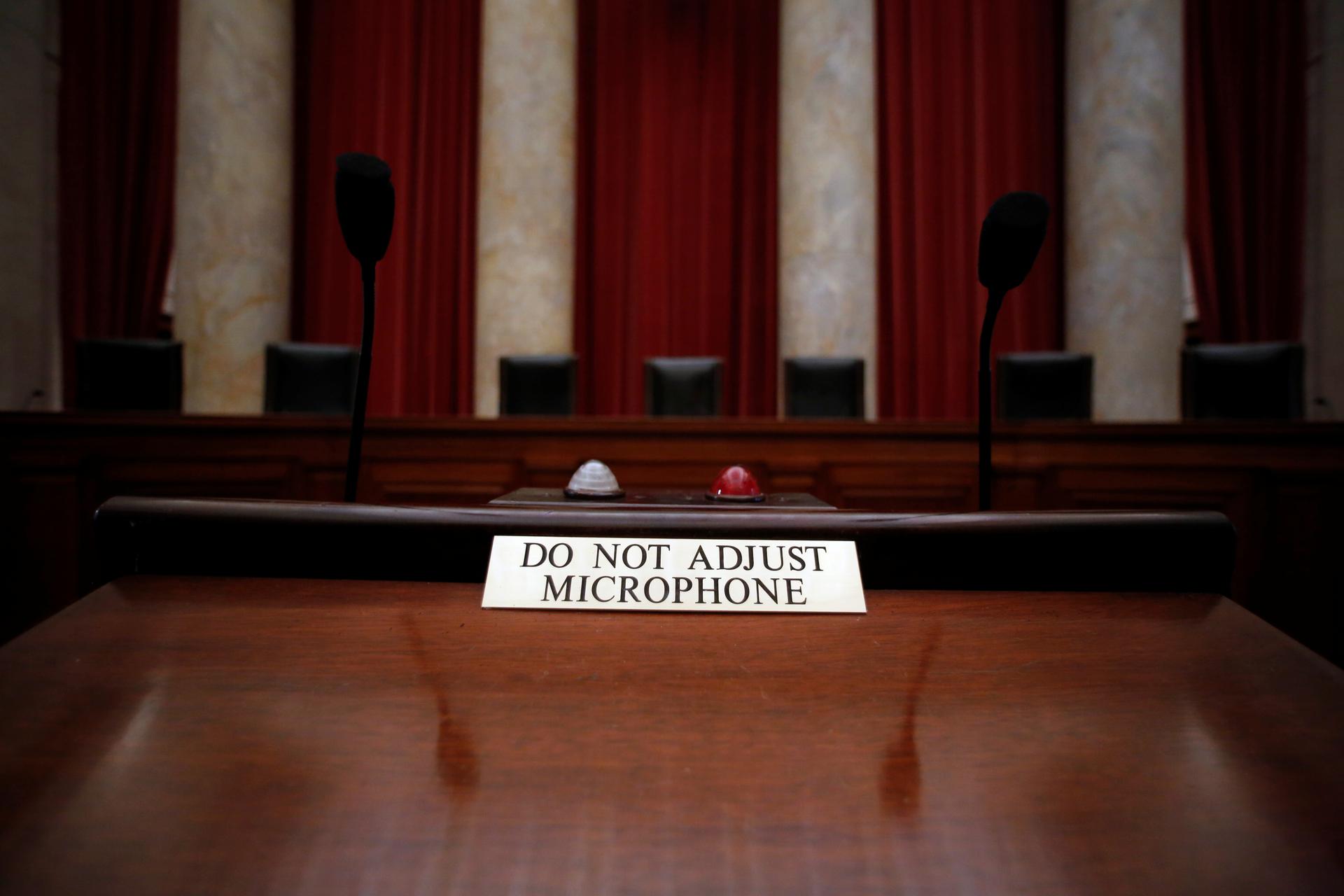
U.S. Supreme Court supercharges its 'shadow docket,' dividing the justices


U.S. Senate/Handout via REUTERS

Welcome back to the legal news landscape where we are still talking about the U.S. Supreme Court. Today, I want to take a look at how the court’s decision to protect Federal Reserve independence exposed a growing divide among the justices over the court’s increasingly powerful emergency, or “shadow docket.”

What happened?

In a 5-4 ruling, Chief Justice John Roberts and four colleagues rejected President Trump’s emergency bid to remove Fed Governor Lisa Cook. But three conservative dissenters argued the court should not have used an emergency proceeding to make such a significant ruling before lower courts fully considered the case. Roberts defended the decision, calling it a matter of judicial “prudence.”

Why it matters

The emergency docket allows the court to act quickly, often before lower courts rule on the merits. Critics say it lacks transparency and can effectively reshape the law through abbreviated decisions. The court has used it repeatedly in recent months to address major Trump administration policies.

A growing divide

The Cook case is not the first flashpoint. Justices across the ideological spectrum have objected when emergency orders appear to set precedent, alter existing law or resolve complex constitutional questions prematurely. Earlier this term, liberal justices criticized an emergency ruling involving parental-rights claims in California schools. Now, conservative justices are raising similar objections in the Fed case.

Big picture

The debate reflects a fundamental question for the court: How much power should the emergency docket have?

Andrew Chung has more here.


Coming up today

  • Criminal: A Utah judge will hear testimony on whether there is sufficient evidence to try Tyler Robinson, the man accused of killing conservative activist Charlie Kirk. 

Court calendars are subject to last-minute docket changes.


More top news

  • U.S. Supreme Court to hear gun, LGBT, voting rights cases in next term
  • Trump administration says the ICC has no jurisdiction over Americans
  • Supreme Court ruling may wipe out Democrats' cash advantage in Senate battlegrounds
  • Justice Department says Adani case should end because of foreign jurisdiction, small chance of success 
  • Ex-EEOC member's challenge to Trump firing may be tossed after Supreme Court ruling
  • Trump administration cannot hold migrants without bond hearings past 90 days, court rules


Industry insight

  • The U.S. legal sector added 5,100 jobs in June, pushing legal employment to an all-time high for the third straight month, according to the Bureau of Labor Statistics. The total number of jobs in the legal sector hit 1,243,500 in June, up 0.41% from 1,238,400 in May and an 8.4% gain from five years ago. Read more.
  • Magistrate Judge Christian Wright of the Delaware Chancery Court said JPMorgan Chase must continue paying the legal bills of Charlie Javice, the former finance executive convicted of defrauding the bank, after the bank racked up what it called "astronomical" costs.
 

19

That’s how many intelligence officers that a divided 4th Circuit ruled President Trump cannot fire. The officers had been assigned to positions related to DEI. Read the opinion here.


"To expect any justice to always vote the way that we wish things were, it's just complete fantasy, and it misunderstands the entire enterprise."

—Brian Fitzpatrick, a law professor at Vanderbilt University and former clerk to the late conservative Supreme Court Justice Antonin Scalia, on Justice Amy Coney Barrett becoming a target of criticism from President Trump. Read more here.