|
|
|
|
Good morning. Welcome to another instalment of our “Second Act” series, where we explore how Canadians are reinventing life after retirement. Let’s dive in. |
|
|
|
|
|
|
|
|
|
|
|
|
|
|
|
Kenji and Yoko Abe selling products from Sora Farm. Kenji Abe/Supplied
|
|
|
|
|
Kenji Abe, 61, and his wife, Yoko, 58, had always loved fresh vegetables and homemade bread. They just never imagined they’d one day be growing and baking them for other people. |
|
|
|
|
When Mr. Abe retired from his office job in automotive manufacturing in 2020, the couple left Ontario for B.C.’s Gabriola Island, a small island about a 20-minute ferry ride from Nanaimo. Today, they run a small-market garden and bakery there called Sora Farm. |
|
|
|
|
Mr. Abe didn’t jump straight into farming, though. After retiring, he started volunteering with an organization for people interested in agriculture, which gave him the chance to apprentice on a few commercial farms. Eventually, he and his wife decided to try it for themselves. The couple used the proceeds from selling their home in Richmond Hill, Ont., to buy the property in British Columbia and launch the farm. |
|
|
|
|
But starting the business was far from easy. The property they purchased on Gabriola Island was undeveloped. “We had to develop basically from forest into a working farm,” Mr. Abe said. |
|
|
|
|
Then came the harder part: making it into a business. On an island of about 4,500 people, growing great vegetables and baking good bread isn’t enough if no one buys them. |
|
|
|
|
“No matter how beautiful and how abundant our vegetables or the breads are, if we cannot sell, if we cannot find the market for those products, it won’t be successful,” he said. |
|
|
|
|
Farming has also required a different mindset than his previous career. “When you work for a company, if there is a problem, you can pretty much fix it, that’s your job,” he said. “But in farming, if you make a mistake, you have to wait another year to fix the problem.” |
|
|
|
|
Along the way, Mr. Abe says farming has taught him lessons that he has been able to apply to his personal life. “Working with nature requires us to be patient and really let go of our feelings of failure and ‘should-have, could-have’ thinking,” Mr. Abe said. |
|
|
|
|
|
|
|
|
For anyone considering a passion project in retirement, his advice is to begin with what genuinely matters to you. “It is great to start from what you really want to do, things that you think are valuable for yourselves and for the community you serve.” |
|
|
|
|
Subscribe to the Retire Rich newsletter
Are you reading this newsletter on the web or did someone forward the e-mail version to you? If so, you can sign up for Retire Rich here. |
|
|
|
|
|
|
|
|
|
|
|
|
|
|
|
|
|
|
|
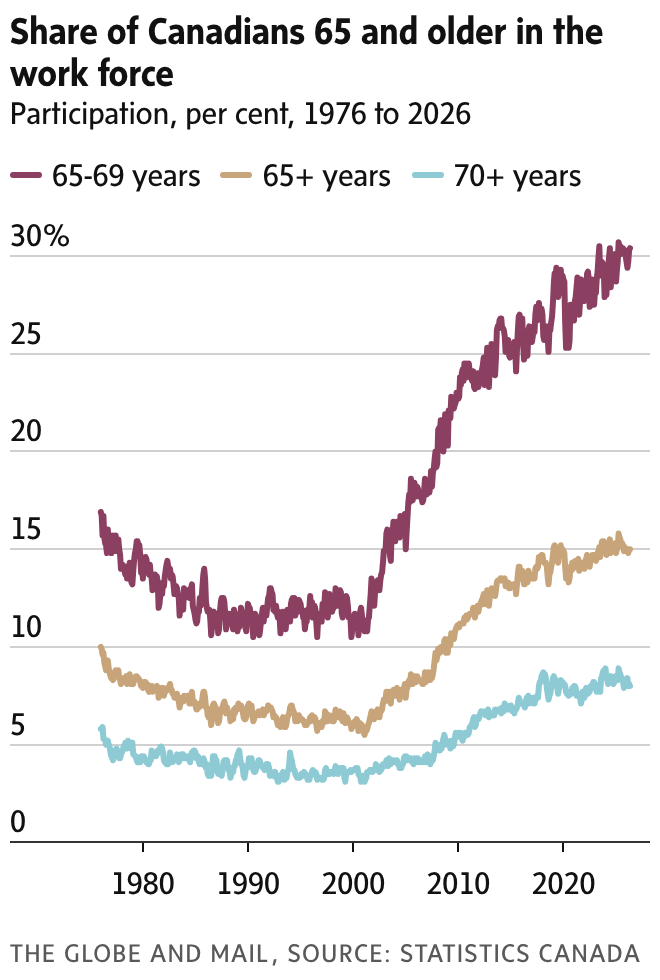
Why it matters: As Canadians live longer and more people delay retirement, experts say the gap between official retirement policy and real-world retirement trends is becoming harder to ignore. |
|
|
|
|
|
|
|
|
|
|
|
|
|
|
|
James Paddle-Grant/The Globe and Mail
|
|
|
|
|
|
|
|
|
|
|
The numbers: Shaye has about $1.03-million in assets, including a $350,000 RRSP, $227,000 TFSA and a $450,000 rental property, plus a defined benefit pension with an estimated value of $742,000. |
|
|
|
|
The situation: Shaye expects her education-sector job to end next year and is deciding whether to retire at 63. She hopes to spend $75,000 a year after tax, help support her adult son and eventually leave him an inheritance. |
|
|
|
|
Key takeaways from a financial planner: Shaye can likely retire next year by supplementing her pension with RRSP withdrawals while delaying CPP until age 70. The planner also recommends selling her rental property after retirement, moving to a lower-cost, more balanced investment portfolio and drawing down her RRSP strategically to help avoid Old Age Security clawbacks. |
|
|
|
|
|
|
|
|
|
|
|
|