|
Hey Tomasz,
Most people start with G or C. But if I could only teach one chord, it would be Am.
Not because it's easy. Because it unlocks two other chords with almost zero effort.
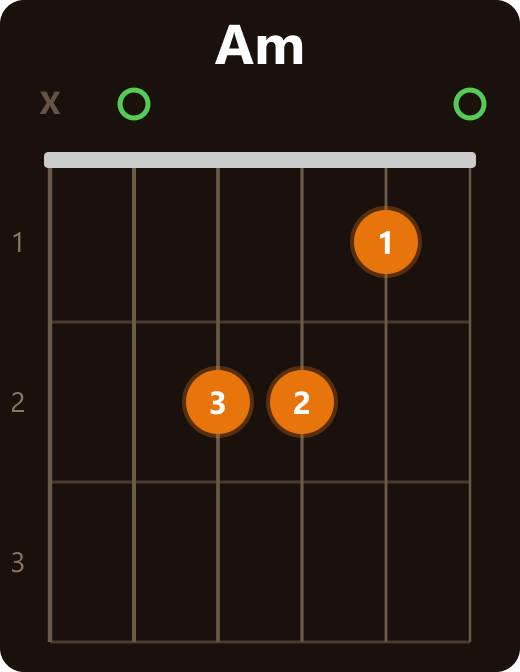
The Chord
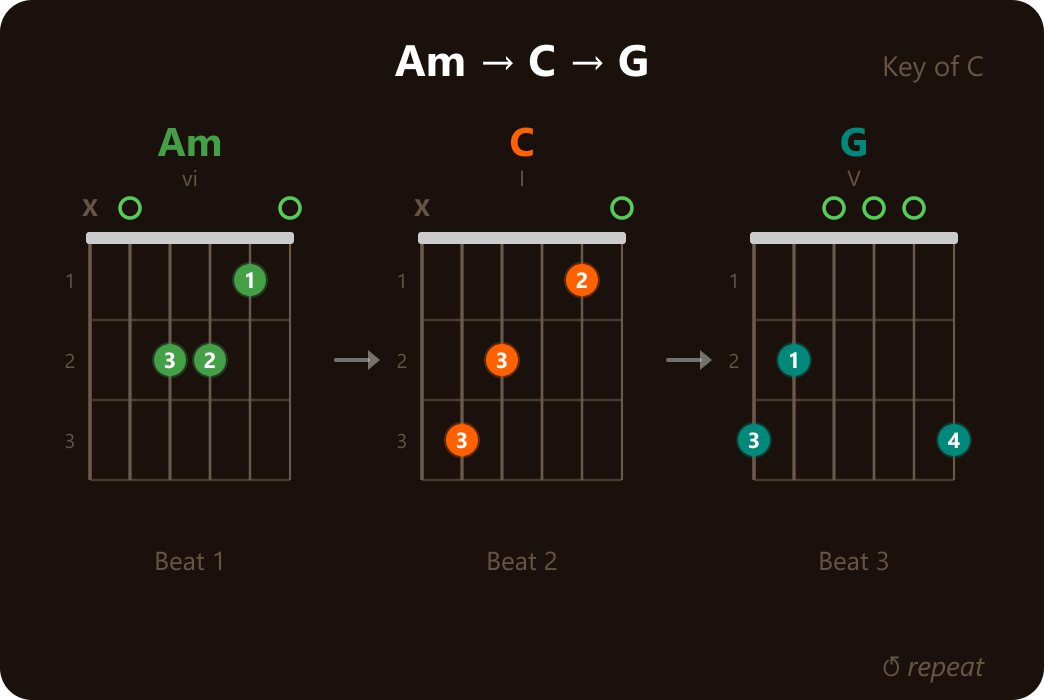
Three fingers. All on the first two frets. Strum from the 5th string down.
Am is a minor chord. That slightly sad, emotional sound? That's the minor quality. Most songs that give you chills are built on chords like this one.
Your First Chord Change: Am → C
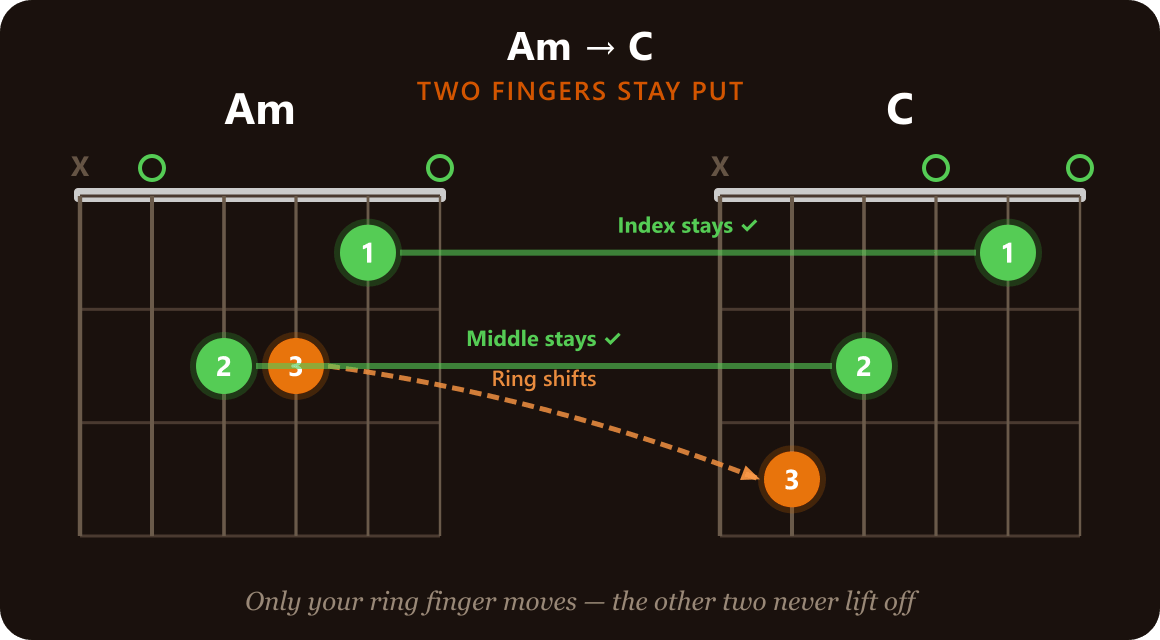
This is where it gets interesting. Look at what happens when you switch from Am to C:
Two Fingers Stay Put
Your index and middle finger never lift off the fretboard. They stay on the exact same strings, exact same frets. Only your ring finger moves — it shifts down to the 5th string, 3rd fret.
One finger moves. That's the entire chord change. This is called a pivot, and it's one of the fastest transitions on the guitar.
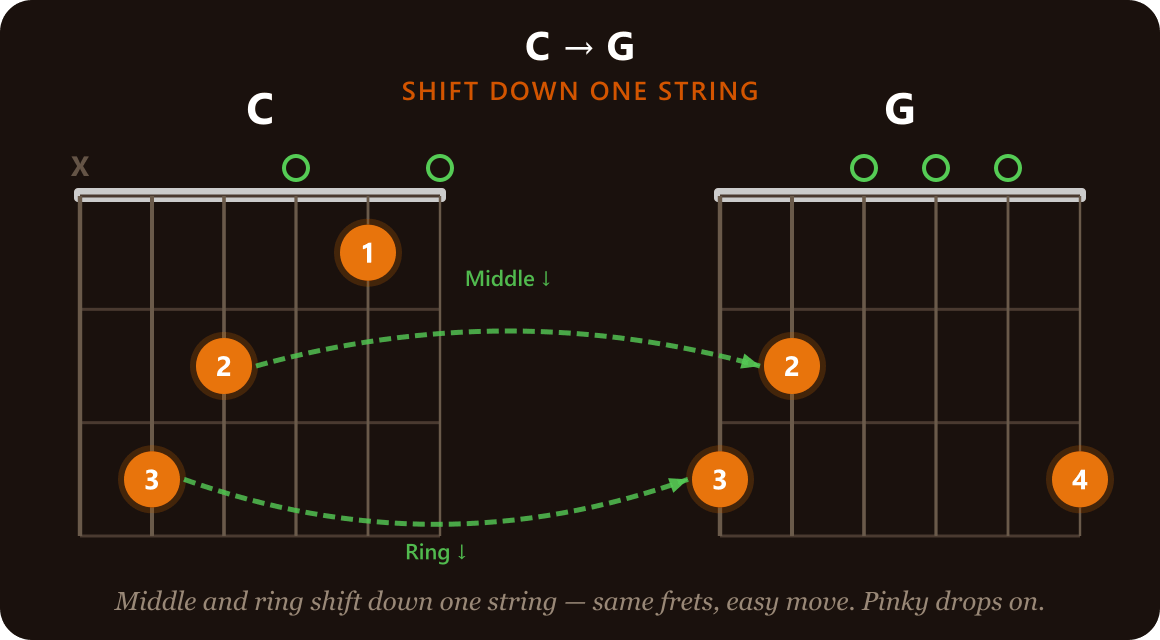
Second Chord Change: C → G
Now watch your ring finger:
Shift Down One String
Your middle and ring fingers both slide down one string. Same frets, just one string lower. Then your pinky drops onto the 3rd fret of the 1st string. Index lifts off.
Two chord changes. Both built on small movements, not big jumps. That's how you move between three chords without your hand flying all over the fretboard.
Put It Together
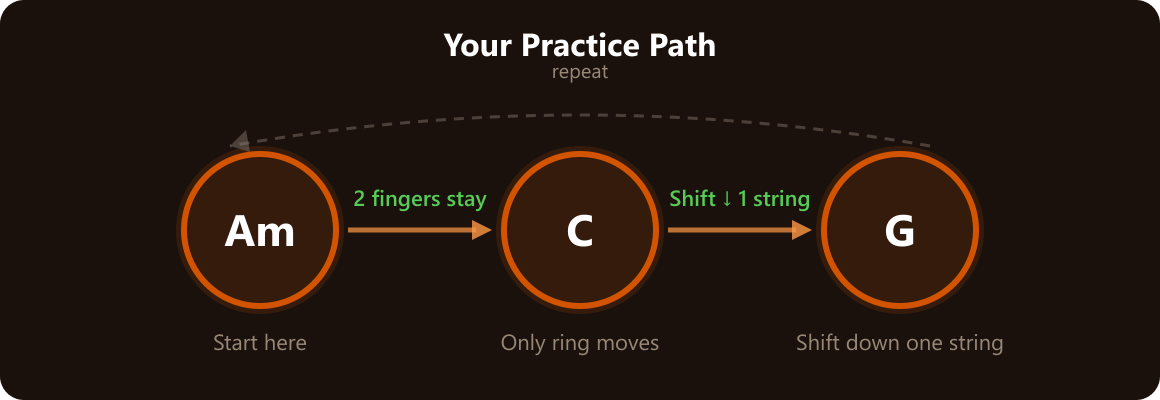
Am for four strums. C for four. G for four. Back to Am.
Go slow. Focus on the pivot and guide fingers. If you can make each change without pausing to look at your hand, you're doing it right.
Your First Progression
Am → C → G. Four beats each. Repeat.
You already know the transitions. Now just loop it. This three-chord progression is the backbone of hundreds of songs across every genre.
That's a real lesson. One chord, two transition techniques that pros use, and a progression behind dozens of hit songs.
Inside Acoustia, the software listens through your mic and teaches you these songs section by section. It waits at every chord change until you nail it.
See how it works inside Acoustia.
Talk soon,
|