Thanks for reading The Briefing, our nightly column where we break down the day’s news. If you like what you see, I encourage you to subscribe to our reporting here.
Meanwhile, the trajectory of SpaceX shares will be worth watching. A Friday report on Bloomberg that SpaceX’s recently issued bonds were trading down suggests investor confidence in Elon Musk’s rocket-and-cloud firm isn’t what it could be. Aside from that, there is one news event scheduled that might be worth watching—the public debut on Wednesday of Bending Spoons, the Italian scavenger of discarded digital businesses. In just the past year, it has bought AOL, Vimeo and Eventbrite.
The founders of Bending Spoons have a theory that they can “reimagine” these tired businesses with new investment and overhaul their operations. It’s hard to judge what the return on that will be over the long run, particularly as the bigger acquisitions—such as that of AOL—have only just been done. Still, Bending Spoons is hoping to go public at a valuation of around $18 billion.
What else could Bending Spoons go after? Its criteria are businesses whose core products are digital, have lots of revenue and can be improved significantly. There are a few publicly traded businesses whose stocks have stalled for one reason or another, which might fit those criteria. Here’s a couple of ideas: NerdWallet, which runs an online service offering consumers and small businesses financial advice, helping them compare products like loans, credit cards and insurance. It has shown decent growth—revenue expanded 22% last year to $836.6 million.
The company makes money. And yet it is trading at just 3.75 times next year’s estimated earnings before interest, taxes, depreciation and amortization to its enterprise value, according to S&P Global Market Intelligence. The stock has rarely traded above its IPO price since NerdWallet went public in 2021. NerdWallet looks vulnerable to AI, to be sure, but it could be a good fit for Bending Spoons.
Another one is Asana, the collaboration software firm co-founded by Facebook co-founder Dustin Moskovitz, who has a majority stake. Moskovitz may not want to sell, but, given the threat facing the firm from AI, he could change his mind. Though Asana generates free cash flow, its margins aren’t anything to write home about. The company has a market capitalization of $1.5 billion. It could fit with other enterprise software firms owned by Bending Spoons, including Evernote.
The same goes for Dropbox, a bigger company whose revenue has stagnated in the past couple of years and whose stock has traded within a very tight range since it went public in 2018. Dropbox co-founder Drew Houston last month revealed his plans to step down soon. This company carries a bigger price tag than other Bending Spoons acquisitions—its market capitalization is around $6 billion—but it would also be a fit with the conglomerate’s portfolio.
In Other News
• OpenAI on Friday launched GPT-5.6, its most advanced AI models, to a small group of partners that the U.S. government has cleared to use the technology, according to a blog post.
• Samsung Group, the South Korean tech giant, plans to unveil an investment package of more than 1,000 trillion won ($651 billion) next week, a record pledge aimed at chips, AI data centers, batteries and display, according to the Maeil Business Newspaper.
• Amazon Web Services is raising the price for its AI workload rental service by 20%, the company said on Friday.
• Apple’s Vision Pro and smart glasses chief, Paul Meade, is leaving for OpenAI, Bloomberg reported.Meade, a vice president, will depart Apple by next week and join OpenAI’s hardware unit to work on its forthcoming line of devices, Bloomberg said.
• Coinbase has cut its AI spending “nearly in half” even as it increases the number of tokens it uses, by using various measures to control costs. These measures include defaulting to open-weight models from Chinese firms, Coinbase CEO Brian Armstrong said in an X post on Friday night.
• Firmus, an Asia-Pacific neocloud, said on Sunday that it’s building a new data center in Batam, Indonesia, with 170,000 of Nvidia’s advanced server chips: a mix of Grace Blackwell and Vera Rubin GPUs and CPUs. In a deal that appears to be the first of its kind, Nvidia is set to earn a revenue share based on chip usage and provide credit support for the project.
• Google put limits on Meta’s use of its Gemini AI models a few months ago, saying it couldn’t provide all the capacity that the social media giant wanted, the Financial Times reported.
Friday on The Information’s TITV
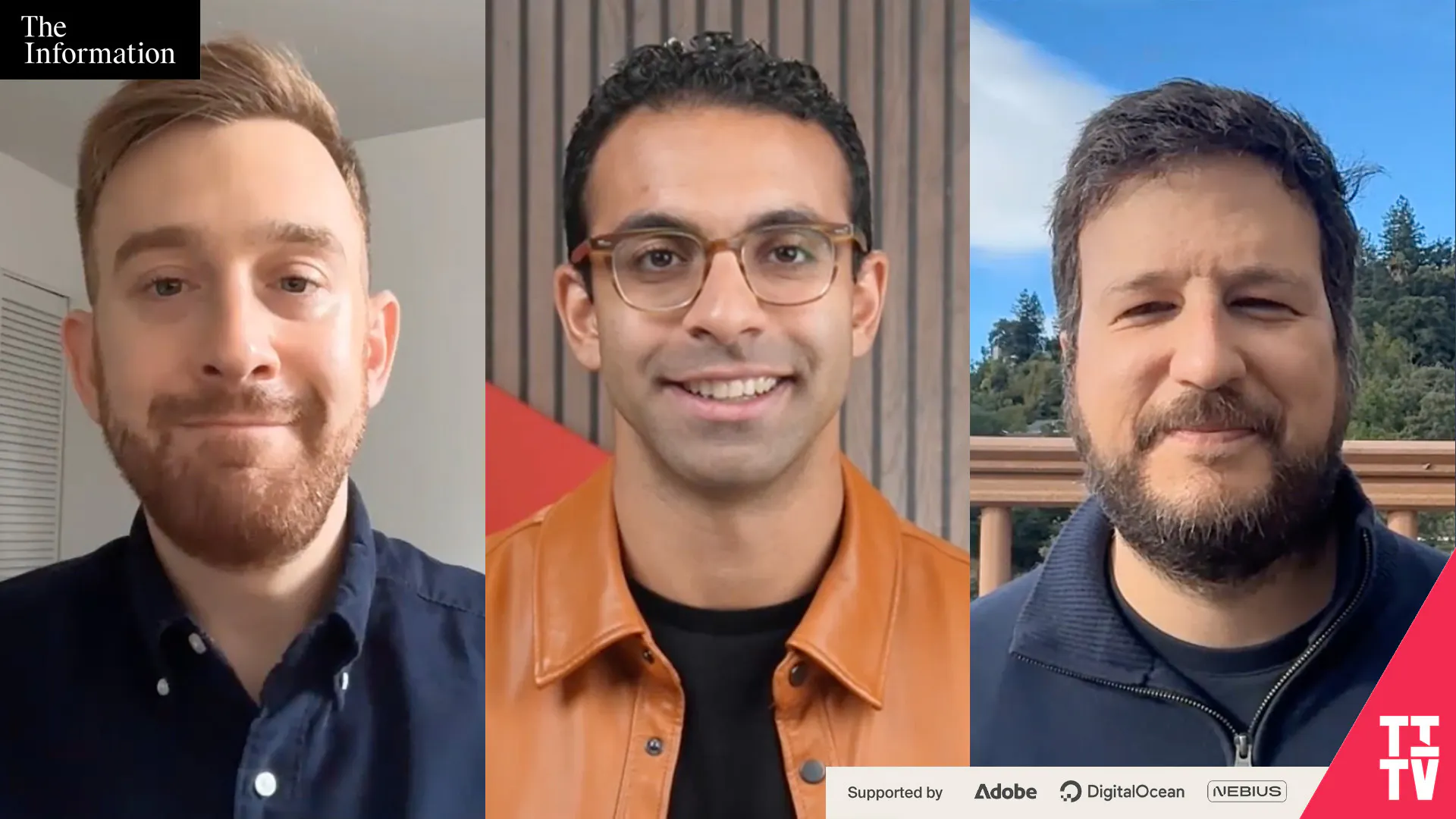
Check out Friday’s episode of TITV in which we unpack our reporting on the government’s recent discussions with OpenAI about its latest model.
Recommended Newsletter
Start your day with Applied AI, the newsletter from The Information that uncovers how leading businesses are leveraging AI to automate tasks across the board. Subscribe now for free to get it delivered straight to your inbox twice a week.
One year of TITV calls for a toast, and The Information is celebrating with an anniversary happy hour in San Francisco on July 16. Hosted by Akash Pasricha, the evening will bring together the insider community shaping and covering the defining stories in tech. Request an invite to join!
Request an invitation to join The Information and EY for an exclusive dinner bringing together senior leaders for candid conversation on closing the trust gap in enterprise AI.