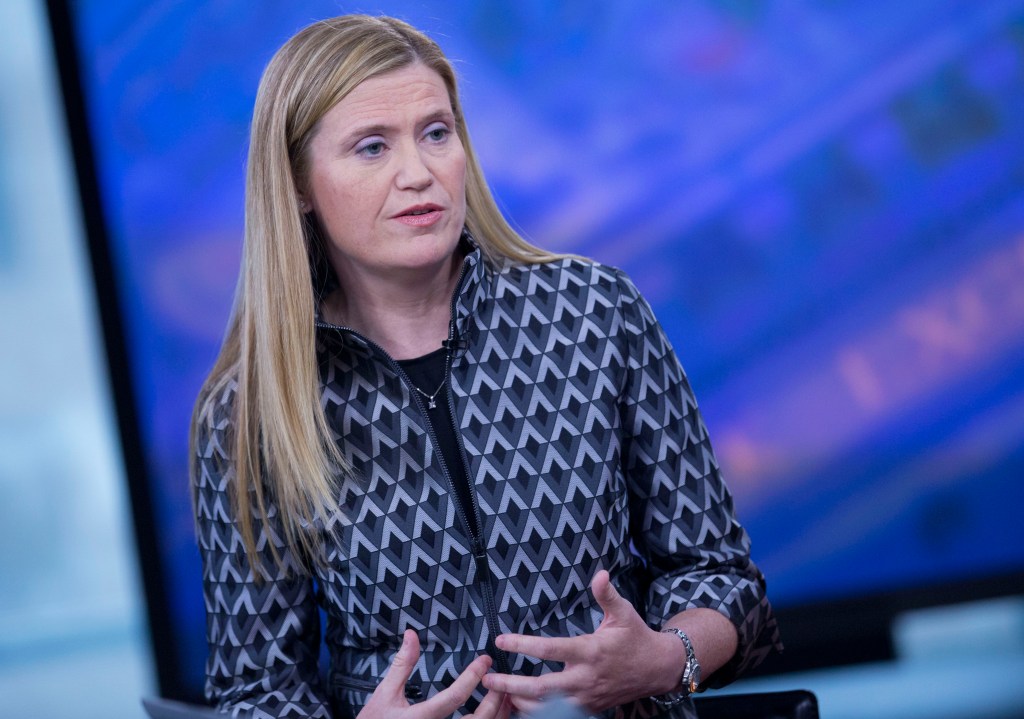
For more than a decade, Marianne Lake has climbed the ranks of the
Fortune Most Powerful Women list. A longtime JPMorgan exec, she has held roles from CFO to CEO of consumer lending to, most recently,
CEO of consumer and community banking. Lake has always been an influential banking exec, but she started inching closer to the top when she was explicitly named as a contender in the race to succeed Jamie Dimon.
Well, yesterday JPMorgan
announced that Lake is retiring after more than 25 years at the bank. That takes her out of the running—and comes about a year and a half after her onetime fellow CEO contender Jennifer Piepszak
bowed out of the race. JPMorgan is elevating Doug Petno and Troy Rohrbaugh to co-presidents, leaving them in a two-man (literally) race to take over.
“The changes announced today mark an important step in our board’s thoughtful process around succession planning and development of our top leaders,” Dimon said. “We are fortunate to have in place an exceptional group of senior leaders, not only at our operating committee level but across our organization.” About Lake, he
added that she “has been an outstanding partner and friend and has dedicated her career to championing our people and customers, building world-class businesses and delivering results, always with unquestioned integrity.” “We will miss her and wish her all the best in the future,” he said.
JPMorgan still has prominent women in leadership positions—including Piepszak as COO and Mary Erdoes, who is CEO of asset and wealth management. But a woman will not run this financial institution anytime soon. Citi CEO Jane Fraser,
No. 1 on this year’s MPW list, will likely remain
the only woman running a major Wall Street bank for the foreseeable future.
This twist at JPMorgan is the third time this year that a closely watched CEO race hasn’t gone in the female contender’s favor. At Walmart, Kath McLay
left her role as CEO of Walmart International in January after Walmart named John Furner its chief executive. And at Disney, the CEO bake-off ended with Josh D’Amaro in charge; Dana Walden came out of it with a huge new role created for her
as chief creative officer, but not as CEO. (I’d say Piepszak, who bowed out of the JPMorgan CEO race but is a No. 2 as COO and
is getting a $20 million bonus, is the Walden in this situation.)
I’ve spoken to analysts before who told me that Lake would
absolutely be the next CEO of JPMorgan. Bloomberg called her departure yesterday “
abrupt.” So what happened here? These bake-offs include so many twists and turns. Dimon has displayed an interesting combination of sometimes railing
against DEI efforts, and at the same time
elevating many women throughout the bank. He places people in “test jobs,” which has the side effect of allowing women who don’t always raise their hands for things they don’t feel 100% qualified for to show what they can do. He’s always maintained that JPMorgan will choose the absolute best person to take over. But why wasn’t it Lake?
On an individual level, every company needs to choose the best person to be in charge. And every person—and woman—must determine the best path for herself. Lake (and Piepszak) could even be among the many women reevaluating where they direct their ambition,
another trend of the moment.
But at a macro level, going 0 for 3 on these big CEO jobs is not a good sign of where things stand. If we could be confident businesses were cultivating another generation of female leaders just behind this one, maybe it wouldn’t be so concerning. But that hardly feels like a sure thing right now.
These big jobs have an outsize impact on the world; that’s why we track them so closely. So what will it take for a woman to get one of them?
Emma Hinchliffeemma.hinchliffe@fortune.comThe Most Powerful Women Daily newsletter is Fortune’
s daily briefing for and about the women leading the business world. Subscribe here.