| | In this edition, unpacking SpaceX’s much anticipated IPO, and some key takeaways from Semafor’s Tech͏ ͏ ͏ ͏ ͏ ͏ |
| |  | Technology |  |
| |
|
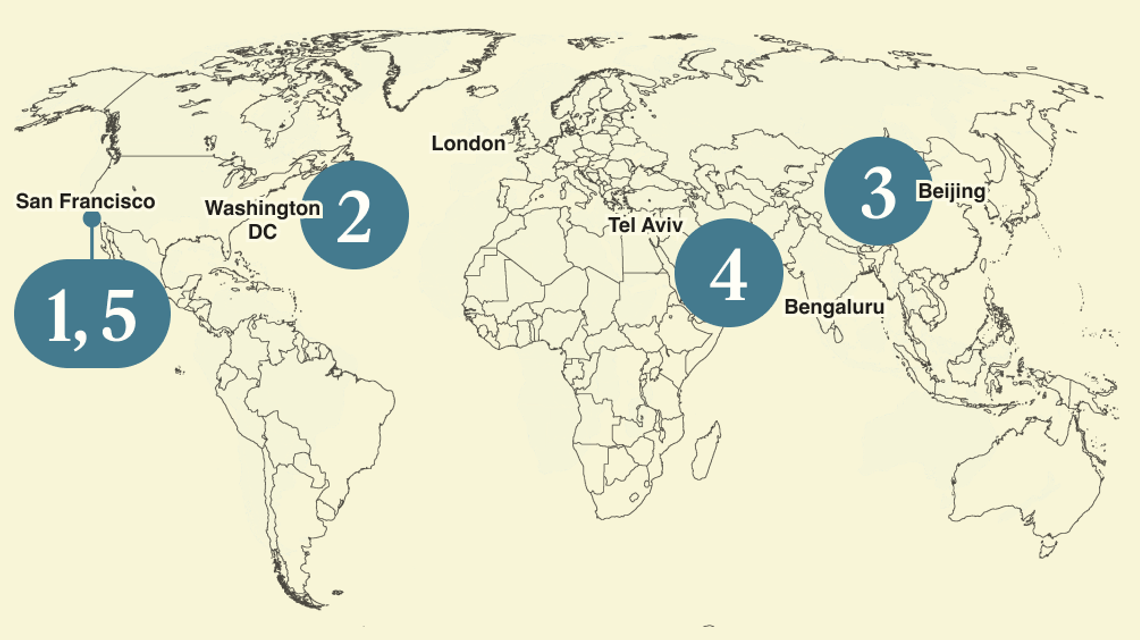 - Tokenomics
- Quantum ‘conditions’
- Neuroscience race
- Altman cancels UAE trip
- AI ads take over
 Unpacking SpaceX’s IPO, and scientists use AI to supercharge dangerous ‘worms.’ |
|
 SpaceX made history with the US’ largest ever IPO, the first of the big three private foundation model companies to go public. (Anthropic and OpenAI’s public debuts are expected soon.) It’s funny to think about SpaceX as a premier AI lab, given its frontier model division, xAI, is mostly overshadowed by rockets, satellites, and — if the company merges with Tesla — robotaxis. But for Musk, AI is not the end product. It’s woven into everything across the billionaire’s empire, from Starlink satellites to its Optimus robots to its Neuralink brain-computer interfaces. And like with most things Musk, he’s already ahead of the game. He long ago gave up the notion of Tesla being a carmaker or SpaceX just making rockets. AI acting as a behind-the-scenes player instead of a main stage actor is actually a much more natural place for the technology, akin to the machine learning and neural networks that have made a huge impact on the world with little fanfare outside of Silicon Valley. Large language models, starting with ChatGPT, changed that briefly. Suddenly, everyday consumers could experience the astonishing capabilities of AI and see immediate change in their lives. But the AI era has also led to a lot of confusion about what the technology is and what it’s good for. 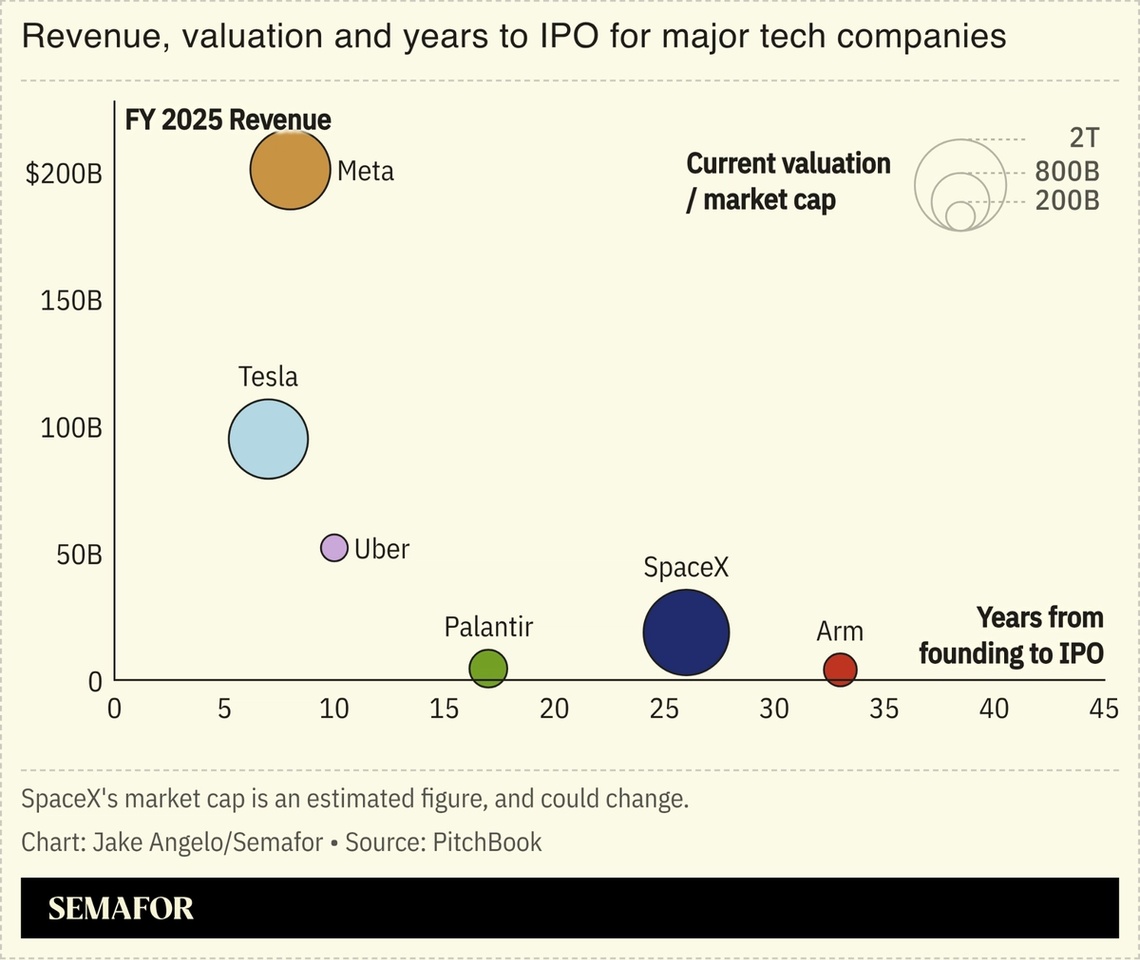 During Semafor’s Tech event this week, it became clear that AI chatbots are impressive and useful, but represent just a tiny sliver of what makes investors so bullish on AI. The real money — and promise of AI — is in supplying a general-purpose resource (AI compute) that can power automation across every industry. Think oil, utilities, data. And once these AI companies go public, mint a new generation of billionaires, and start competing on cost and efficiency, the most interesting story will become whatever they help create, rather than the latest model released and all the tokens they’ve amassed. We’re already seeing plenty of smart money chasing AI projects to enable efficient batteries, nuclear fusion, therapeutics, and a robotics explosion that, in turn, enables another wave of innovation. The SpaceX, OpenAI, and Anthropic IPOs are the first steps to demystifying these AI labs, allowing investors to see the numbers and invest accordingly. And in Silicon Valley, they’ll allow us to start focusing on whatever new, new thing comes next. |
|
‘Nobody has budgeted’ for tokenmaxxing |
 Chris Tuite/Semafor Chris Tuite/SemaforMost companies didn’t budget for the exorbitant cost of AI tokens, but no company can function without them, Box CEO Aaron Levie said at the Semafor Tech summit in San Francisco. “It just showed up overnight,” he said about the ability for workers to write huge amounts of sophisticated code using AI, racking up big bills for many companies. “In Silicon Valley, that’s okay, because [you] just raise more money, and then [you] can fund the tokens.” Most of the increased cost is coming from coding agents, but as workers start to develop AI tools around other kinds of workflows, “you should expect that we’ll see another jump in total spend on compute,” he said. Box, as a cloud storage company offering several AI models, has a broad view of how employees across various organizations are using tokens. It’s also using AI internally to build out its own products. Levie said Box would “cease to function” without coding agents. Uber CEO Dara Khosrowshahi, who told Semafor he was vibe coding his own apps earlier this year, is now cracking down on his workers’ use of Claude Code. AI labs are responding: OpenAI is weighing “drastic” price cuts, The Wall Street Journal reported, anticipating a similar move from Anthropic. Still, Cisco president Jeetu Patel said at Semafor’s event that AI consumes nearly five times as much bandwidth as a human conducting the same task. “You have to make sure that there’s a mechanism” to control costs “so CFOs don’t give up on this thing,” he said. |
|
Google quantum exec on why they said no to Trump funds |
 Chris Tuite/Semafor Chris Tuite/SemaforGoogle didn’t take funding from the Trump administration for quantum computing because of “conditions” that would’ve prevented the tech giant from moving as quickly as it would like, according to Charina Chou, chief operating officer at Google Quantum AI. The US government last month announced $2 billion in grants and investments across nine quantum companies, including IBM and PsiQuantum, in a bid to bolster domestic development and take on China in quantum. “In this one specific case, I think there were various conditions that came with the funding,” Chou said at the Semafor Tech summit in San Francisco this week. Google wants “to move as quickly as we can to a quantum computer,” and is working with the US government in “other ways,” she added. PsiQuantum co-founder Pete Shadbolt, a recipient of the US funding, said at the event that it was “really natural” for the government to invest in the sector because of its profound geopolitical and national security implications. “I try to spend as much time as I can building the quantum computer, but I do run around Washington,” he said of the importance of working with the US government. |
|
China beating the US in neuroscience |
 Chris Tuite/Semafor Chris Tuite/SemaforThe US risks ceding healthcare and science preeminence to China if it doesn’t speed its systems for medical research and regulation, said Max Hodak, former president of Elon Musk’s Neuralink who now heads neurotechnology firm Science Corp. “There is a very real possibility that without significant regulatory reform, if you’re a wealthy American, in 10 years, the only place you’ll be able to get your state-of-the-art cancer care is in Shanghai,” he said at the Semafor Tech summit in San Francisco. “This is a thing we should be very mindful of. [China is] executing very competently.” Hodak works primarily on brain-computer interfaces (BCI), or technologies that decode brain activity to perform physical actions, sometimes using chips implanted in the brain. Earlier this week, China approved the first commercially available BCI, beating the US. The country has also designated BCIs as a key national priority. “This stuff sounds insane,” Hodak said. “It’s hard to take seriously, but when you do, the impacts are so great that it’s tough to imagine that not being a national priority. This is going to be one of the three or four major plot lines of the next decade. China understands the potential.” |
|
Altman calls off UAE trip |
 Kylie Cooper/Reuters Kylie Cooper/ReutersOpenAI CEO Sam Altman was expected to visit Abu Dhabi this weekend but called it off, according to a person with direct knowledge of the matter, as the ChatGPT maker, which has deep ties to the UAE, prepares for its public market debut. Uncertainty pervaded the potential visit with the region on edge over the war in Iran. Altman had planned to meet with executives from sovereign wealth fund Mubadala, AI conglomerate G42, AI investment fund MGX (an investor in OpenAI), and state oil company ADNOC, according to people with direct knowledge. OpenAI and Mubadala did not respond to a request for comment. G42 declined to comment. While Wall Street executives have beaten a trail to the UAE capital since the onset of the war, Silicon Valley leaders — who have been a major beneficiary of Gulf sovereign wealth funds’ largesse — have been less demonstrative. OpenAI is a major partner in these efforts as the UAE has deepened its tech relationships under the Trump administration with a pledge to invest $1.4 trillion into the US over the next decade. |
|
AI quietly infiltrating most major brands |
 An AI-generated Kalshi ad. PJ Ace/YouTube. An AI-generated Kalshi ad. PJ Ace/YouTube.Most of the discourse and distaste around AI-generated ads has bubbled up when high-profile companies produce viral commercials, like Coke’s holiday ad or Kalshi’s NBA finals spot last year. Now, AI is spreading across many of the ads consumers engage with on a daily basis, but in a much quieter way. AI studio Higgsfield is serving 390 of the Fortune 500, double what it was six months ago, the company told Semafor. AI video platform Luma doubled its customer count from March to April, then again from April to May, it told Semafor. Video generation company Runway is working with 90% of Fortune 100 companies, and while it wasn’t able to provide usage numbers, a spokesperson said it is seeing increases across all its metrics, including seat count, token usage, and content output. The tech is sneaking its way into viral videos without drumming up many reactions from consumers, likely because viewers don’t know it’s being used. One recent Instagram Reel created by Dolce & Gabbana utilized Higgsfield’s AI, producing videos of roses and candles interspersed with real clips of Madonna singing. The brand makes no disclosure about the AI usage, nor has that been focal to viewers’ reactions. This has been the promise of video generation companies for years: making AI that looks so realistic that people don’t know the difference. That moment seems to be here. — Rachyl Jones |
|
 Eli Pariser coined the term “filter bubble.” Now, he thinks AI is about to change how you start your day. On this week’s episode of Mixed Signals, New_Public co-director Eli Pariser joins Max and Ben to talk about how soon your morning routine will change, which platforms are most exposed to AI disruption, and whether centralizing everyone’s attention was actually a mistake. |
|
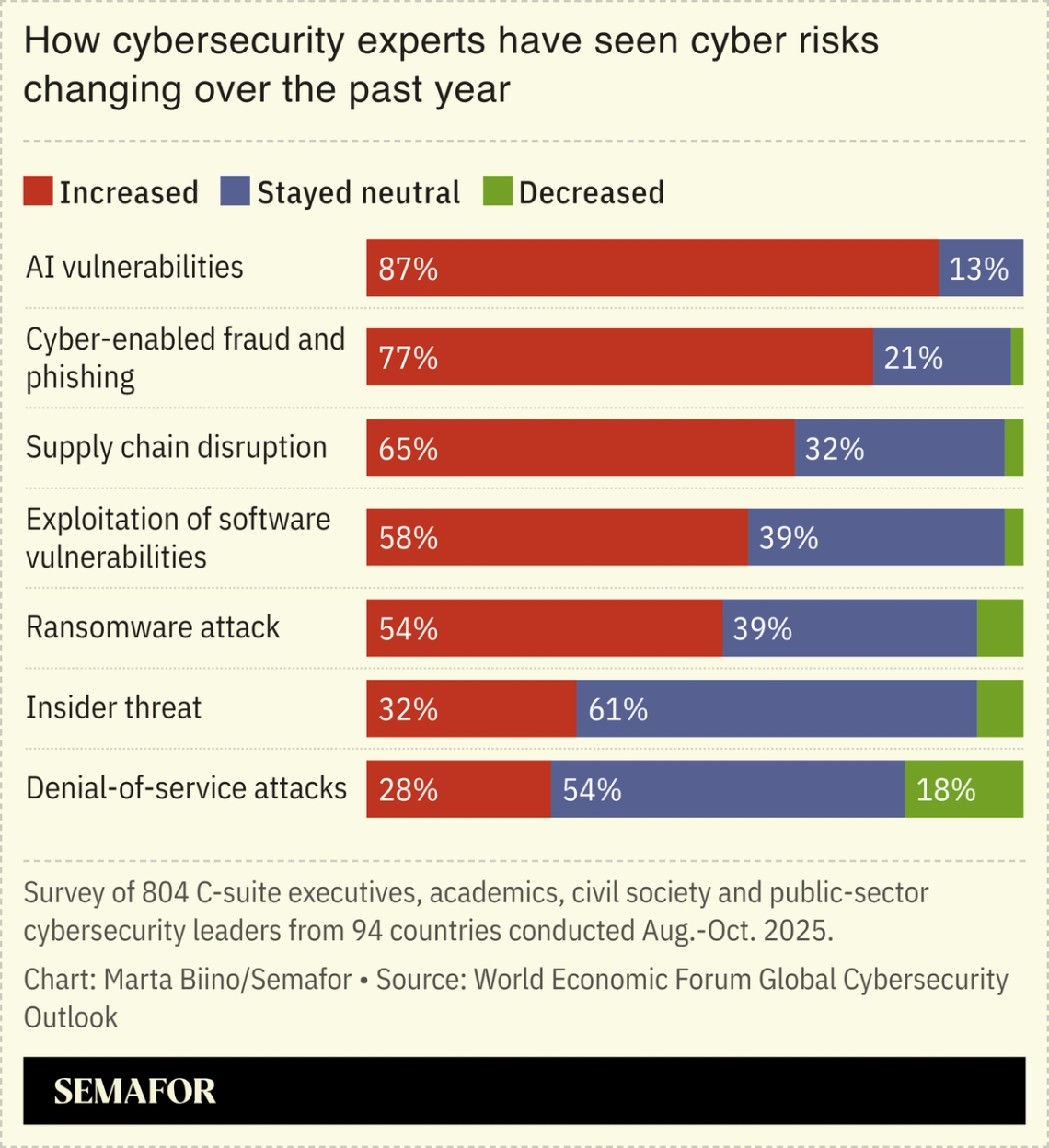 Researchers used open-source software to develop an AI-powered malware “worm” which could tailor its attacks to different systems. Cutting-edge AI models are a cybersecurity threat — Anthropic only released Mythos, capable of finding flaws in most systems, to a few key organizations, to let them use it to plug vulnerabilities. But open-source Chinese models are just months behind the frontier, and are potentially both dangerous and freely available. The worm’s adaptability means it cannot be stopped with a single software fix, The New York Times reported. Organizations without access to cutting-edge AI cybersecurity will be vulnerable to open-source attacks soon, if not now: AI policy researchers warned this week that Europe’s AI weakness could leave it defenseless as open-source hacking capabilities expand. |
|
|


